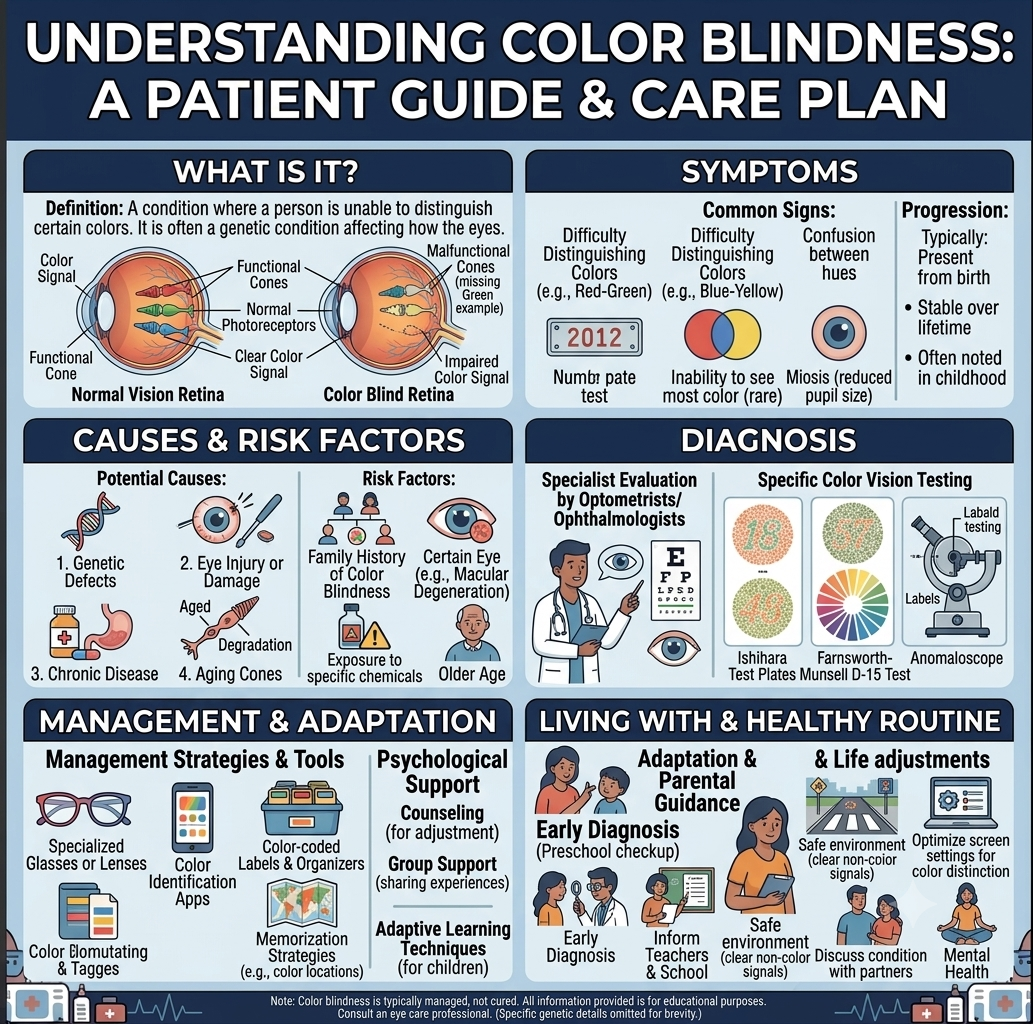
Color vision deficiency, commonly known as color blindness, is an eye condition where individuals struggle to distinguish between certain colors. While the term 'color blind' often brings to mind a world seen only in black and white, this severe form is extremely rare. More commonly, people experience difficulty differentiating specific shades, most often red and green, and less frequently, blue and yellow. This condition is typically inherited, meaning it's passed down through families, and is far more common in men than women. However, certain medical conditions, medications, or eye injuries can also cause acquired color vision deficiency.
Understanding the Condition
Understanding Color Vision Deficiency (Color Blindness)
Understanding the Condition
Common Symptoms
Difficulty Distinguishing Shades: The most common symptom is an inability to tell the difference between certain shades of red and green. Less often, individuals may struggle to distinguish shades of blue and yellow. In rare, severe cases, a person may have trouble seeing any colors, perceiving the world in shades of gray.
Unawareness of the Condition: Many people with mild color vision deficiency may not realize they have it until specific situations arise, such as problems identifying colors in traffic lights, interpreting color-coded charts or learning materials, or matching clothes.
Varying Severity: The inability to distinguish colors can range from mild to moderate to severe. A person may not be completely insensitive to a color but rather see it as a different, less vibrant, or muted shade.
Consultation Guide
Which Specialist to Meet
Consultation Guide
Color vision deficiency, commonly known as color blindness, is an eye condition where individuals struggle to distinguish between certain colors. While the term 'color blind' often brings to mind a world seen only in black and white, this severe form is extremely rare. More commonly, people experience difficulty differentiating specific shades, most often red and green, and less frequently, blue and yellow. This condition is typically inherited, meaning it's passed down through families, and is far more common in men than women. However, certain medical conditions, medications, or eye injuries can also cause acquired color vision deficiency.
Treatment of Acquired Color Vision Deficiency: If color vision deficiency is caused by an underlying medical condition (such as diabetes, glaucoma, or macular degeneration) or certain medications, treating the primary condition or adjusting medication may improve or restore color vision. It's crucial to consult your doctor before making any changes to your medication. (Duration: Depends on the underlying condition, potentially long-term.)
Learning Cues and Labeling: Developing strategies to identify colors through other cues, such as learning the order of traffic lights (red on top, green on bottom), or labeling items with their colors can be very helpful. Using apps or digital tools that identify colors in real-time can also assist. (Duration: Ongoing, as part of daily life.)
Risk Factors and Prevention
Gender and Family History: Inherited color vision deficiency is far more common in males and is passed down through families. If you have a family history of the condition, particularly if you are male, your risk is significantly higher. There is no known way to prevent inherited forms.
Associated Medical Conditions: Certain diseases can increase the risk of acquired color vision deficiency, including diabetes, sickle cell anemia, macular degeneration, glaucoma, Parkinson's disease, and chronic alcoholism. Managing these conditions effectively can help prevent or mitigate color vision problems.
Eye Protection: Trauma to the eye from injury, surgery, or certain medical treatments can cause color vision problems. Protecting your eyes from injury through appropriate safety measures can help prevent these causes.
Long-Term Wellbeing and Management
Regular Eye Check-ups: Regular visits to an eye care specialist are crucial, especially if your color vision deficiency is acquired due to an underlying health condition, to monitor changes and manage the primary cause.
Diagnostic Procedures
If you suspect you or your child has difficulty distinguishing colors, or if your color vision changes, you should consult an eye care specialist. This includes an optometrist, who can perform comprehensive eye exams and color vision testing, or an ophthalmologist, a medical doctor specializing in eye and vision care who can diagnose and treat underlying conditions.
Preparations Before Your Visit
Before your visit, it's helpful to note down any specific situations where you notice difficulty with colors. For children, observe their reactions to colorful objects or their ability to complete color-based tasks. Bring a list of any current medications you are taking, as some can affect color perception. You do not need to prepare your eyes in any special way for the tests.
Book a doctor visit near me
This is the most common screening test for red-green color vision deficiency. It consists of a series of plates (cards) featuring a pattern of colored dots. Within these dots, numbers or shapes are hidden, formed by dots of a different color. People with normal color vision can easily see these numbers or shapes, while those with certain color deficiencies may struggle or see a different number.
What to Expect
You will be shown a series of circular plates, one at a time. For each plate, you will be asked to identify the number or pattern you see within the colored dots. The test is quick and painless. Your responses will help the eye care specialist determine if you have a red-green color vision deficiency and, in some cases, its severity.
Farnsworth Munsell 100 Hue Test
This test is more detailed and used to identify the type and severity of color vision deficiency, including blue-yellow deficiencies. It involves arranging a series of colored caps or chips in a precise order based on their hue, creating a gradual color spectrum.
What to Expect
You will be presented with several trays, each containing a number of small, colored caps that vary subtly in hue. Your task will be to arrange these caps in a continuous color sequence. This test requires concentration and can take longer than the Ishihara test, typically 15-30 minutes, but it provides a comprehensive assessment of your color discrimination abilities.
Considered the most accurate diagnostic test, the anomaloscope specifically evaluates red-green color vision. It involves asking the patient to mix two primary colors (red and green) to match a third, fixed yellow color.
What to Expect
You will look through an eyepiece at a circular field divided into two halves. One half will display a fixed yellow light, while the other half will allow you to adjust the mixture of red and green light. You will be asked to adjust the red and green lights until their combination perfectly matches the yellow light in brightness and color. This test can precisely determine the type and extent of red-green deficiency.
Early Diagnosis in Children: It is important for children to have comprehensive eye exams, including color vision testing, before starting school. Early diagnosis helps children and educators adapt learning materials and teaching methods, preventing potential confusion and frustration.
Utilizing Technology: Various smartphone apps and digital tools are available that can help identify colors or adjust screen displays to be more perceivable for individuals with color vision deficiency.
Environmental Adaptations: Making adjustments in your environment, such as ensuring good lighting, using clear labels for color-coded items, or arranging items by position rather than color, can significantly improve daily functioning.
Treatment Options
Specialized Filter Lenses: For some types of color vision deficiency, particularly red-green, specially tinted contact lenses or glasses can help improve color perception and discrimination. These lenses do not cure the condition but filter certain wavelengths of light, making some colors appear more distinct. (Duration: Used as needed, for specific tasks or daily wear.)
Managing Underlying Conditions
Medication Awareness: Some medicines can affect color vision. If you are starting new medication and notice changes in your color perception, discuss this with your doctor. Do not stop taking prescribed medication without medical advice.
Tags & Topics
Notice an error or need an update?
Help us keep medical information accurate. Report incorrect info or suggest an edit.


