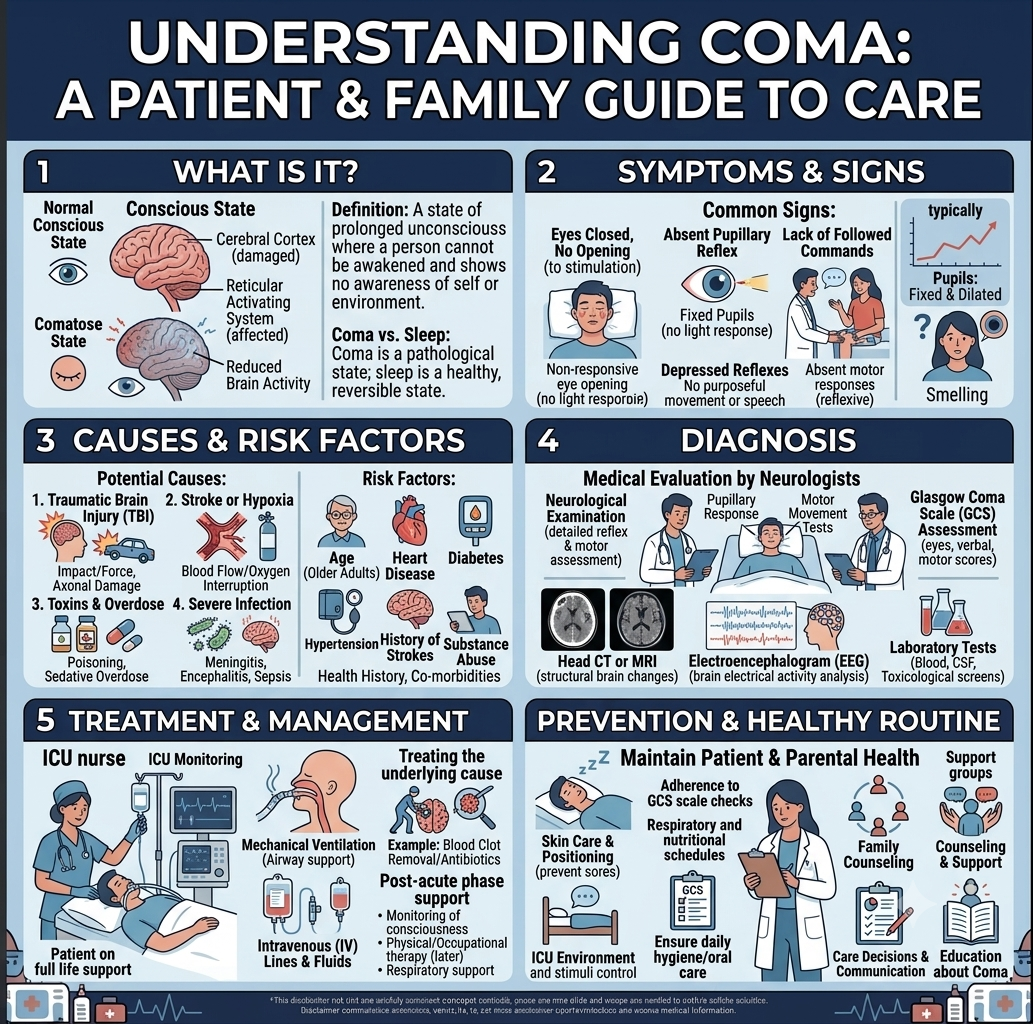
A coma is a deep state of prolonged unconsciousness. It can be caused by various factors, including severe head injuries, strokes, brain tumors, drug or alcohol overdose, or serious underlying illnesses like diabetes or infections. A coma is a medical emergency requiring immediate attention to protect life and brain function. Healthcare professionals act quickly to identify the cause through tests like blood work and brain scans to begin appropriate treatment. Comas typically don't last more than a few weeks; longer periods might lead to a persistent vegetative state or brain death.
Understanding the Condition
Coma: Understanding a State of Unconsciousness
Understanding the Condition
Common Symptoms
Closed Eyes: The person's eyes remain closed.
Unresponsive Pupils: The pupils (the black centers of the eyes) do not change size or react when light is shined on them.
No Purposeful Limb Movement: Limbs do not move voluntarily, only exhibiting automatic, uncontrolled reflex movements.
No Response to Pain: The person does not react to painful stimuli, aside from involuntary reflex movements.
Irregular Breathing: Breathing patterns are inconsistent or abnormal.
Consultation Guide
Which Specialist to Meet
If a coma is suspected, immediate medical care is critical. Emergency medical personnel will likely be involved first, followed by a neurologist (a doctor specializing in brain and nervous system conditions) or a critical care specialist.
Preparations Before Your Visit
When seeking emergency care, provide as much information as possible about the person's medical history, current medications, any recent injuries or events, and known allergies. If possible, bring a list of their current medications. Be prepared to describe the onset of symptoms and any unusual behaviors observed.
Book a doctor visit near me
Consultation Guide
A coma is a deep state of prolonged unconsciousness. It can be caused by various factors, including severe head injuries, strokes, brain tumors, drug or alcohol overdose, or serious underlying illnesses like diabetes or infections. A coma is a medical emergency requiring immediate attention to protect life and brain function. Healthcare professionals act quickly to identify the cause through tests like blood work and brain scans to begin appropriate treatment. Comas typically don't last more than a few weeks; longer periods might lead to a persistent vegetative state or brain death.
A neurological exam assesses brain, spinal cord, and nerve function. It helps doctors determine the extent and possible cause of a coma.
You will lie on a movable table that slides into a large, doughnut-shaped machine. The machine makes whirring and clicking sounds. You'll need to lie still for the duration of the scan. Sometimes, a special dye (contrast) is injected into a vein to highlight specific areas, which might cause a warm sensation.
Brain MRI (Magnetic Resonance Imaging)
A brain MRI uses powerful magnets and radio waves to generate highly detailed images of the brain. It does not use radiation and is excellent for detecting subtle changes in brain tissue.
Treating Infections: If an infection like meningitis or encephalitis is the cause, specific medications will be used to fight the infection. (Duration: Course of treatment typically lasts 1-3 weeks.)
Controlling Blood Sugar: For coma caused by diabetes, medications are given to stabilize blood sugar levels (either lower high levels or raise low levels). (Duration: Ongoing until stable, then managed long-term.)
Diagnostic Procedures
Neurological Examination
What to Expect
A doctor will check your reflexes, pupil reactions to light, eye movements, and responses to various stimuli. They will also assess muscle strength and movement (if any). This is a physical exam and is not painful.
Brain CT (Computed Tomography) Scan
A CT scan uses X-rays and a computer to create detailed cross-sectional images of the head, showing brain tissue, bone, and blood vessels. It's often the first test for head injuries or sudden stroke signs.
What to Expect
What to Expect
You will lie on a table that slides into a long, tube-shaped machine. The MRI machine makes very loud knocking and thumping noises, so you will be offered earplugs or headphones. It's crucial to remain completely still during the scan, which can take longer than a CT scan. Similar to a CT, contrast dye may be used.
EEG (Electroencephalogram)
An EEG records the electrical activity of the brain through electrodes placed on the scalp. It helps diagnose conditions like seizures and can confirm brain death.
What to Expect
Small, metal discs (electrodes) will be attached to your scalp with a special paste. These electrodes are connected to a machine that records your brain's electrical signals as wavy lines. The test is painless. You may be asked to open and close your eyes, breathe deeply, or look at flashing lights.
Lumbar Puncture (Spinal Tap)
This procedure involves inserting a needle into the lower back to collect cerebrospinal fluid (CSF) for testing. CSF surrounds and protects the brain and spinal cord, and its analysis can help diagnose infections, bleeding, or other central nervous system diseases.
What to Expect
You will typically lie on your side with your knees pulled up to your chest, or sit and lean forward. The doctor will clean and numb an area on your lower back. A thin needle is then carefully inserted between two spinal bones to collect a small amount of fluid. You might feel some pressure. It's important to stay very still. Afterward, you might be asked to lie flat for a period to reduce the risk of headache.
Treatment Options
Immediate Medical Care
Breathing Support: Many people in a coma cannot breathe effectively on their own and require a ventilator (breathing machine). (Duration: As long as necessary, from hours to weeks.)
Fluid and Nutrition Management: Intravenous (IV) fluids are given to ensure hydration and provide essential nutrients. A feeding tube may be used for longer-term nutritional support. (Duration: Ongoing throughout the coma, often for weeks.)
Vital Sign Monitoring: Continuous monitoring of heart rate, blood pressure, oxygen levels, and brain activity is essential to manage complications and assess the patient's condition. (Duration: Throughout the coma state.)
Reducing Brain Swelling: Medications may be administered to decrease swelling in the brain, which can be life-threatening. (Duration: As needed, typically for days to weeks.)
Seizure Control: Medications are used to stop ongoing seizures or prevent new ones, as prolonged seizures can worsen brain damage. (Duration: As needed acutely, potentially longer for ongoing seizure disorders.)
Reversing Drug Overdose/Toxicity: If a coma is due to drug or alcohol intoxication, specific antidotes or supportive care to help the body eliminate the substances may be given. (Duration: Acutely, until substances are cleared from the body.)
Surgical Interventions
Removing Blood Clots or Tumors: Surgery may be necessary to remove blood clots (e.g., from a severe head injury or stroke) or brain tumors that are causing pressure on the brain. (Duration: Single procedure, with recovery varying.)
Draining Fluid: If fluid buildup (hydrocephalus) is causing increased pressure, a shunt or drain may be surgically placed to relieve it. (Duration: Single procedure, with potential for long-term shunt.)
Rehabilitation Therapies
Prompt Infection Treatment: Seek timely medical care for infections, especially those that can affect the brain, such as meningitis or encephalitis, to prevent severe complications.
Post-Coma Care and Rehabilitation
Regular Follow-ups: Maintain scheduled appointments with neurologists and other specialists to monitor recovery, manage any ongoing issues, and adjust treatment plans.
Prevention & Long-Term Wellbeing
Physical, Occupational, and Speech Therapy: Once a person awakens from a coma, these therapies are crucial to regain lost motor skills, cognitive function, and communication abilities. (Duration: Can range from weeks to several years, depending on recovery needs.)
Prevention
Head Injury Prevention: Always wear a helmet during activities like cycling or contact sports, and use seatbelts in vehicles to minimize the risk of traumatic brain injuries.
Manage Chronic Conditions: Diligent management of conditions like diabetes, high blood pressure, and heart disease can reduce the risk of stroke or other brain complications.
Avoid Substance Abuse: Refrain from excessive alcohol consumption and illegal drug use to prevent intoxication-induced coma and long-term brain damage.
Comprehensive Rehabilitation: Engage in physical, occupational, and speech therapy as recommended to maximize functional recovery and adapt to any lasting disabilities.
Support Systems: Family involvement, support groups, and psychological counseling can be vital for both the patient and caregivers coping with the long-term effects of a coma.
Complication Monitoring: Regularly check for potential complications such as bedsores, urinary tract infections, and blood clots, which can arise during or after a prolonged period of immobility.
Tags & Topics
Notice an error or need an update?
Help us keep medical information accurate. Report incorrect info or suggest an edit.


