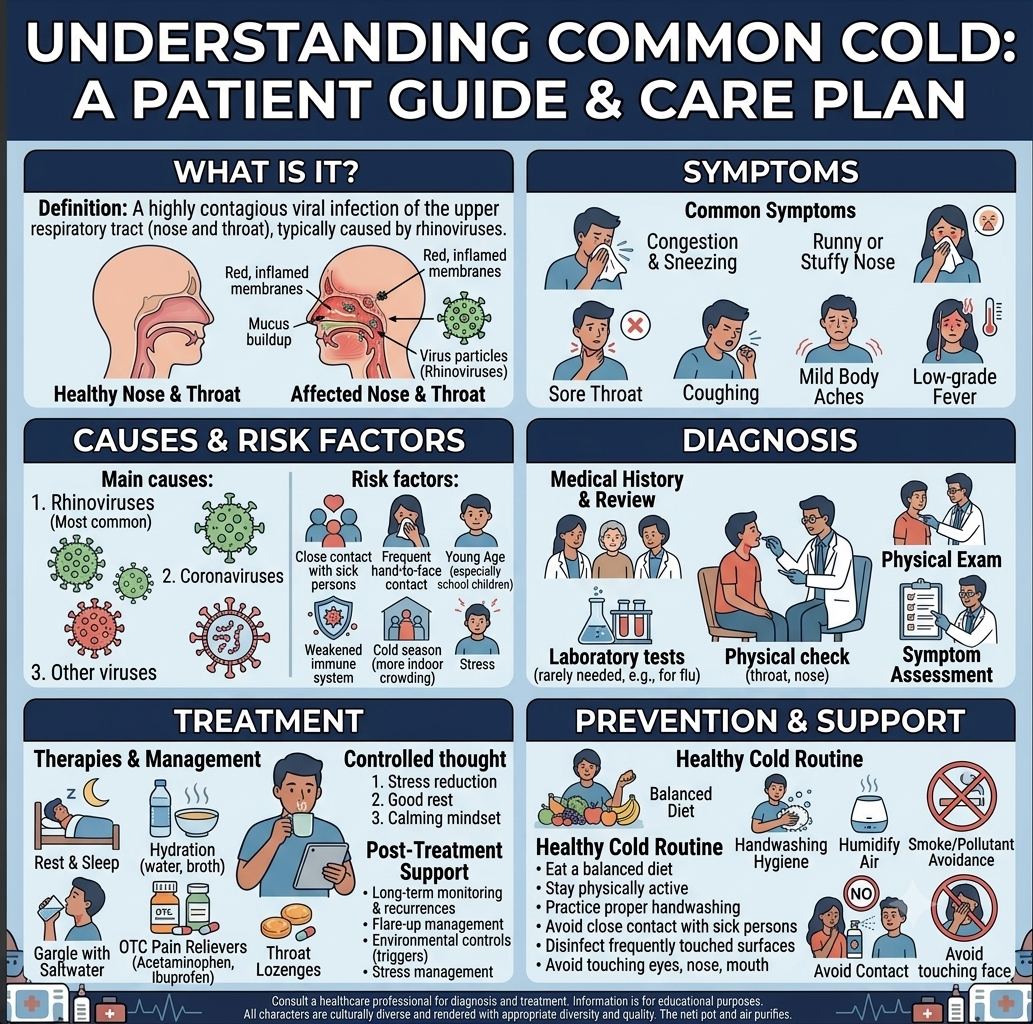
The common cold is a highly prevalent, generally harmless viral infection primarily affecting the nose and throat. Although it can cause discomfort, most individuals recover within 7 to 10 days, though symptoms may linger longer in smokers. Infants and young children are more susceptible, experiencing colds more often than adults, who typically have two to three colds annually. Medical consultation is generally not required unless symptoms worsen or persist. This type of illness is known as an upper respiratory tract infection.
Understanding the Condition
Understanding the Condition
The common cold is a highly prevalent, generally harmless viral infection primarily affecting the nose and throat. Although it can cause discomfort, most individuals recover within 7 to 10 days, though symptoms may linger longer in smokers. Infants and young children are more susceptible, experiencing colds more often than adults, who typically have two to three colds annually. Medical consultation is generally not required unless symptoms worsen or persist. This type of illness is known as an upper respiratory tract infection.
Common Symptoms
Runny or Stuffy Nose: Nasal discharge, often starting clear and potentially thickening to yellow or green. This change is normal and usually does not indicate a bacterial infection. You may also experience congestion, making breathing difficult.
Sore or Scratchy Throat: Discomfort, irritation, or a feeling of scratchiness in the throat, especially when swallowing.
General Malaise: A feeling of overall unwellness, fatigue, or lack of energy.
Slight Body Aches or Mild Headache: Mild pain in the muscles or a dull ache in the head.
Low-Grade Fever: A slightly elevated body temperature, typically below 101.3 degrees Fahrenheit (38.5 degrees Celsius).
Consultation Guide
Which Specialist to Meet
For typical common cold symptoms, your primary care provider or a General Practitioner (GP) is the appropriate specialist to consult. If symptoms are severe, persistent, or suggest complications like ear infections, sinusitis, or worsening asthma, your GP may refer you to an Otolaryngologist (ENT) or a Pulmonologist.
Preparations Before Your Visit
Before your appointment, prepare a detailed list of your symptoms, including when they began, their severity, what makes them better or worse, and any over-the-counter remedies or home treatments you've tried. Be sure to mention any pre-existing health conditions such as asthma or a weakened immune system, and bring a list of your current medications.
Book a doctor visit near me
A healthcare provider will visually examine your nose, throat, ears, and listen to your lungs with a stethoscope. This helps to assess the extent of your symptoms, check for signs of inflammation or fluid, and rule out other conditions or complications.
During the examination, the doctor will ask about your symptoms and medical history. They will use a small light to look inside your throat and nose, gently check your ears with an otoscope, and listen to your breathing on your chest and back. This procedure is quick and generally painless.
If your symptoms include a severe sore throat without a significant cough, your doctor might suspect strep throat. A sterile swab is used to collect a sample from the back of your throat to test for Streptococcus bacteria.
If your symptoms are severe and suggest influenza, your doctor may perform a test to identify the flu virus. This helps differentiate between a cold and the flu, guiding appropriate treatment and precautions.
Rest and Hydration: Prioritize getting ample rest to allow your body to recover. Drink plenty of fluids such as water, juice, and broth to prevent dehydration and thin mucus. (Duration: As long as symptoms persist, typically 7-10 days.)
Saltwater Gargle: Gargle with a mixture of 1/4 to 1/2 teaspoon of salt in an 8-ounce glass of warm water. This can temporarily relieve a sore or scratchy throat. Not recommended for children under 6 years due to choking risk. (Duration: As needed for sore throat relief.)
Throat Soothers: Suck on ice chips, use sore throat sprays, lozenges, or hard candy to alleviate throat discomfort. Exercise caution when giving lozenges or hard candy to children due to choking hazards, especially those under 6. (Duration: As needed for symptom relief.)
Saline Nasal Drops/Sprays and Rinses: Over-the-counter saline nasal drops or sprays can help moisturize nasal passages and relieve stuffiness. For infants, a bulb syringe can gently clear mucus after saline drops. Nasal rinses using a neti pot or squeeze bottle with distilled, sterile, or boiled and cooled tap water can also clear mucus and debris. (Duration: As needed for nasal congestion.)
Humidifier Use: Using a cool-mist humidifier in your room can add moisture to the air, helping to ease a stuffy nose and sore throat. Ensure the humidifier is cleaned regularly to prevent the growth of mold or bacteria. (Duration: As needed for comfort, particularly during sleep.)
Pain Relievers and Fever Reducers: Non-prescription medications can help alleviate body aches, headaches, and reduce low-grade fever associated with a cold. (Duration: As directed on the product label, typically every 4-6 hours while symptoms last.)
Nasal Decongestant Tablets: For individuals aged 12 and older, oral decongestant tablets can help reduce swelling in nasal passages by narrowing blood vessels, thereby easing stuffiness. Always follow dosage instructions. (Duration: Use as directed, typically for short-term relief only.)
Consultation Guide
A sterile cotton swab will be briefly rubbed over your tonsils and the back of your throat. This might cause a momentary tickling sensation or mild discomfort. The sample is then rapidly tested, often providing results within minutes.
Diagnostic Procedures
What to Expect
Rapid Strep Test / Throat Swab
What to Expect
What to Expect
A sterile swab is gently inserted into a nostril (nasal swab) or rubbed against the back of your throat (throat swab) for a brief moment. You might experience a temporary tickling sensation or a slight urge to sneeze.
If there are concerns about a lung infection, such as pneumonia, particularly if you have a persistent cough, shortness of breath, or high fever, an imaging test may be performed to visualize your lungs.
What to Expect
You will be asked to stand or sit in front of an X-ray machine. You may need to hold your breath for a few seconds while the image is taken. The procedure is quick, painless, and involves a minimal amount of radiation.
Treatment Options
Over-the-Counter Medications
Prevention & Long-Term Wellbeing
Prevention
Practice Hand Hygiene: Wash your hands thoroughly and frequently with soap and water for at least 20 seconds, especially after coughing, sneezing, using the bathroom, and before eating. If soap and water are unavailable, use an alcohol-based hand sanitizer with at least 60% alcohol.
Avoid Touching Your Face: Refrain from touching your eyes, nose, and mouth with unwashed hands, as this is a common way cold viruses enter the body.
Clean and Disinfect Surfaces: Regularly clean and disinfect high-touch surfaces in your home and workplace, such as doorknobs, light switches, electronic devices, and countertops, particularly when someone in the household is ill.
Cover Coughs and Sneezes: Always cough or sneeze into a tissue, then dispose of it immediately and wash your hands. If a tissue is not available, cough or sneeze into the bend of your elbow.
Avoid Sharing Personal Items: Do not share drinking glasses, eating utensils, towels, or other personal items with others to prevent the spread of germs.
Limit Exposure to Sick Individuals: Try to avoid close contact with anyone who has a cold. If possible, stay out of crowded environments during cold and flu season.
Maintain a Healthy Lifestyle: Eat a balanced diet rich in fruits and vegetables, engage in regular physical activity, and ensure you get adequate sleep. These habits strengthen your immune system, making you more resilient to infections.
Long-Term Management
Manage Chronic Health Conditions: Effectively managing chronic conditions such as asthma or a weakened immune system is crucial, as these can increase your susceptibility to colds and potential complications. Work closely with your healthcare provider to keep these conditions well-controlled.
Tags & Topics
Notice an error or need an update?
Help us keep medical information accurate. Report incorrect info or suggest an edit.


