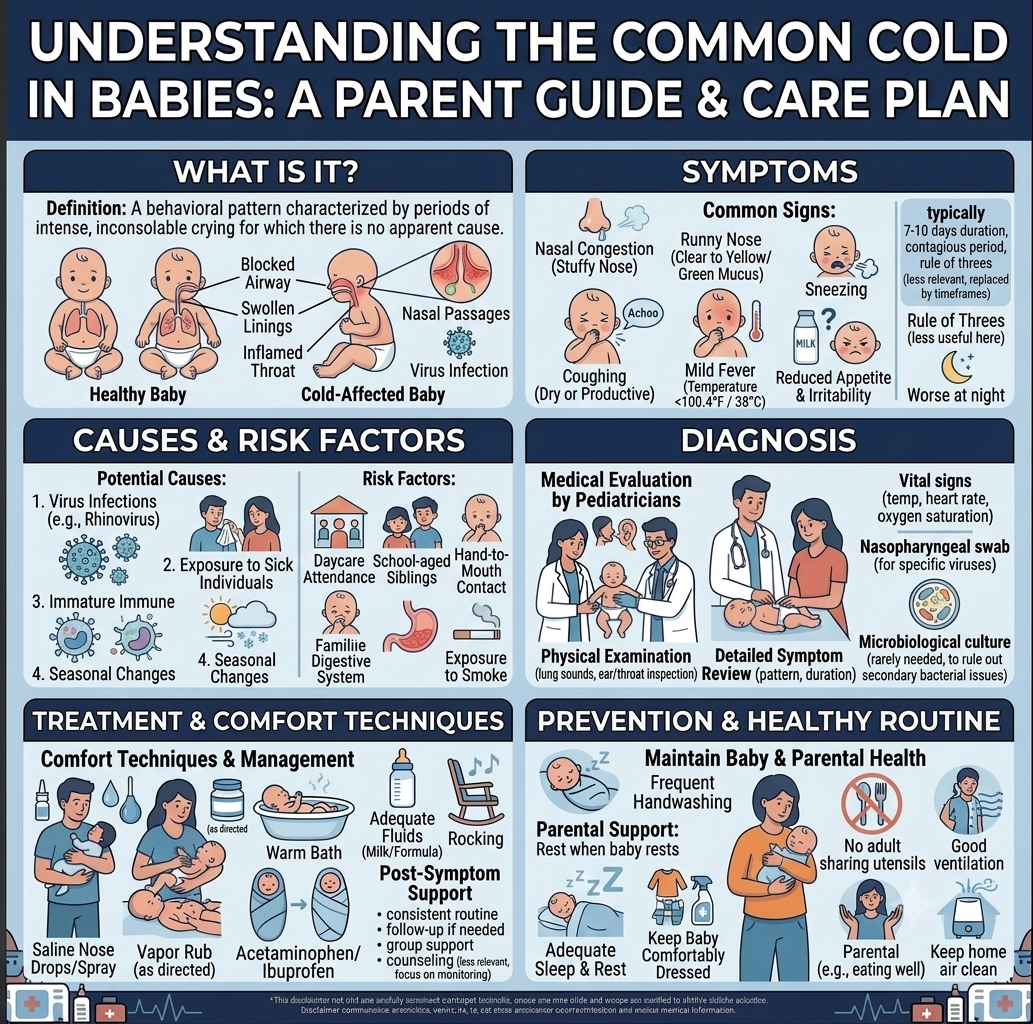
A common cold in a baby is a mild viral infection affecting the nose and throat. It typically causes a stuffy and runny nose, along with other symptoms. All babies are likely to experience colds frequently because their immune systems are still developing and they are often exposed to germs from older children or in childcare settings. Babies and young children commonly have 6 to 8 colds per year, sometimes more. Treatment focuses on relieving symptoms, which includes ensuring they get enough fluids, keeping the air moist, and helping clear their nasal passages. For very young infants, especially those under 3 months old, it is crucial to seek medical attention at the first sign of a cold to rule out more serious conditions like croup or pneumonia. Most uncomplicated colds resolve within 10 to 14 days, but persistent or worsening symptoms warrant a doctor's visit.
Understanding the Condition
Common Cold in Babies: Understanding and Care
Understanding the Condition
A common cold in a baby is a mild viral infection affecting the nose and throat. It typically causes a stuffy and runny nose, along with other symptoms. All babies are likely to experience colds frequently because their immune systems are still developing and they are often exposed to germs from older children or in childcare settings. Babies and young children commonly have 6 to 8 colds per year, sometimes more. Treatment focuses on relieving symptoms, which includes ensuring they get enough fluids, keeping the air moist, and helping clear their nasal passages. For very young infants, especially those under 3 months old, it is crucial to seek medical attention at the first sign of a cold to rule out more serious conditions like croup or pneumonia. Most uncomplicated colds resolve within 10 to 14 days, but persistent or worsening symptoms warrant a doctor's visit.
Common Symptoms
First Symptoms: The initial signs of a common cold in a baby often include a runny nose, which may start with clear discharge and gradually thicken or change color to grey, yellow, or green. Nasal congestion, or a stuffy nose, is also very common.
Other Symptoms: Additional symptoms that may develop include a fever, sneezing, coughing, reduced appetite, and increased irritability. Babies might also have difficulty sleeping and struggle with nursing or taking a bottle due to nasal congestion.
Consultation Guide
Which Specialist to Meet
You should consult with a pediatrician or a family doctor. For specific concerns about respiratory complications, your primary doctor may refer you to a pediatric pulmonologist or infectious disease specialist.
Preparations Before Your Visit
Before your visit, make a list of your baby's symptoms, noting when they started and how they have progressed. Record any fever readings, including the temperature and time. Be prepared to describe your baby's feeding habits, diaper output, and sleep patterns. Mention any recent exposure to sick individuals. It's also helpful to write down any questions you have for the doctor.
Book a doctor visit near me
In some cases, especially for very young infants or when symptoms are severe or suggest a specific illness like Respiratory Syncytial Virus (RSV) or influenza, a nasal swab may be collected. This sample helps identify the exact virus causing the illness, which can influence treatment or monitoring strategies.
Medications (Symptom Relief)
Monitor for Worsening Symptoms: Always be vigilant for signs of worsening symptoms, such as increased difficulty breathing, a high or persistent fever, decreased wet diapers, significant changes in feeding, or unusual lethargy. Seek medical attention promptly if these occur.
Diagnostic Procedures
A physical examination is the primary way doctors diagnose a common cold. The doctor will carefully examine your baby's nose, throat, ears, and chest. They will listen to your baby's breathing and assess their overall hydration, alertness, and check for any signs of a more serious infection.
What to Expect
The doctor will gently use a light to look into your baby's throat and a special instrument (otoscope) to check their ears. They will use a stethoscope to listen to your baby's heart and lungs. Your baby may cry briefly during parts of this examination, but it is generally quick and not painful. The doctor will also observe your baby's general activity level and breathing effort.
Nasal Swab (if specific viral infection suspected)
What to Expect
A healthcare professional will gently insert a small, soft swab into one of your baby's nostrils and rotate it briefly to collect a sample of mucus. Your baby might experience a moment of discomfort, such as sneezing or pulling away, but the procedure is very quick.
Chest X-ray (if pneumonia or other lung complication suspected)
If your doctor suspects a more serious lung infection like pneumonia, a chest X-ray may be ordered. This imaging test uses a small amount of radiation to create pictures of your baby's lungs, heart, and chest bones, helping to identify any inflammation, fluid, or infection.
What to Expect
Your baby will be placed on a table, and a technologist will position them carefully. You may be asked to wear a protective lead apron and help hold your baby still for a very brief moment while the X-ray image is taken. The procedure is painless and very fast, usually lasting only a few seconds.
Treatment Options
Nasal Suction: Use a rubber bulb syringe or a specialized nasal aspirator to gently clear mucus from your baby's nostrils, especially before feedings and sleep. (Duration: As needed, typically several times a day.)
Saline Nose Drops: Apply a few drops of saline solution into each nostril to help thin the mucus, making it easier to suction out. (Duration: As needed, particularly before nasal suctioning.)
Cool-Mist Humidifier: Place a cool-mist humidifier in your baby's room to add moisture to the air, which can help ease congestion and soothe irritated airways. (Duration: While the baby is sleeping or spending time in the room.)
Adequate Fluids: Ensure your baby stays well-hydrated. Offer frequent breastfeeds or bottles of formula. For older babies (over 6 months), small amounts of water or diluted juice may be offered as advised by your doctor. (Duration: Throughout the duration of the illness.)
Comfort Measures: Provide plenty of cuddles, gentle patting on the back, and a calm, comforting environment to help your baby rest. (Duration: Throughout the duration of the illness.)
Fever Reducer/Pain Reliever: If your baby has a fever and is uncomfortable, your doctor may recommend an age-appropriate fever-reducing medication. Always consult your healthcare professional for proper dosage and to confirm the medication is suitable for your baby's age. (Duration: As directed by your doctor, typically every 4-6 hours for acetaminophen or every 6-8 hours for ibuprofen (if appropriate for age), for the duration of fever or discomfort.)
Caution with OTC Cold Medicines: Over-the-counter cough and cold medicines are NOT recommended for babies and young children due to potential serious side effects. Always consult your doctor before giving any medication to your baby. (Duration: Not applicable as these are not recommended.)
Elevating Head During Sleep: Slightly elevating the head of your baby's crib (by placing blocks under the mattress legs, not by using pillows in the crib) can help ease breathing by allowing mucus to drain more easily. Always ensure a safe sleep environment. (Duration: During sleep, as needed, while maintaining safe sleep practices.)
Follow Medical Advice: Adhere strictly to all instructions and recommendations provided by your healthcare professional regarding medication, home care, and follow-up appointments. Do not hesitate to contact your doctor with any concerns or questions.
Prevention & Long-Term Wellbeing
Prevention Strategies
Frequent Handwashing: Encourage everyone who interacts with your baby to wash their hands frequently and thoroughly with soap and water for at least 20 seconds, especially after coughing, sneezing, or using the bathroom, and before handling the baby or preparing food.
Avoid Sick Individuals: Limit your baby's exposure to people who are sick, including family members. If a caregiver is ill, they should wear a mask and practice strict hand hygiene.
Clean and Disinfect Surfaces: Regularly clean and disinfect frequently touched surfaces and toys in your home to reduce the spread of germs.
Breastfeeding: If possible, breastfeed your baby. Breast milk provides antibodies and immune factors that help protect babies from infections, including colds.
Keep Vaccinations Up-to-Date: Ensure your baby receives all recommended vaccinations. While there isn't a vaccine for the common cold, being fully vaccinated against other illnesses helps maintain overall health and can prevent more serious complications.
Long-Term Monitoring
Tags & Topics
Notice an error or need an update?
Help us keep medical information accurate. Report incorrect info or suggest an edit.


