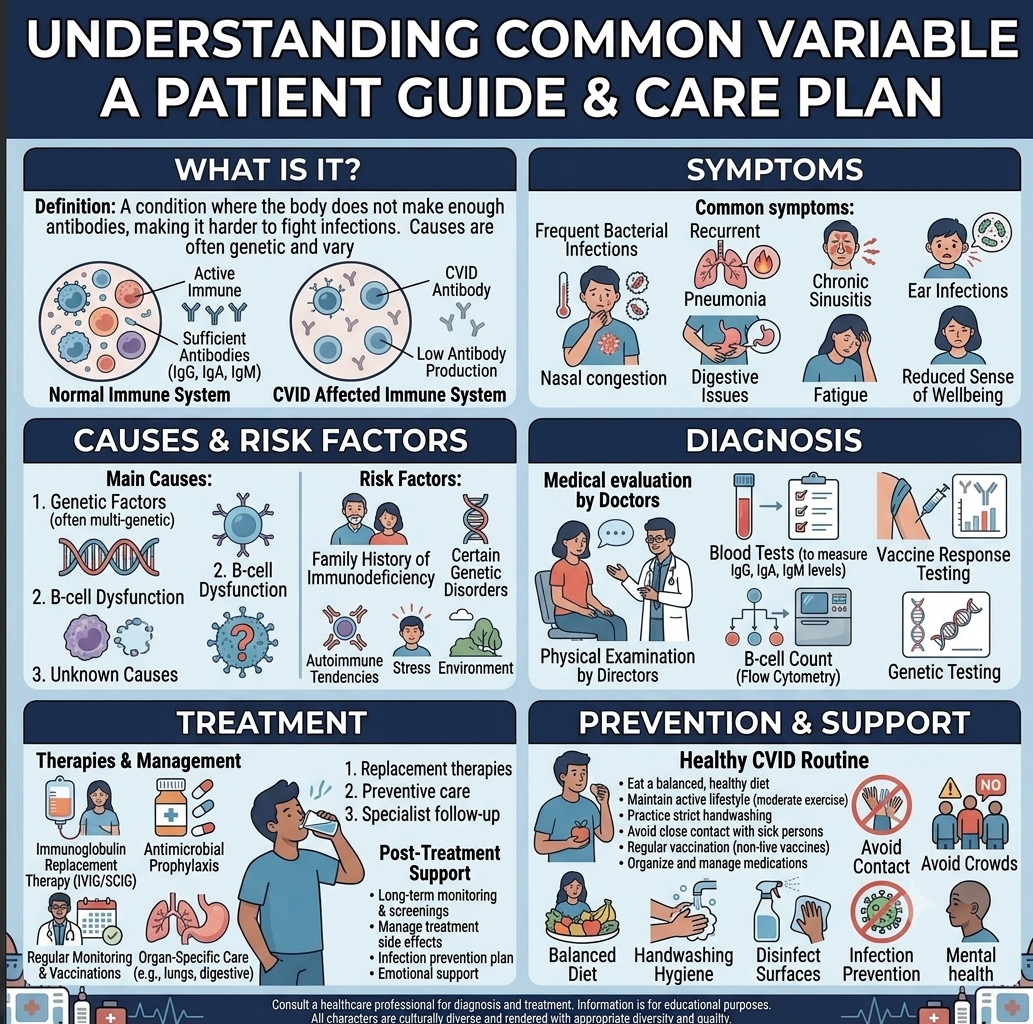
Common Variable Immunodeficiency (CVID) is a lifelong immune system disorder where the body fails to produce enough essential infection-fighting proteins called antibodies. These antibodies are vital for protecting against bacteria and viruses. Consequently, individuals with CVID often suffer from frequent, severe infections, primarily in the ears, sinuses, and lungs. CVID also elevates the risk for digestive issues, autoimmune diseases (where the immune system attacks its own tissues), blood disorders, and certain cancers. While CVID can sometimes be inherited, its precise cause is often unknown.
Understanding the Condition
Common Variable Immunodeficiency (CVID): Understanding and Managing a Complex Immune Condition
Understanding the Condition
Common Symptoms
Frequent and Recurrent Infections: People with CVID commonly experience repeated infections that are often more severe or prolonged than usual. These typically include lung infections (like pneumonia), sinus infections, ear infections, and gastrointestinal issues. Symptoms vary greatly; some appear in childhood/adolescence, others not until adulthood.
Associated Health Problems: Beyond infections, CVID increases the risk of other conditions. These may include digestive problems (e.g., poor nutrient absorption), autoimmune disorders (immune system attacks healthy tissues), blood disorders (like anemia or low platelets), and an elevated risk for certain cancers.
Consultation Guide
Which Specialist to Meet
Before your visit, prepare all medical records, a detailed symptom list, current medications, and family medical history. Also, write down any questions you have for the doctor.
Book a doctor visit near me
Screening for Complications: Be vigilant for new symptoms and report them to your doctor. Regular screenings for autoimmune disorders, blood disorders, and cancers may be recommended due to elevated risks.
Consultation Guide
Common Variable Immunodeficiency (CVID) is a lifelong immune system disorder where the body fails to produce enough essential infection-fighting proteins called antibodies. These antibodies are vital for protecting against bacteria and viruses. Consequently, individuals with CVID often suffer from frequent, severe infections, primarily in the ears, sinuses, and lungs. CVID also elevates the risk for digestive issues, autoimmune diseases (where the immune system attacks its own tissues), blood disorders, and certain cancers. While CVID can sometimes be inherited, its precise cause is often unknown.
In some cases, especially with family history, genetic testing identifies specific gene changes linked to CVID, though most cases lack an identifiable cause.
Diagnostic Procedures
For CVID diagnosis and management, consult an immunologist, a specialist in immune system disorders. Your primary care doctor can provide an initial referral. An infectious disease specialist may help manage recurrent infections, and a gastroenterologist for digestive issues.
Preparations Before Your Visit
Blood Tests for Immunoglobulin Levels
This crucial test measures blood levels of different antibodies (IgG, IgA, IgM), which are typically low in CVID. It also assesses your immune system's vaccine response.
What to Expect
A quick, routine blood draw from your arm, usually requiring no special preparation.
Vaccine Antibody Response Test
After baseline antibody tests, you might receive common vaccines. Weeks later, another blood test checks your immune system's antibody production. CVID patients often show a poor response.
What to Expect
Standard vaccine injection, followed by a later blood draw to check response.
Lymphocyte Subpopulation Analysis
This specialized blood test counts and identifies specific white blood cells (B and T cells) to characterize immune cell defects, aiding CVID confirmation.
What to Expect
A standard blood sample is taken from your arm; no special preparation is typically needed.
What to Expect
A blood sample or cheek swab is collected for analysis; results may take several weeks.
Imaging Scans (e.g., Chest CT Scan, Sinus CT Scan)
For frequent lung or sinus infections, imaging tests like CT scans assess damage or inflammation. Chest CT identifies lung changes, sinus CT shows chronic inflammation.
What to Expect
You lie on a table that slides into a machine for detailed X-ray images. It's quick, painless, but you might hear whirring and need to hold your breath briefly. A contrast dye may be used.
Treatment Options
Medications
Immunoglobulin Replacement Therapy (IRT): This is the primary treatment, replacing the antibodies your body lacks. It fights infections and reduces their frequency/severity, managing CVID effectively. (Duration: Lifelong. Given intravenously (every 3-4 weeks, taking hours) or subcutaneously (weekly/bi-weekly, taking 1-2 hours).)
Antibiotics, Antivirals, and Antifungals: These treat active infections. Prophylactic (daily low-dose) antibiotics may be prescribed to prevent recurrent bacterial infections, especially in the lungs. (Duration: Active infection treatment lasts days to weeks. Prophylactic use can be long-term, as directed.)
Anti-inflammatory and Immunomodulating Medications: For complications like autoimmune diseases or specific inflammation, medications that reduce inflammation or adjust the immune system may be prescribed. (Duration: Varies from short courses to long-term management for chronic issues.)
Surgical Procedures
Surgery for Complications: While not a direct CVID treatment, surgery may address complications. Examples include sinus surgery for severe chronic infections, or spleen removal for certain CVID-related blood disorders. (Duration: Typically one-time procedures, with recovery lasting weeks to months.)
Regular Medical Follow-ups: Schedule regular appointments with your immunologist and other specialists to monitor CVID, assess for complications, adjust treatments, and conduct screenings. Early detection is vital.
Patient Education and Support: Educate yourself about CVID to better understand your condition and treatment. Connect with support groups or patient advocacy organizations for emotional support and practical advice.
Prevention & Long-Term Wellbeing
Prevention and Protection
Regular Immunoglobulin Replacement: Strictly follow your immunoglobulin replacement therapy schedule. This is crucial for preventing infections and managing CVID, as consistency maintains protective antibody levels.
Infection Control Practices: Practice excellent hand hygiene. Avoid close contact with sick individuals, especially during peak illness seasons. Discuss safe and recommended vaccinations with your doctor; live vaccines are typically avoided.
Healthy Lifestyle: Maintain a balanced, nutrient-rich diet, get adequate sleep, and engage in moderate exercise as tolerated. These habits support overall health. Avoid smoking and excessive alcohol.
Long-Term Monitoring and Management
Tags & Topics
Notice an error or need an update?
Help us keep medical information accurate. Report incorrect info or suggest an edit.


