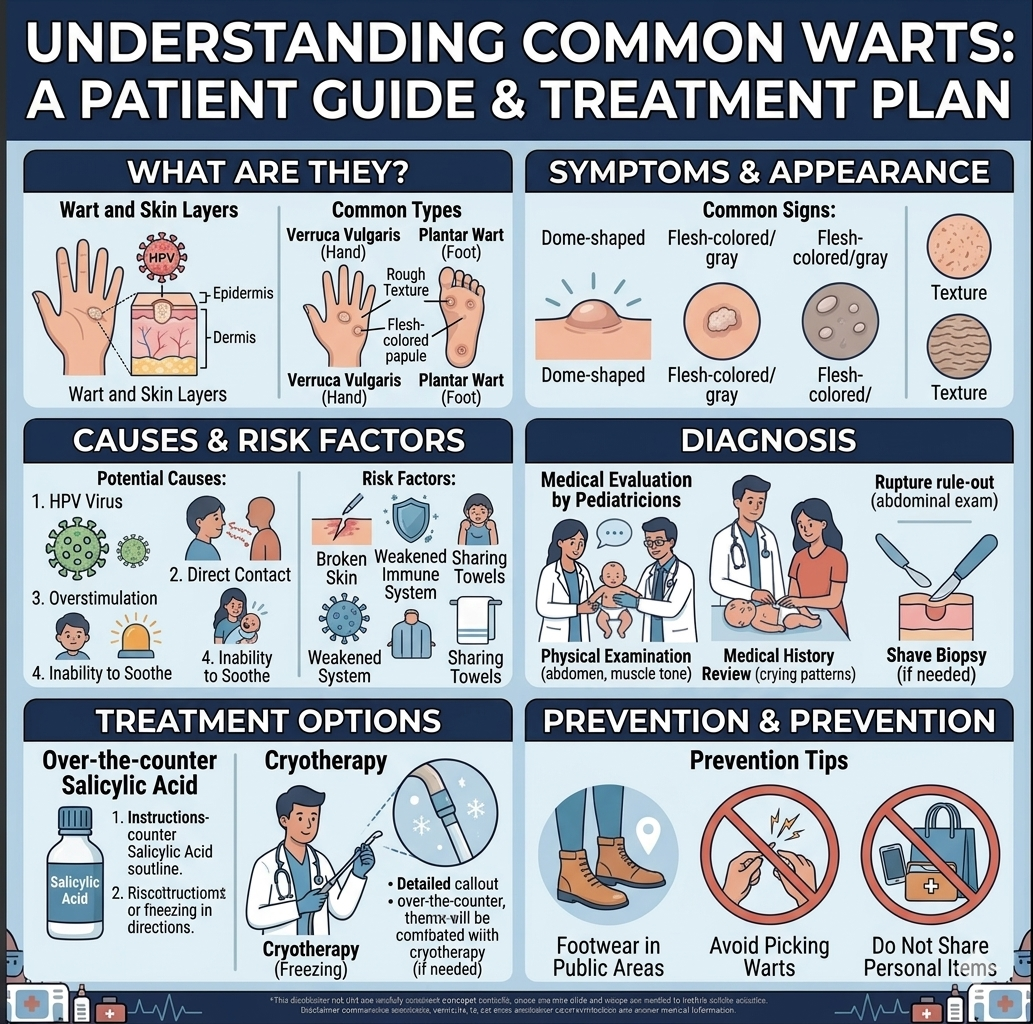
Common warts are small, non-cancerous skin growths that typically appear on the fingers or hands. They feel rough to the touch and often have tiny black dots, which are actually small, clotted blood vessels. These warts are caused by a common virus called human papillomavirus (HPV) and spread through direct skin contact or by touching contaminated surfaces. After exposure, a wart can take anywhere from two to six months to develop. While common warts are generally harmless and may eventually disappear on their own, many individuals seek treatment due to discomfort or cosmetic concerns.
Understanding the Condition
Common Symptoms
Grainy Bumps: Small, firm, and grainy-textured bumps, most frequently found on the fingers or hands.
Rough Texture: Warts have a noticeably rough surface when touched.
Tiny Black Dots: Often described as "seeds," these are small, dark spots within the wart, indicating clotted blood vessels.
Consultation Guide
Which Specialist to Meet
Before your visit, make a list of your symptoms, including when they first appeared, how they've changed, and if they cause pain, bleeding, or itching. Note any home remedies or over-the-counter treatments you've tried. Be prepared to discuss your medical history and any medications you are taking. Also, list any questions you have for the doctor, especially if the growths hurt, bleed, burn, itch, persist, spread, recur, are bothersome, or if you have a weak immune system, many warts, or warts on your face, feet, or genitals.
Book a doctor visit near me
Consultation Guide
Common warts are small, non-cancerous skin growths that typically appear on the fingers or hands. They feel rough to the touch and often have tiny black dots, which are actually small, clotted blood vessels. These warts are caused by a common virus called human papillomavirus (HPV) and spread through direct skin contact or by touching contaminated surfaces. After exposure, a wart can take anywhere from two to six months to develop. While common warts are generally harmless and may eventually disappear on their own, many individuals seek treatment due to discomfort or cosmetic concerns.
Diagnostic Procedures
Start by consulting your primary care doctor or a family physician. They can often diagnose and suggest initial treatments. If the warts are persistent, widespread, or unusual, they may refer you to a dermatologist, a doctor specializing in skin conditions.
Preparations Before Your Visit
A healthcare professional will examine the suspicious growth on your skin. Common warts usually have a distinctive appearance that allows for easy identification.
What to Expect
The doctor will simply look at the growth, possibly using a magnifying tool for a closer view. They might gently scrape the surface of the wart to check for tiny black dots (clotted blood vessels) or pinpoint bleeding, which are characteristic signs of a common wart. This examination is quick and generally painless.
Skin Biopsy (Rarely Needed)
In rare cases, if the growth is unusual, doesn't respond to treatment, or if there's uncertainty about the diagnosis, a small tissue sample might be taken for laboratory analysis. This helps to confirm the diagnosis or rule out other skin conditions.
What to Expect
The doctor will numb the area with a local anesthetic injection. Then, a small piece of the growth will be removed using a scalpel or a specialized punch tool. This sample is then sent to a lab for microscopic examination. You might feel a slight pinch from the numbing injection, but the procedure itself should be painless. A small bandage will be applied, and you might have a tiny stitch that dissolves on its own or needs to be removed later.
Treatment Options
Common Warts: Understanding, Treatment, and Prevention
Understanding the Condition
Salicylic Acid Treatments: Over-the-counter creams, gels, and patches containing salicylic acid work by gently peeling away layers of the wart over time. (Duration: Daily application for several weeks to months.)
Duct Tape Occlusion: While scientific evidence is limited, some people find success by covering the wart with duct tape for several days, then soaking the wart and gently rubbing it with an emery board before reapplying tape. (Duration: Applied for 6 days, then removed for 12 hours, repeated for 1-2 months.)
Medical Treatments (Performed by a healthcare professional)
Cryotherapy (Freezing): A common office procedure where liquid nitrogen is applied to the wart, causing it to freeze and eventually fall off. This may be uncomfortable. (Duration: Usually requires multiple sessions every 2-4 weeks until the wart clears, typically over several months.)
Stronger Peeling Agents: Your doctor may prescribe stronger concentrations of peeling medicines, such as higher-strength salicylic acid or other compounds, to apply at home or during office visits. (Duration: Applied daily or as directed, often for weeks to months.)
Immunotherapy: Involves using medications applied to the wart or injected into it to stimulate your body's immune system to fight the virus. (Duration: Varies depending on the specific medication and individual response, often over several weeks to months.)
Electrocautery (Burning) or Curettage (Scraping): The wart is burned off using an electrical current or scraped away with a small, sharp instrument. Often done under local anesthetic. (Duration: Typically a single procedure, though follow-up might be needed if the wart recurs. Healing takes several weeks.)
Laser Treatment: Uses an intense beam of light to burn and destroy the wart tissue. This option is usually reserved for warts that haven't responded to other treatments. (Duration: May require one or more sessions, with healing taking several weeks after each treatment.)
Minor Surgical Excision: A doctor may cut out the wart if other treatments are unsuccessful or if it's particularly large or bothersome. (Duration: A single procedure with a recovery period of a few weeks; leaves a small scar.)
Watch for Recurrence: Even after treatment, warts can sometimes return. Regularly check treated areas for any new growths or signs of recurrence.
Early Intervention: If warts reappear or new ones develop, seek professional advice promptly to prevent them from spreading or becoming more difficult to treat.
Prevention & Long-Term Wellbeing
Prevention
Avoid Touching Warts: Do not touch, scratch, or pick at warts, whether they are your own or someone else's, as this can spread the virus.
Personal Hygiene Tools: Use separate, dedicated tools (such as emery boards, pumice stones, or nail clippers) for areas with warts and healthy skin/nails. Consider disposable tools for wart care.
Prevent Skin Breaks: Avoid biting your fingernails or picking at hangnails, as these open wounds provide entry points for the virus.
Careful Grooming: Be cautious when brushing, clipping, or shaving areas where warts are present to avoid spreading the virus to surrounding skin.
Limit Shared Items: Avoid sharing personal items like towels, washcloths, or razors. Avoid shared hot tubs, showers, and warm baths if you have warts.
Moisturize Skin: Keep your hands moisturized daily to prevent dry, cracked skin, which can create small breaks where the virus can enter.
Long-Term Monitoring
Tags & Topics
Notice an error or need an update?
Help us keep medical information accurate. Report incorrect info or suggest an edit.


