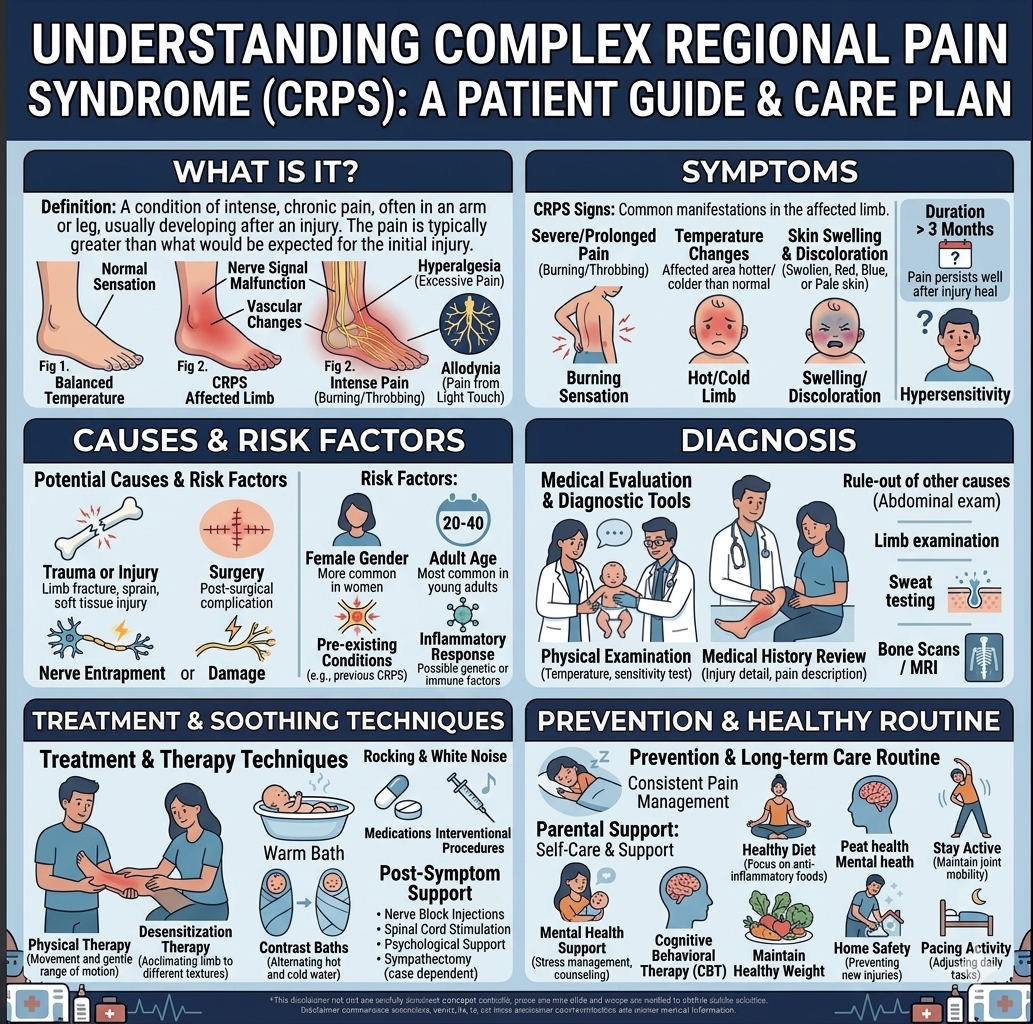
Complex Regional Pain Syndrome (CRPS) is a chronic pain condition that most often affects an arm or a leg. It typically develops after an injury, surgery, stroke, or heart attack, with the resulting pain being much more severe than would be expected for the initial event. CRPS is uncommon, and its exact cause is not fully understood, though it's believed to involve dysfunction in the nervous system. Early diagnosis and treatment are crucial for the best chance of improvement and even remission, as symptoms can progressively worsen and become irreversible if not managed promptly.
Understanding the Condition
Understanding Complex Regional Pain Syndrome (CRPS)
Understanding the Condition
Complex Regional Pain Syndrome (CRPS) is a chronic pain condition that most often affects an arm or a leg. It typically develops after an injury, surgery, stroke, or heart attack, with the resulting pain being much more severe than would be expected for the initial event. CRPS is uncommon, and its exact cause is not fully understood, though it's believed to involve dysfunction in the nervous system. Early diagnosis and treatment are crucial for the best chance of improvement and even remission, as symptoms can progressively worsen and become irreversible if not managed promptly.
Common Symptoms
Severe, Constant Pain: A persistent, intense pain, often described as burning, throbbing, or aching, that is disproportionate to the severity of the original injury. This pain usually starts in one limb but can sometimes spread.
Swelling and Redness: The affected limb may appear swollen, particularly in the initial stages, and can exhibit noticeable skin color changes, such as a reddish or mottled appearance.
Temperature Changes: The skin on the affected limb may feel significantly warmer or colder to the touch compared to the unaffected limb. Over time, it might become consistently cold and pale.
If you experience constant, severe pain affecting a limb that makes touching or moving it intolerable, begin by consulting your primary care provider. They can assess your symptoms and refer you to specialists such as a pain management doctor, neurologist, or physical and occupational therapists for further evaluation and a tailored treatment plan.
Preparations Before Your Visit
Before your appointment, prepare a detailed list of your symptoms, including when they started, how they feel, and what seems to make them better or worse. Document your complete medical history, noting any recent injuries, surgeries, or other health conditions. Also, list all medications you are currently taking and any questions you have for your doctor to ensure all your concerns are addressed.
Book a doctor visit near me
Pain-Relieving Medications: Various oral or topical medications may be prescribed to manage severe pain, reduce inflammation, or address nerve-related symptoms specific to CRPS, helping to improve comfort and function. (Duration: Varies based on individual response, symptom severity, and treatment goals, ranging from short-term use during flare-ups to ongoing management.)
Self-Care Practices: Engaging in gentle, consistent movement of the affected limb, applying heat or cold packs as tolerated, practicing stress-reduction techniques (such as deep breathing or mindfulness), and protecting the limb from injury or extreme temperatures. (Duration: These practices are integral and should be continued daily as ongoing strategies for symptom management and maintaining functional independence.)
Seek Prompt Medical Evaluation: Do not delay in seeking medical attention for any constant, severe, or unexplained pain in a limb, especially after an injury, surgery, or other precipitating event. Early diagnosis and intervention are critical for the best possible outcomes and preventing the progression of symptoms.
Adhere to Treatment Plan: Work closely with your healthcare team and consistently follow all prescribed medications, therapies (including physical and occupational therapy), and procedures to effectively manage symptoms and maintain functional abilities over time.
Stress Reduction Techniques: Integrate stress-reducing practices such as meditation, deep breathing exercises, yoga, or engaging in hobbies into your daily routine. Managing stress is vital for coping with chronic pain and improving emotional well-being.
Maintain Gentle Activity: Under the guidance of your physical therapist, continue with appropriate gentle exercises and movements. This helps prevent stiffness, maintain strength, improve circulation in the affected limb, and promote overall physical health.
Build a Support System: Engage with support groups, family, and friends, or seek counseling to address the psychological and emotional impact of living with chronic pain and to develop effective coping strategies.
Consultation Guide
Hypersensitivity: Extreme sensitivity to touch (known as allodynia) or cold. Even light contact, changes in temperature, or gentle pressure can cause intense pain or discomfort.
Skin and Nail Changes: The skin on the affected limb can become thin, shiny, or overly sensitive. Changes in hair growth patterns and nail texture (e.g., brittle, ridged, or unusually fast/slow growth) may also occur.
Movement Difficulties: Muscle spasms, tremors, weakness, stiffness, and involuntary tightening of muscles (dystonia) in the affected limb, leading to reduced range of motion and difficulty using the limb.
Consultation Guide
Which Specialist to Meet
Diagnostic Procedures
An X-ray is a quick and painless imaging test that uses a small amount of radiation to create pictures of the structures inside your body, especially bones. It can help identify bone changes, such as bone loss, or rule out other conditions that might be causing your pain.
What to Expect
You will be asked to lie on a table or stand, and a technician will position the part of your body being examined. You'll need to hold still for a few seconds while the X-ray machine captures the images. The procedure is generally very brief, taking only a few minutes to complete.
A bone scan is a nuclear imaging test used to diagnose and track various bone diseases. It involves injecting a small amount of a radioactive substance (tracer) into a vein, which travels to your bones. Areas with increased bone metabolism, often indicating infection, fracture, arthritis, or certain cancers, absorb more tracer and show up as 'hot spots' on the images.
What to Expect
First, a small dose of a radioactive tracer is injected into a vein, usually in your arm. You will then typically wait for 2-4 hours to allow the tracer to circulate and be absorbed by your bones. After this waiting period, you will lie on a padded table while a special camera moves slowly over your body to detect the tracer and create images. The scan itself usually takes 30-60 minutes, during which you will need to remain still.
Treatment Options
Medications
Physical and Occupational Therapy: A fundamental part of CRPS treatment, these therapies involve tailored exercises, stretches, and activities designed to restore range of motion, improve strength, reduce swelling, and decrease hypersensitivity in the affected limb. Desensitization techniques are often employed. (Duration: Typically involves consistent, regular sessions over several months, coupled with ongoing home exercises and practices for sustained benefit and recovery.)
Biofeedback: A mind-body technique where electronic sensors provide real-time information about involuntary bodily functions, such as heart rate, breathing patterns, and muscle tension. This feedback enables individuals to learn self-regulation, helping to manage pain, reduce stress, and improve coping mechanisms. (Duration: Usually involves a series of training sessions over several weeks or months, followed by continued self-practice to maintain and enhance the learned control.)
Psychological Support: Counseling and cognitive behavioral therapy offer strategies to help individuals cope with the emotional distress, anxiety, and depression often associated with living with chronic pain, providing tools for pain management and improving overall quality of life. (Duration: Ongoing as needed, tailored to address individual psychological challenges and promote mental well-being.)
Pain Management Procedures
Nerve Blocks: Injections of anesthetic medication (and sometimes anti-inflammatory agents) around specific nerves or nerve clusters can temporarily block pain signals from reaching the brain, offering significant relief and often facilitating physical therapy. (Duration: Relief from nerve blocks is temporary, typically lasting from hours to weeks. Procedures may be repeated or administered in a series as part of a comprehensive pain management plan.)
Optimal Injury Rehabilitation: Diligently follow all recommended physical therapy and rehabilitation protocols after injuries or surgeries. Proper and timely rehabilitation can significantly minimize complications and reduce the risk of CRPS development.
Long-Term Management and Support
Prevention & Long-Term Wellbeing
Prevention and Early Intervention
Tags & Topics
Notice an error or need an update?
Help us keep medical information accurate. Report incorrect info or suggest an edit.


