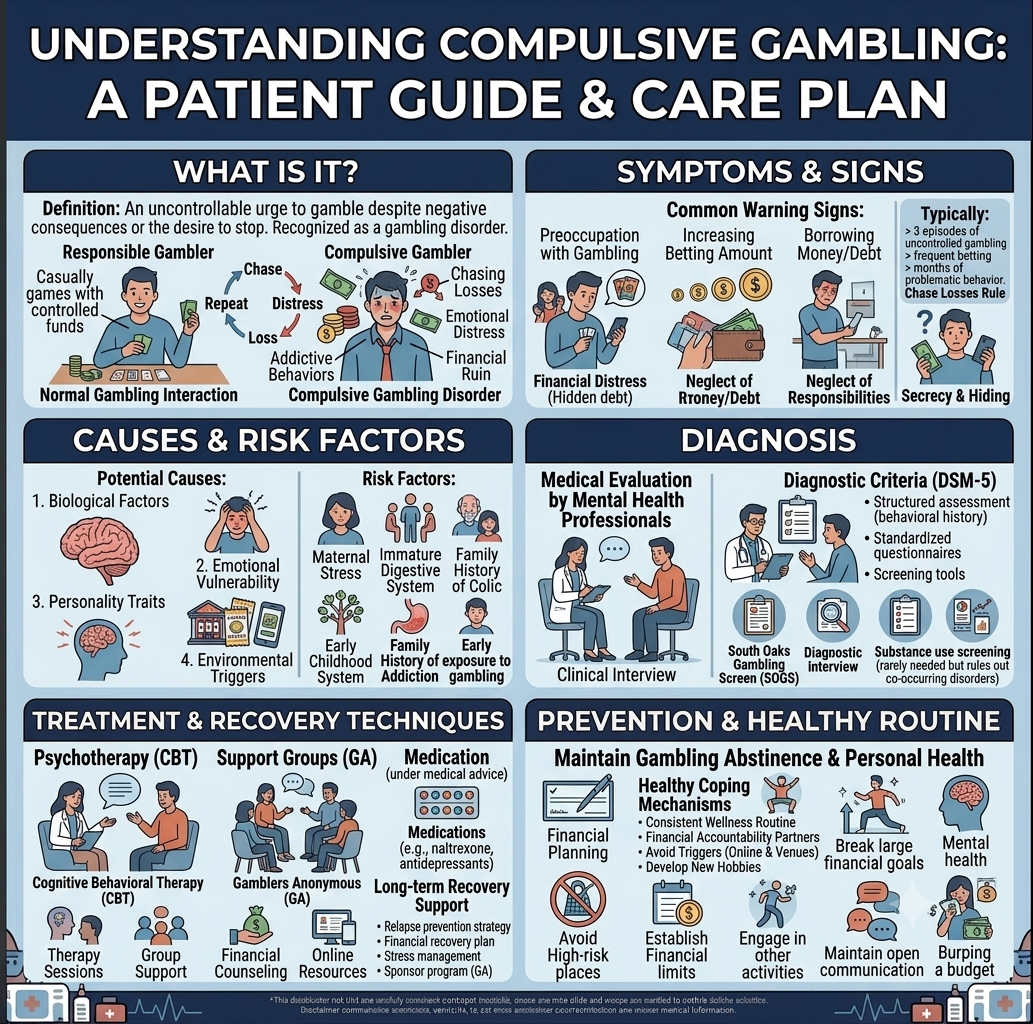
Compulsive gambling, also known as gambling disorder, is a serious condition characterized by an uncontrollable urge to gamble continuously, despite the severe negative impacts it has on a person's life. Gambling involves risking something valuable in the hope of winning something even more valuable. This behavior can stimulate the brain's reward system much like substances, potentially leading to addiction. Individuals struggling with compulsive gambling often chase losses, deplete savings, accumulate debt, and may resort to dishonest acts to fund their addiction. While challenging, professional treatment offers hope and recovery for many.
Understanding the Condition
Common Symptoms
Preoccupation with Gambling: Constantly thinking about past gambling experiences, planning future gambling, or finding ways to get money to gamble.
Needing to Bet More: Feeling the need to gamble with increasing amounts of money to achieve the same excitement or 'high'.
Repeated Unsuccessful Attempts to Stop: Making efforts to cut back or stop gambling, but being unable to do so.
Restlessness or Irritability When Not Gambling: Feeling agitated, anxious, or irritable when trying to reduce or stop gambling.
Gambling to Escape Problems or Feelings: Using gambling as a way to escape from stress, guilt, anxiety, or depression.
Lying About Gambling Behavior: Hiding the extent of gambling from family members, friends, or therapists.
Medication Support: While there isn't a specific medication solely for compulsive gambling, certain medicines may be prescribed to address underlying or co-occurring mental health conditions often linked to it, such as depression, anxiety, or obsessive-compulsive disorder. These can help reduce urges or manage symptoms that contribute to gambling behavior. (Duration: Varies depending on the medication and individual response; may be short-term or ongoing under medical supervision.)
Consultation Guide
Jeopardizing Relationships or Career: Losing or risking significant relationships, jobs, or educational opportunities because of gambling.
Reliance on Others for Money: Asking for money from family or friends to relieve desperate financial situations caused by gambling.
Chasing Losses: Feeling compelled to keep gambling to try and win back money that has been lost.
Consultation Guide
Which Specialist to Meet
Psychotherapy (Talk Therapy): Psychotherapy, often called talk therapy, involves talking with a mental health provider to explore your specific issues and how your thoughts, emotions, and behaviors influence your moods and actions. It helps you understand the root causes of your compulsive gambling and develop healthier ways to cope with life's challenges and stress. (Duration: Can range from short-term (a few sessions) to long-term (several months or more), depending on individual needs and the complexity of the issues.)
Recognize Risk Factors and Seek Help Early: Be aware of factors that increase the risk for compulsive gambling, such as mental health conditions, certain personality traits, or family history. If you notice signs of a problem or feel an urge to gamble becoming difficult to control, seek professional help immediately before it escalates.
Listen to Loved Ones' Concerns: If family or friends express worry about your gambling, take their concerns seriously. Denial is a common barrier to recognizing a problem, and their perspective can be a vital indicator that help is needed.
Attend Regular Therapy Sessions: Consistent engagement in therapy, such as CBT or other forms of psychotherapy, is crucial for developing and reinforcing coping strategies, addressing underlying issues, and preventing relapse.
Diagnostic Procedures
For compulsive gambling, you should consult with a mental health professional specializing in addiction. This could include a psychiatrist, psychologist, licensed clinical social worker, or an addiction counselor. These specialists are trained to diagnose and treat addictive behaviors.
Preparations Before Your Visit
Before your visit, it's helpful to gather some information. Make a list of your gambling habits, including how often you gamble, the types of gambling you engage in, and how much money you typically spend. Note down any negative consequences your gambling has had on your finances, relationships, work, or health. Consider if family members, friends, or colleagues have expressed concerns about your gambling, as denial is common with addictive behaviors. Being open and honest with your provider is crucial for an accurate diagnosis and effective treatment plan.
Book a doctor visit near me
Clinical Evaluation and Assessment
Diagnosis of compulsive gambling is primarily made through a comprehensive clinical evaluation conducted by a mental health professional. This is not a physical test, but rather an in-depth discussion and assessment of your behaviors, thoughts, and personal history related to gambling. The professional will use specific diagnostic criteria to determine if your gambling patterns align with a gambling disorder.
What to Expect
During the evaluation, you will have a confidential discussion with the mental health professional. They will ask detailed questions about your gambling habits, including when it started, how frequently you gamble, the amount of money involved, and any attempts you've made to stop or cut back. You'll also discuss the impact of gambling on various aspects of your life, such as your finances, relationships, job, and emotional well-being. The professional may also inquire about any co-occurring mental health conditions or substance use. Be prepared to answer honestly, as this information is vital for an accurate diagnosis and personalized treatment plan. The process is designed to be supportive and non-judgmental.
Treatment Options
Compulsive Gambling (Gambling Disorder): Understanding and Treatment
Understanding the Condition
Compulsive gambling, also known as gambling disorder, is a serious condition characterized by an uncontrollable urge to gamble continuously, despite the severe negative impacts it has on a person's life. Gambling involves risking something valuable in the hope of winning something even more valuable. This behavior can stimulate the brain's reward system much like substances, potentially leading to addiction. Individuals struggling with compulsive gambling often chase losses, deplete savings, accumulate debt, and may resort to dishonest acts to fund their addiction. While challenging, professional treatment offers hope and recovery for many.
Therapies
Cognitive Behavioral Therapy (CBT): CBT is a goal-oriented therapy that helps you identify unhealthy thinking patterns and behaviors related to gambling. You learn practical coping skills to manage urges and change your reactions to gambling triggers. It focuses on how your thoughts, feelings, and actions are interconnected. (Duration: Typically involves fewer sessions than other therapies, often structured over several weeks to a few months, but can be ongoing as needed.)
Medications
Prevention & Long-Term Wellbeing
Support Groups: Peer support groups provide a safe and understanding environment where individuals with gambling disorder can share experiences, receive encouragement, and learn from others facing similar challenges. These groups often follow a 12-step program model. (Duration: Often long-term or ongoing, as sustained support is key for recovery.)
Prevention and Long-Term Wellbeing
Participate in Support Groups: Ongoing involvement in support groups provides a network of understanding individuals, offering shared experiences, accountability, and continuous encouragement in your recovery journey.
Develop Healthy Coping Mechanisms: Learn and practice alternative ways to manage stress, boredom, loneliness, or difficult emotions that might otherwise trigger gambling urges. This could include exercise, hobbies, mindfulness, or connecting with supportive individuals.
Manage Finances Carefully: Work with a trusted person or financial counselor to manage your money, especially in the early stages of recovery. This can involve restricting access to funds that could be used for gambling and establishing a repayment plan for debts.
Address Co-occurring Conditions: If you have other mental health issues like depression, anxiety, or substance use disorder, ensure these are also being treated. Addressing these conditions simultaneously is vital for overall recovery and reducing the risk of relapse into gambling.
Tags & Topics
Notice an error or need an update?
Help us keep medical information accurate. Report incorrect info or suggest an edit.


