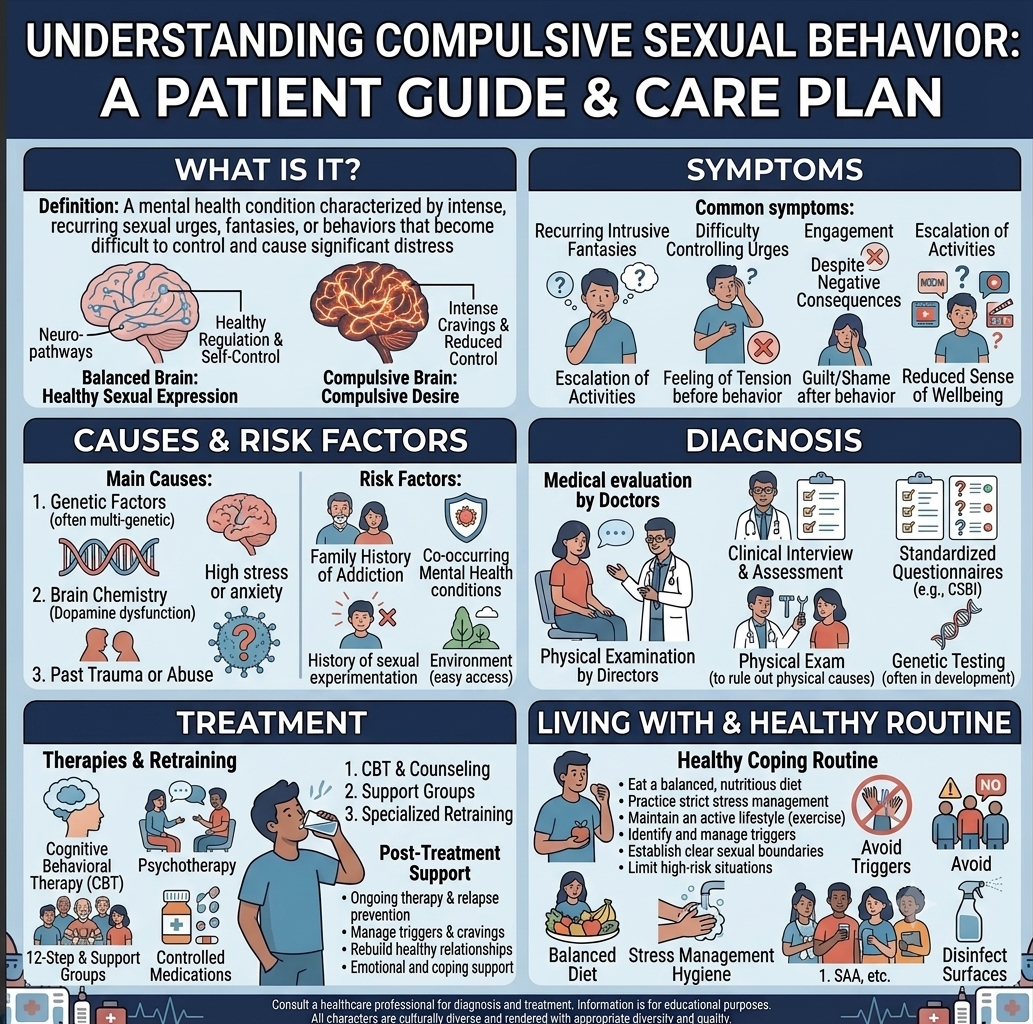
Compulsive sexual behavior, sometimes known as hypersexuality or sexual addiction, involves an intense focus on sexual thoughts, urges, or actions that feel impossible to control. This can lead to significant distress and create difficulties in various aspects of your life, including your health, work, and relationships. While it can involve common sexual activities like masturbation, online interactions, or using pornography, it becomes compulsive when these behaviors dominate your life, are hard to stop, cause problems, or harm yourself or others. Left untreated, this condition can damage your self-esteem, relationships, career, and health. However, with professional help and self-support, it is manageable.
Understanding the Condition
Compulsive Sexual Behavior
Understanding the Condition
Common Symptoms
Uncontrollable Urges: Experiencing repeated and intense sexual thoughts, urges, and behaviors that consume much of your time and feel beyond your control.
Cycle of Tension and Regret: Feeling strong urges to engage in sexual behaviors, experiencing a temporary relief afterward, but then being overcome by guilt or deep regret.
Failed Attempts to Stop: Repeatedly trying, without success, to lessen or stop your sexual thoughts, urges, or behaviors.
Escapism: Using sexual behavior as a way to escape from difficult feelings or problems like loneliness, sadness, worry, or stress.
Harmful Consequences: Continuing sexual activities despite serious negative outcomes. These can include risking sexually transmitted infections, damaging important relationships, work difficulties, financial troubles, or legal issues.
Relationship Challenges: Struggling to form and maintain healthy, stable relationships.
Consultation Guide
Which Specialist to Meet
Consultation Guide
Compulsive sexual behavior, sometimes known as hypersexuality or sexual addiction, involves an intense focus on sexual thoughts, urges, or actions that feel impossible to control. This can lead to significant distress and create difficulties in various aspects of your life, including your health, work, and relationships. While it can involve common sexual activities like masturbation, online interactions, or using pornography, it becomes compulsive when these behaviors dominate your life, are hard to stop, cause problems, or harm yourself or others. Left untreated, this condition can damage your self-esteem, relationships, career, and health. However, with professional help and self-support, it is manageable.
Psychotherapy (Talk Therapy): This involves talking with a mental health professional to explore the root causes of your compulsive sexual behavior, understand how your thoughts and feelings influence your actions, and develop healthier coping strategies. It can also address underlying issues like trauma or relationship problems. (Duration: Varies widely, from several months to ongoing therapy, depending on individual needs and goals.)
Diagnostic Procedures
It's important to seek help from mental health professionals who specialize in behavioral health or addiction. This may include a psychiatrist, psychologist, licensed therapist, or counselor experienced in treating compulsive sexual behavior. They can provide an accurate diagnosis and guide you toward appropriate treatment.
Preparations Before Your Visit
Before your visit, it can be helpful to reflect on your experiences. Consider when your sexual urges or behaviors feel most out of control, how they affect your daily life, relationships, work, and finances, and any efforts you've made to stop or reduce them. Being honest about your thoughts and behaviors is crucial for an effective evaluation.
Book a doctor visit near me
Clinical Evaluation and Psychological Assessment
Diagnosis typically involves a thorough discussion with a mental health professional. They will ask detailed questions about your sexual thoughts, urges, and behaviors, their intensity, how long they've been present, and their impact on your life, relationships, and overall well-being. This process helps to understand the full scope of the problem and rule out other potential conditions.
What to Expect
Treatment Options
During the evaluation, you will meet with a mental health professional in a private, confidential setting. They will guide you through a series of questions about your personal history, emotional state, and specific patterns of sexual behavior. You might discuss your feelings, any distress you experience, attempts to control the behavior, and any negative consequences. This is a safe space to share openly without judgment, allowing the professional to understand your situation comprehensively and develop a suitable treatment plan.
Therapies
Cognitive Behavioral Therapy (CBT): CBT helps you identify and change unhealthy thought patterns and behaviors that fuel compulsive sexual urges. It teaches coping skills to manage triggers and develop healthier responses. (Duration: Typically 12-20 sessions, often lasting several months, with potential for ongoing support.)
Medications
Medication Management: While there isn't a specific medication solely for compulsive sexual behavior, certain medications may be prescribed to help manage co-occurring conditions like depression, anxiety, or mood disorders, which can contribute to the behavior. These medications can help stabilize mood and reduce urges indirectly. (Duration: Ongoing, as prescribed by your doctor, with regular reviews.)
Self-Help and Support
Prevention & Long-Term Wellbeing
Support Groups: Participating in support groups offers a safe space to share experiences, gain insights from others facing similar challenges, and build a supportive community, which can be crucial for recovery. Examples include groups based on 12-step programs. (Duration: Ongoing, as needed.)
Lifestyle Adjustments: Engaging in stress-reducing activities, maintaining a healthy diet, ensuring adequate sleep, and regular exercise can improve overall well-being and help manage urges. (Duration: Ongoing commitment.)
Prevention and Long-Term Management
Early Intervention: Seeking professional help as soon as you notice problems with sexual behavior can prevent it from worsening over time and reduce the impact on your life and relationships.
Address Mental Health Conditions: Promptly treating co-existing mental health issues like depression, anxiety, or other addictions can significantly improve the management of compulsive sexual behavior.
Manage Substance Use: Getting help for alcohol or drug use problems is crucial, as these substances can lower inhibitions and lead to unhealthy sexual behaviors.
Avoid High-Risk Situations: Consciously avoiding environments or situations that trigger compulsive urges or risky sexual activities can help you maintain control and protect your health and others.
Develop Healthy Coping Mechanisms: Learn and practice healthy ways to manage stress, loneliness, or anxiety, such as hobbies, exercise, mindfulness, or connecting with supportive people, instead of relying on sexual behavior as an escape.
Build and Maintain Healthy Relationships: Working on communication skills and fostering open, honest relationships can provide emotional support and reduce feelings of isolation that may fuel compulsive behaviors.
Tags & Topics
Notice an error or need an update?
Help us keep medical information accurate. Report incorrect info or suggest an edit.


