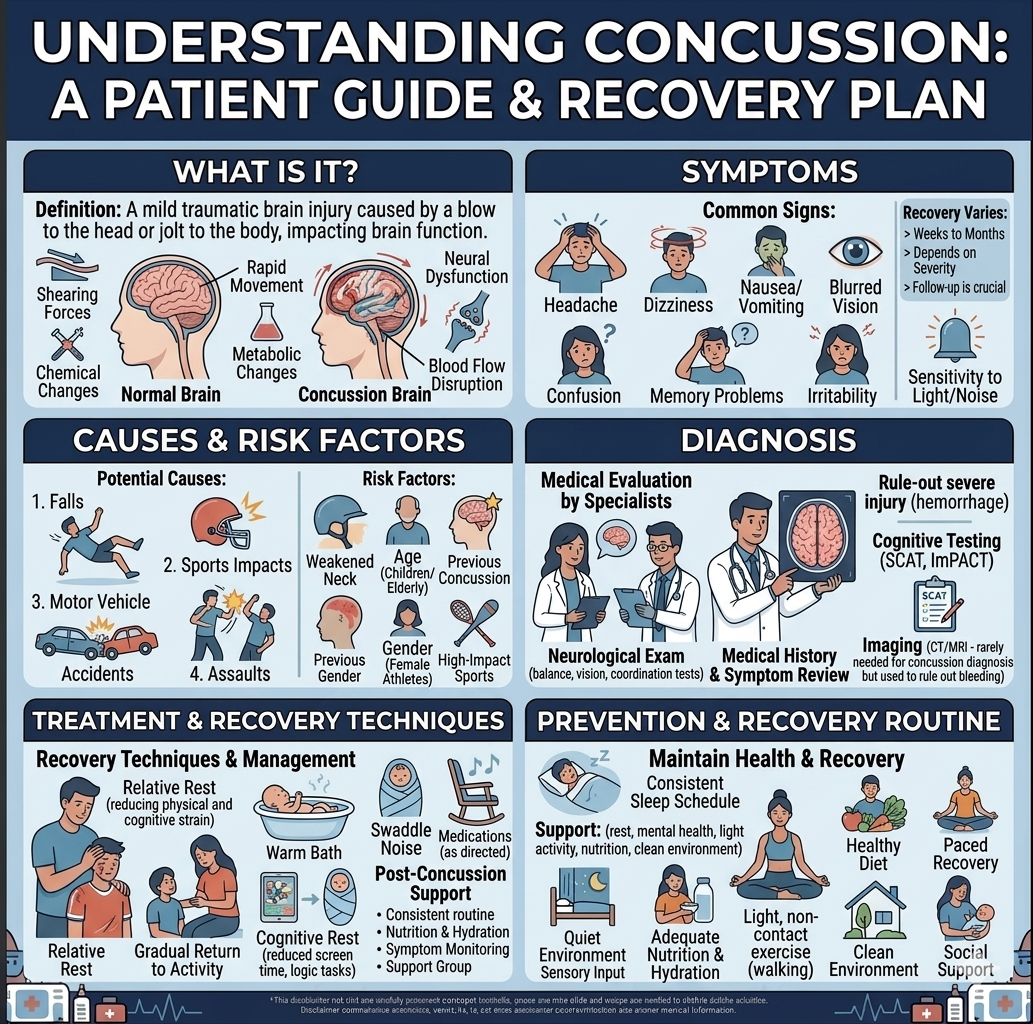
A concussion is a type of mild traumatic brain injury that temporarily affects how your brain works. It's often caused by a bump, blow, or jolt to the head, or a hit to the body that causes the head to move quickly. This forceful movement can make the brain slide against the inside of the skull, causing temporary injury. While often short-term, symptoms can include headaches, confusion, and problems with memory, balance, mood, and sleep. Not all head impacts result in a concussion, and losing consciousness is rare. Falls, contact sports, and car accidents are common causes. Most people recover fully, but it's important to monitor for any worsening symptoms. In rare cases, a concussion can lead to more serious issues like bleeding in or around the brain, which requires immediate medical attention.
Understanding the Condition
Concussion: Understanding a Mild Brain Injury
Understanding the Condition
A concussion is a type of mild traumatic brain injury that temporarily affects how your brain works. It's often caused by a bump, blow, or jolt to the head, or a hit to the body that causes the head to move quickly. This forceful movement can make the brain slide against the inside of the skull, causing temporary injury. While often short-term, symptoms can include headaches, confusion, and problems with memory, balance, mood, and sleep. Not all head impacts result in a concussion, and losing consciousness is rare. Falls, contact sports, and car accidents are common causes. Most people recover fully, but it's important to monitor for any worsening symptoms. In rare cases, a concussion can lead to more serious issues like bleeding in or around the brain, which requires immediate medical attention.
Common Symptoms
Headache: A common symptom, ranging from mild to severe, that may not appear immediately after the injury.
Confusion or "Foggy" Feeling: Feeling disoriented, slow to respond, or as if your thoughts are unclear.
A general practitioner (family doctor) is a good starting point for evaluating a suspected concussion. Depending on the severity or persistent symptoms, they may refer you to specialists such as a neurologist (brain and nervous system doctor), a sports medicine doctor (for sport-related injuries), or an emergency room doctor if symptoms are severe or worsen suddenly.
Preparations Before Your Visit
Before your visit, make a list of all your symptoms, including when they started and how they've changed. Be ready to describe how the injury occurred, your full medical history, and any medications you are taking. Write down any questions you have for the doctor.
Book a doctor visit near me
Physical and Mental Rest: Limit physical activity, reduce screen time (computers, phones, TV), and avoid mentally demanding tasks like extensive reading or studying. This allows your brain to heal. (Duration: Days to weeks, gradually increasing activity as symptoms improve.)
Gradual Return to Activity: Slowly reintroduce daily activities, school, work, and sports. If symptoms worsen, reduce activity and rest again. This step-by-step approach is crucial for full recovery. (Duration: Weeks to months, depending on symptom severity and individual recovery pace.)
Pain Management: Over-the-counter pain relievers, such as acetaminophen or ibuprofen, can help manage headaches. Always follow dosage instructions and consult your doctor. (Duration: As needed for symptoms, typically short-term.)
Physical Therapy: May be recommended for ongoing balance issues, dizziness (vertigo), or neck pain following a concussion. Therapists provide exercises to improve stability and reduce symptoms. (Duration: Typically several weeks, with exercises continued at home.)
Cognitive Rehabilitation: For those experiencing persistent difficulties with concentration, memory, or problem-solving. Therapists help develop strategies to manage these challenges. (Duration: Variable, often several weeks to months, depending on individual needs.)
Vision Therapy: If vision problems like blurry vision or eye strain persist, a specialized therapist can provide exercises to retrain the eyes and brain. (Duration: Variable, typically several weeks.)
Recognize Persistent Symptoms: Be aware that a small number of people may experience concussion symptoms like headaches, dizziness, or thinking difficulties for longer than expected (beyond three months), a condition known as persistent post-concussive symptoms. Seek medical advice if symptoms persist.
Avoid Second Impact Syndrome: This rare but serious condition occurs when a second concussion happens before the brain has fully recovered from a first. It can cause rapid brain swelling and potentially be fatal. It is crucial to never return to sports or high-risk activities while still experiencing any concussion symptoms.
Consultation Guide
Memory Loss (Amnesia): Difficulty remembering the event that caused the concussion, or events just before or after.
Dizziness or Balance Problems: Feeling lightheaded, unsteady, or seeing "stars." May also include a sensation of spinning (vertigo).
Fatigue or Drowsiness: Unusual tiredness or feeling sleepy.
Blurry or Double Vision: Difficulty seeing clearly or seeing two images of one object.
Ringing in the Ears: A buzzing, ringing, or hissing sound in one or both ears.
Sensitivity to Light or Sound: Bright lights or loud noises may feel overwhelming or painful.
Mood Changes: Irritability, sadness, anxiety, or unusual emotional reactions.
Sleep Disturbances: Trouble falling asleep, staying asleep, or sleeping more than usual.
Trouble Concentrating: Difficulty focusing on tasks, learning new things, or following conversations.
Nausea or Vomiting: Feeling sick to your stomach or throwing up.
Consultation Guide
Which Specialist to Meet
A neurological exam checks how well different parts of your nervous system are working, including your brain, spinal cord, nerves, and muscles. It helps doctors identify nervous system conditions and their causes, playing a key role in assessing concussion severity and recovery.
Improve Home Safety for All Ages: Keep your home well-lit, keep floors clear of tripping hazards, and use nonslip mats in bathrooms. Falls are a leading cause of head injuries, especially in older adults.
Stay Physically Active: Regular exercise, especially activities that strengthen leg muscles and improve balance, can help reduce the risk of falls.
Educate Others: Spread awareness about concussions to coaches, athletes, parents, and community members. Understanding the signs and importance of proper management can save lives.
Long-Term Monitoring & Risk Management
Diagnostic Procedures
A computerized tomography (CT) scan uses X-rays and a computer to create detailed, cross-sectional images of your head, including the brain, bone, and blood vessels. It provides more detail than standard X-rays and can quickly detect serious issues like bleeding or swelling in or around the brain.
What to Expect
You will lie on a movable table that slides into a large, doughnut-shaped scanner. You'll need to stay very still during the scan, which usually takes only a few minutes. The machine may make humming or clicking noises. Sometimes, a special dye (contrast) is injected into a vein to help highlight blood vessels or tissues, though this is not always necessary, especially in emergency situations.
Concussion Testing and Screening Tools
These assessments evaluate your brain function before and after a head injury. They help healthcare professionals check physical skills like balance, and mental skills such as memory, concentration, attention, and how quickly you can think and solve problems. Baseline screenings (done before an injury, common for athletes) can be compared to post-injury tests to identify changes.
What to Expect
A healthcare professional will guide you through a series of tasks. These might include answering questions about your memory, repeating words, following instructions, tests of your balance (like standing on one leg), and simple problem-solving exercises. These tests are quick and non-invasive, designed to assess various aspects of brain function.
What to Expect
The doctor will ask about your medical history and then perform various tests. They may check your reflexes, balance, coordination, muscle strength, and sensation. They will also assess your mental status by asking questions to evaluate your memory, concentration, and ability to follow commands. The exam can range from a few minutes to an hour or more.
Treatment Options
Home Remedies & Self-Care
Prevention & Long-Term Wellbeing
Prevention Strategies
Wear Protective Gear: Always wear appropriate, well-fitting helmets and protective equipment during sports, bicycling, motorcycling, snowboarding, or any activity that could result in a head injury. Ensure equipment is properly maintained and worn correctly.
Use Seat Belts: Buckle up every time you're in a vehicle. Seat belts significantly reduce the risk of serious head and other injuries in traffic accidents.
Childproofing Your Home: For young children, block stairways, install window guards, and use play equipment safely. These measures help prevent falls and head injuries.
Manage Previous Concussion Risk: Having had one concussion increases the risk of having another. Take extra precautions and ensure complete recovery before returning to activities after any head injury.
Tags & Topics
Notice an error or need an update?
Help us keep medical information accurate. Report incorrect info or suggest an edit.


