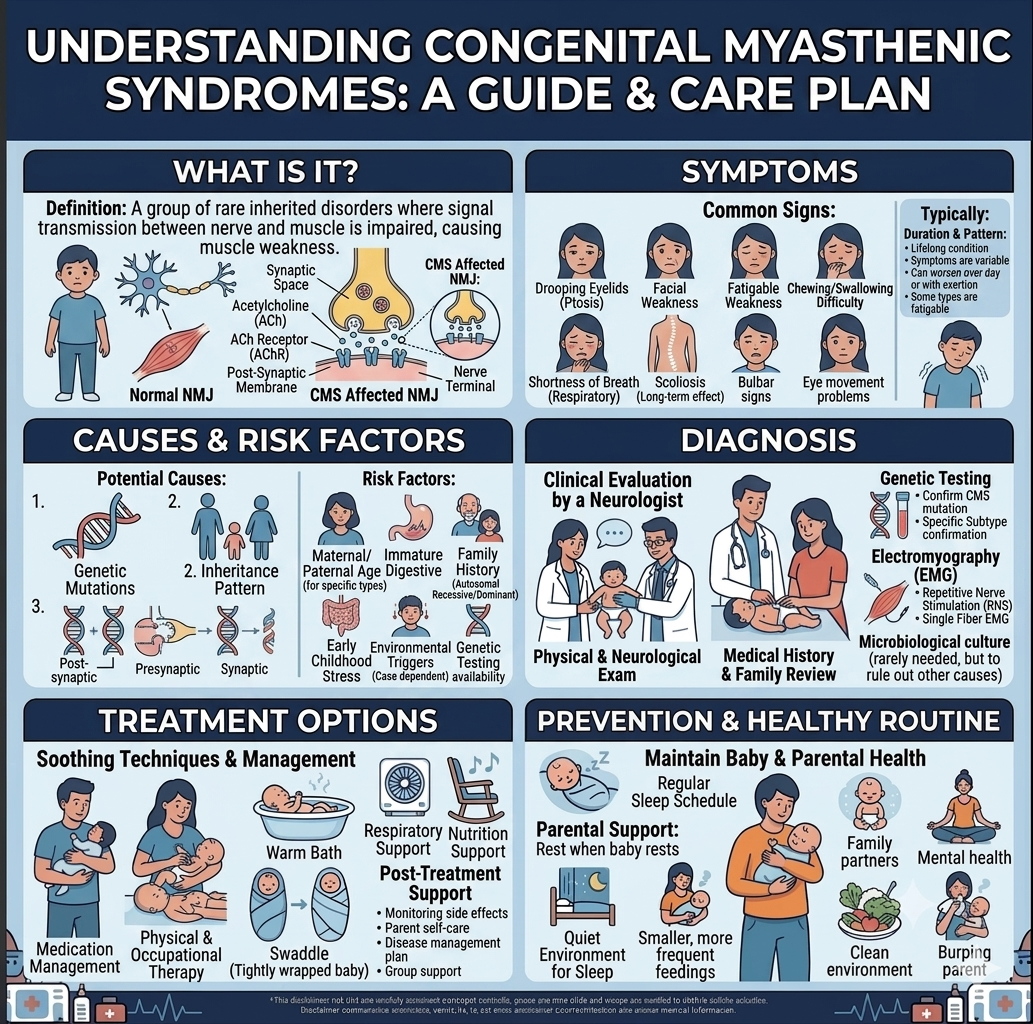
Congenital Myasthenic Syndromes (CMS) are a group of rare, inherited conditions present from birth, stemming from genetic changes that disrupt communication between nerves and muscles. This leads to muscle weakness that worsens with activity. CMS can affect any muscle used for movement, including those for speaking, chewing, swallowing, seeing, breathing, and walking. The specific gene affected determines symptoms, severity, and treatment approach. While lifelong with no cure, treatments effectively manage symptoms, though some mild forms may require little intervention.
Understanding the Condition
Congenital Myasthenic Syndromes (CMS)
Understanding the Condition
Congenital Myasthenic Syndromes (CMS) are a group of rare, inherited conditions present from birth, stemming from genetic changes that disrupt communication between nerves and muscles. This leads to muscle weakness that worsens with activity. CMS can affect any muscle used for movement, including those for speaking, chewing, swallowing, seeing, breathing, and walking. The specific gene affected determines symptoms, severity, and treatment approach. While lifelong with no cure, treatments effectively manage symptoms, though some mild forms may require little intervention.
Common Symptoms
Progressive Muscle Weakness: The hallmark of CMS is muscle weakness that increases with physical activity or repeated use. This can affect various muscles, ranging from mild to severe limitations in movement.
Eye and Eyelid Issues: Commonly, muscles controlling the eyes and eyelids are affected, causing droopy eyelids (ptosis), poor eye control, and often double vision.
Feeding and Swallowing Difficulties: Weakness in mouth and throat muscles makes chewing and swallowing challenging, potentially leading to feeding problems, choking, or aspiration.
Speech and Facial Weakness: Muscle weakness affecting the face, tongue, and vocal cords can result in slurred or nasal speech and a less expressive face.
Variable Onset and Severity: While often present at birth, milder cases may be diagnosed in childhood or early adulthood. Symptom severity varies widely based on the specific CMS type.
Consultation Guide
Which Specialist to Meet
Consult a neurologist, ideally one specializing in neuromuscular disorders or a pediatric neurologist for children. A genetic counselor is also vital to understand inheritance. Other specialists, such as an ophthalmologist, speech-language pathologist, or physical/occupational therapists, may be involved based on specific symptoms.
Preparations Before Your Visit
Before your visit, list all symptoms with their onset and pattern. Gather your complete medical and family history, especially concerning similar conditions. Prepare questions about diagnosis and treatment.
Book a doctor visit near me
These tests help rule out other conditions with similar symptoms, like autoimmune myasthenia gravis, by looking for specific antibodies or markers.
Other Targeted Medications: Additional drugs may address specific genetic defects or manage symptoms like breathing difficulties. (Duration: Variable, depending on the specific need.)
Physical Therapy: Helps maintain muscle strength, improve movement, and prevent atrophy through tailored exercises. (Duration: Ongoing, adapted to individual progress.)
Occupational Therapy: Assists with daily activities like eating and dressing, recommending adaptive strategies and devices. (Duration: Ongoing, based on functional requirements.)
Speech and Swallowing Therapy: Addresses speech and swallowing issues with exercises to strengthen muscles, improve articulation, and teach safe swallowing techniques. (Duration: Variable, from intensive to ongoing support.)
Regular Medical Follow-ups: Consistent visits with a specialized medical team are vital for monitoring the condition, adjusting treatments, and addressing new symptoms.
Consultation Guide
Developmental Delays: In children, CMS can cause delays in motor milestones like crawling, walking, or developing fine motor skills, and difficulty holding their head upright.
Breathing Problems: Weakness of breathing muscles can lead to shortness of breath or brief pauses in breathing, exacerbated by infections, fever, or stress, potentially becoming life-threatening.
Diagnostic Procedures
A thorough physical exam will assess muscle strength, reflexes, and eye movements. A detailed medical and family history will also be collected.
What to Expect
The doctor will observe your movements, test muscle strength, and assess reflexes. You may be asked to perform repetitive actions to check for worsening weakness. Your health history and any family history of similar conditions will be discussed.
Crucial for CMS, this involves DNA analysis to identify specific gene mutations (over 30 known). Targeted gene panels or whole exome sequencing may be used.
What to Expect
A blood or saliva sample will be collected for DNA analysis in a specialized lab. Results can take several weeks.
Electromyography (EMG) & Nerve Conduction Studies (NCS)
These tests measure electrical activity in muscles and nerve signal transmission. Repetitive nerve stimulation is often used to detect characteristic muscle response changes in CMS.
What to Expect
For NCS, electrodes on your skin send mild electrical pulses to measure nerve signal speed. For EMG, a thin needle electrode is inserted into a muscle to record its electrical activity. Repetitive nerve stimulation involves applying a series of pulses to a nerve, looking for a progressive decrease in muscle strength.
What to Expect
A blood sample will be drawn from your arm for laboratory analysis, a standard procedure with minimal discomfort.
Carrier Screening: Genetic testing can determine if individuals are carriers of CMS-causing genes, enabling informed reproductive decisions.
Long-Term Monitoring and Management
Treatment Options
Medications
Cholinesterase Inhibitors: These medications enhance chemical signaling between nerves and muscles, improving strength. Effectiveness varies significantly based on the CMS type. (Duration: Lifelong, with specialist-guided adjustments.)
Amifampridine: This medication aids nerve signal transmission to muscles, particularly effective for certain CMS types. (Duration: Lifelong, under specialist supervision.)
Trigger Avoidance: Identify and manage factors that worsen weakness, such as infections, fever, stress, extreme temperatures, certain medications, and lack of sleep.
Emergency Preparedness: Develop an emergency plan for respiratory crises, knowing when to seek urgent medical attention. A medical alert card is recommended.
Support Networks: Connecting with support groups offers emotional support, practical advice, and a sense of community for coping with a chronic condition.
Prevention & Long-Term Wellbeing
Respiratory and Nutritional Support: For breathing difficulties, non-invasive ventilation may be used. Swallowing issues might require dietary modifications or feeding tubes to ensure adequate nutrition. (Duration: As needed; potentially intermittent or long-term.)
Prevention and Genetic Counseling
Genetic Counseling: Families with a history of CMS can receive counseling to understand inheritance risks, carrier status, and family planning options.
Lifestyle Adjustments: Learn to pace activities, take regular rest breaks, and engage in therapist-approved gentle exercise to maintain function without overexertion.
Tags & Topics
Notice an error or need an update?
Help us keep medical information accurate. Report incorrect info or suggest an edit.


