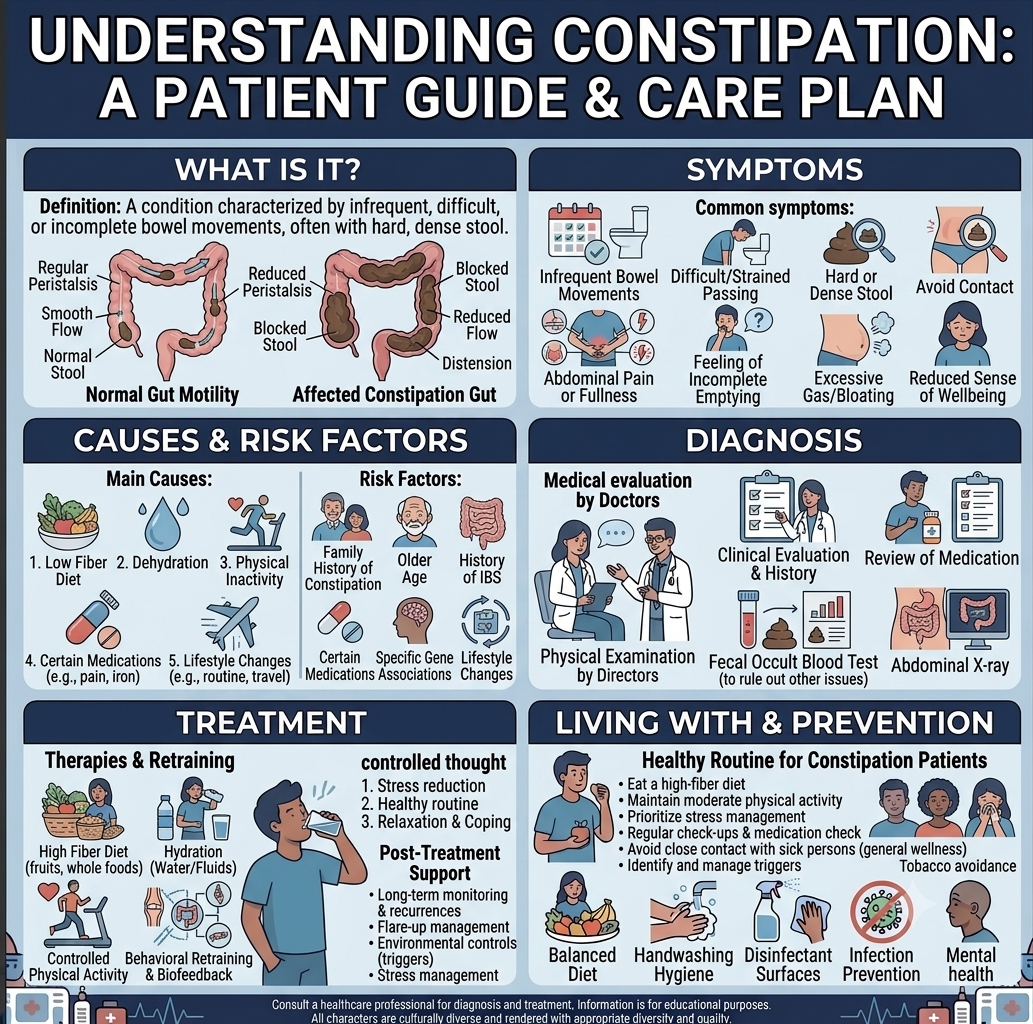
Constipation is a common digestive problem where you have infrequent bowel movements, typically fewer than three times a week, or struggle to pass stool. This often occurs when waste moves too slowly through your large intestine (also called the colon), causing too much water to be absorbed. This makes stools hard, dry, and difficult to pass. While often treatable with simple diet and lifestyle changes, sometimes underlying medical conditions or certain medications can be the cause.
Understanding the Condition
Understanding and Managing Constipation
Understanding the Condition
Common Symptoms
Fewer Bowel Movements: Having less than three bowel movements in a week.
Difficult Stools: Stools that are hard, dry, or lumpy.
Straining or Pain: Needing to push hard or feeling pain when trying to have a bowel movement.
Incomplete Emptying: A sensation that you haven't fully emptied your bowels after going to the bathroom.
Chronic Constipation Definition: Chronic constipation means experiencing two or more of the above symptoms for three months or longer.
When to See a Doctor: You should see your doctor if constipation symptoms last longer than three weeks, are severe enough to interfere with your daily life, are accompanied by bleeding from your bottom or blood on toilet paper, include blood in your stool or black, tar-like stools, involve unusual changes in the shape or color of your stool, come with persistent stomach pain that doesn't go away, or are linked to unexplained weight loss.
Consultation Guide
Which Specialist to Meet
Before your appointment, it's helpful to keep a diary of your bowel movements, noting how often you go, the consistency of your stools, and any accompanying symptoms. Write down any questions you have, list all medications you're taking (including over-the-counter drugs and supplements), and mention any recent changes to your diet or lifestyle.
Book a doctor visit near me
Addressing Underlying Conditions: If constipation is a symptom of another medical condition (e.g., thyroid problems, irritable bowel syndrome), treating that condition is crucial to relieving constipation. (Duration: Duration depends on the specific underlying condition.)
Consultation Guide
Constipation is a common digestive problem where you have infrequent bowel movements, typically fewer than three times a week, or struggle to pass stool. This often occurs when waste moves too slowly through your large intestine (also called the colon), causing too much water to be absorbed. This makes stools hard, dry, and difficult to pass. While often treatable with simple diet and lifestyle changes, sometimes underlying medical conditions or certain medications can be the cause.
Prescription Treatments: For persistent or severe constipation that doesn't respond to lifestyle changes or over-the-counter options, your doctor may prescribe stronger medications that work in various ways to promote bowel movements, depending on the underlying cause. (Duration: As advised by your doctor; duration varies by medication and condition.)
Procedures and Therapies
Biofeedback Therapy: This therapy helps you learn to relax and coordinate the muscles that control bowel movements, which can be helpful if muscle dysfunction is contributing to constipation. (Duration: Typically several sessions over weeks to months.)
Surgery for Severe Cases: Surgery for constipation is rare and typically reserved for severe cases caused by a blockage, structural problem, or nerve issue that hasn't responded to other treatments. (Duration: Varies significantly based on the specific procedure and recovery needs.)
Diagnostic Procedures
Blocked Feeling: Feeling like there's a blockage in your rectum (the final section of the large intestine) that prevents stool from passing.
Manual Assistance: Needing to use a finger to help pass stool.
You can start by consulting your primary care doctor or general practitioner. If your constipation is severe, chronic, or requires specialized tests, your doctor may refer you to a gastroenterologist, a specialist in digestive system disorders.
Preparations Before Your Visit
A colonoscopy is a procedure used to examine the entire inside lining of your large intestine (colon) and rectum for changes like inflamed tissues, growths (polyps), or signs of cancer.
What to Expect
A flexible sigmoidoscopy is an exam that allows your doctor to look inside your rectum and the lower part of your large intestine, specifically the sigmoid colon. This procedure uses a thinner, flexible tube with a camera and light.
What to Expect
You will likely need to use an enema or laxative to clear the lower part of your bowel before the exam. Unlike a colonoscopy, sedation is often not required, but you might experience some discomfort or a feeling of pressure. The flexible tube (sigmoidoscope) is gently inserted into your anus and guided through your rectum and the sigmoid colon. The camera allows the doctor to check for problems like inflammation, polyps, or early signs of cancer in this section of the bowel. If abnormal tissues or polyps are seen, small samples can be taken or removed through the scope. The procedure usually takes 10-20 minutes, and you can typically resume normal activities immediately afterward.
An X-ray is a quick and painless imaging test that uses a small amount of radiation to create pictures of the structures inside your body, especially bones. For digestive issues, X-rays can help see if stool is backed up in your colon. Sometimes, a special liquid (contrast medium) is given to highlight certain areas for better detail.
What to Expect
You will be asked to lie on a table, sit, or stand, depending on the area being examined. A trained technician will position you and the X-ray machine. You might be asked to hold your breath for a few seconds during the image capture. If a contrast medium is used, you might drink it or have it given through an enema or injection. The X-ray beams pass through your body, and different densities (like bone, tissue, or air) absorb the beams differently, creating an image. The test is very fast, usually taking only a few minutes.
Regular Physical Activity: Exercise helps stimulate the muscles in your intestines, promoting more regular bowel movements. Aim for at least 30 minutes of moderate activity most days of the week. (Duration: Ongoing)
Don't Ignore the Urge: When you feel the need to have a bowel movement, go to the toilet promptly. Delaying can make constipation worse. (Duration: Ongoing)
Establish a Routine: Try to have a bowel movement at the same time each day, for example, after a meal, to train your body for regularity. (Duration: Ongoing)
Osmotic Laxatives: These draw water into the intestines to soften stool and promote bowel movements. Prolonged use of some types can lead to an imbalance of essential body salts (electrolytes). (Duration: Can take 30 minutes to 3 hours for some types, or 1-3 days for others. Should be used as directed.)
Stimulant Laxatives: These work by stimulating the muscles of the intestines to contract and move stool along. They are generally not recommended for long-term or frequent use due to potential dependency and decreased bowel function. (Duration: Usually work quickly, within 6-12 hours. Best for occasional use.)
Treatment Options
You will typically need to follow a special diet for a few days before the procedure and take strong laxatives to completely clear your bowels. On the day of the procedure, you will receive medication to help you relax or sleep. A long, flexible tube with a tiny camera (called a colonoscope) is gently inserted into your rectum and guided through your entire colon. The camera sends images to a screen, allowing the doctor to check for any abnormalities. If polyps or unusual tissues are found, small tools passed through the scope can remove them or take tiny tissue samples (biopsies) for further examination. The procedure usually takes 30-60 minutes, and you'll need someone to drive you home afterward due to the sedation.
Flexible Sigmoidoscopy
Over-the-Counter Medications
Prescription Medications
Medication Adjustments: If a medication you are currently taking is causing constipation, your doctor might adjust the dose or switch you to a different medication. (Duration: Immediate adjustment, with effects varying based on new medication.)
Surgical Procedures
Review Medications: Regularly discuss all your medications with your doctor to ensure none are contributing to constipation as a side effect.
Maintain Healthy Weight: Maintaining a healthy weight can contribute to overall digestive health and function.
Stress Management: Stress can impact digestion; practices like meditation, deep breathing, or yoga may help alleviate its effects on your bowels.
Regular Check-ups: Continue regular visits with your doctor to monitor your digestive health and address any persistent issues or changes in your bowel habits.
Prevention & Long-Term Wellbeing
Home Remedies and Lifestyle Changes
Increase Fiber Intake: Eating more high-fiber foods such as fruits, vegetables, beans, and whole grains can soften stool and add bulk. Aim for a gradual increase to avoid gas and bloating. (Duration: Ongoing)
Drink Plenty of Fluids: Staying well-hydrated helps keep stools soft and easier to pass. Water is best, but clear broths and juices also contribute. (Duration: Ongoing)
Fiber Supplements: These add bulk to your stool, similar to dietary fiber, making it softer and easier to pass. They are generally gentle on the body. (Duration: Typically work within 12-72 hours. Can be used short-term or sometimes long-term under medical guidance.)
Stool Softeners: These work by moistening the stool, making it easier to pass without straining. (Duration: Effects usually appear within 12-72 hours. Generally safe for short-term use.)
Prevention
Balanced Diet: Prioritize a diet rich in high-fiber foods like vegetables, fruits, legumes, and whole grains. Limit processed foods, dairy, and meats, which are low in fiber.
Hydration: Drink plenty of water and other fluids throughout the day to keep your stools soft and prevent dehydration.
Regular Exercise: Engage in consistent physical activity to help keep your digestive system moving efficiently and stimulate bowel regularity.
Respond to Nature's Call: Do not delay going to the bathroom when you feel the urge to have a bowel movement, as this can worsen constipation.
Consistent Bowel Habits: Try to establish a regular time each day for bowel movements, ideally after a meal, to train your body for regularity.
Long-Term Monitoring and Management
Identify Triggers: Pay attention to what might worsen your constipation, such as certain foods, stress, or travel, and try to manage these factors.
Tags & Topics
Notice an error or need an update?
Help us keep medical information accurate. Report incorrect info or suggest an edit.


