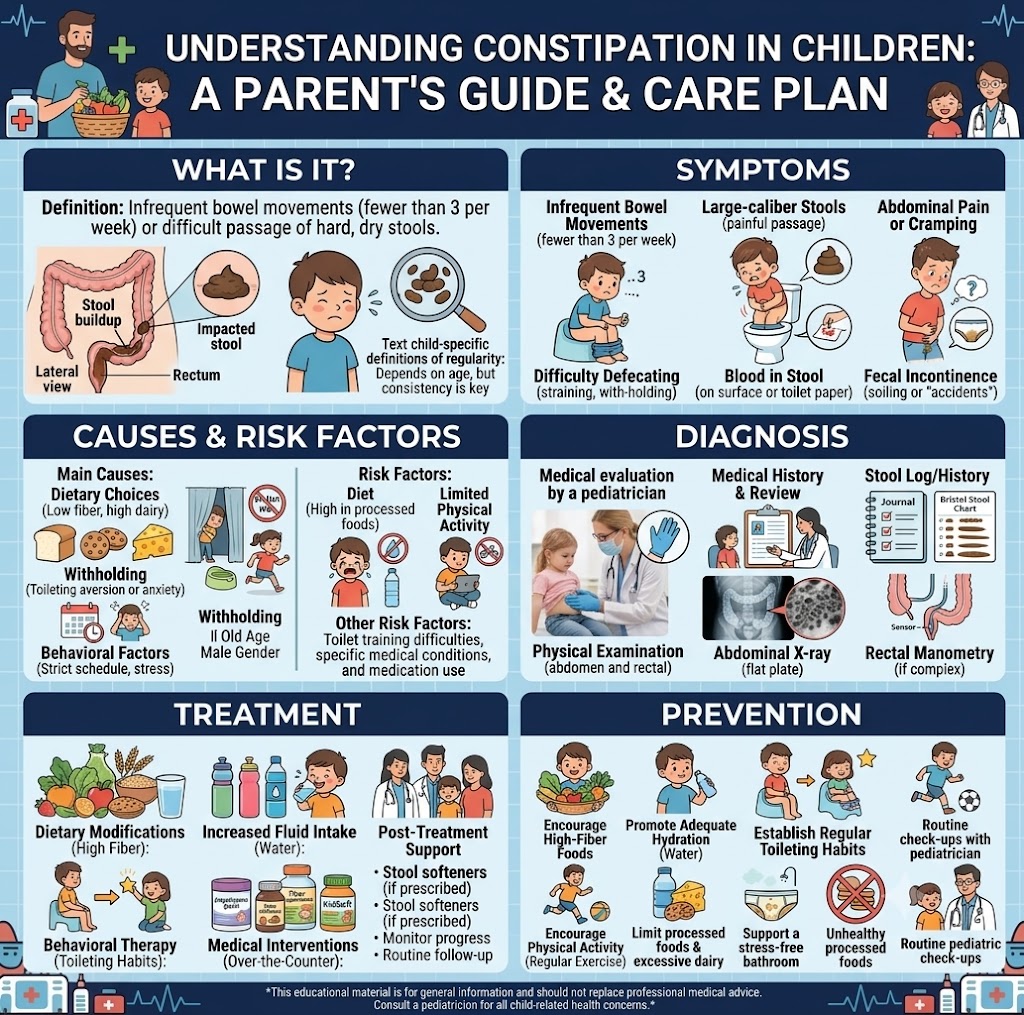
Constipation is a very common issue affecting children, characterized by infrequent bowel movements or stools that are hard, dry, and difficult to pass. While often temporary, it can cause discomfort and anxiety. It happens when waste moves too slowly through the digestive system, allowing too much water to be absorbed, making stools hard. Common factors contributing to constipation include early or stressful toilet training, changes in diet, illness, or even simply holding back stool due to fear or distraction. Fortunately, most cases can be managed effectively with simple adjustments to diet and routine.
Understanding the Condition
Childhood Constipation: Understanding and Managing Your Child's Bowel Health
Understanding the Condition
Common Symptoms
Infrequent Bowel Movements: Fewer than three bowel movements per week.
Hard, Dry, or Large Stools: Stools that are difficult to pass, pebble-like, or unusually large.
Painful Bowel Movements: Discomfort, crying, or fear during stool passage.
Straining: Excessive pushing or straining to pass stool.
Abdominal Pain or Bloating: Discomfort in the belly area, often relieved after a bowel movement.
Fear of Passing Stool (Withholding): Your child avoids bowel movements due to anticipated pain, showing behaviors like crossing legs, clenching buttocks, or twisting. This behavior often worsens constipation.
Soiled Underwear: Small amounts of watery stool leaking around a blockage of hard stool, which may be mistaken for diarrhea.
Consultation Guide
Which Specialist to Meet
The doctor will ask detailed questions about your child's bowel habits, diet, fluid intake, medications, and any associated symptoms. They will perform a physical exam, which usually includes gently checking the abdomen for tenderness or masses. For children, a rectal exam is rarely needed unless severe stool impaction or other specific problems are suspected.
Your child will be asked about their symptoms and may need to lie down for the doctor to gently feel their abdomen. The doctor will explain what they are doing in a calm, child-friendly manner. If a rectal exam is necessary, it will be quick and gentle, with the child lying on their back or side. The doctor will use a gloved, lubricated finger to check the rectum, which might be briefly uncomfortable but should not be painful.
Consultation Guide
Constipation is a very common issue affecting children, characterized by infrequent bowel movements or stools that are hard, dry, and difficult to pass. While often temporary, it can cause discomfort and anxiety. It happens when waste moves too slowly through the digestive system, allowing too much water to be absorbed, making stools hard. Common factors contributing to constipation include early or stressful toilet training, changes in diet, illness, or even simply holding back stool due to fear or distraction. Fortunately, most cases can be managed effectively with simple adjustments to diet and routine.
Diagnostic Procedures
Medical History and Physical Examination
What to Expect
This imaging test uses a small amount of radiation to create a picture of the abdomen. It helps the doctor see if there is a significant amount of stool built up in the intestines, indicating severe constipation or impaction.
What to Expect
Your child will lie still on an X-ray table, often for just a few seconds, while the images are taken. They will need to remove any metal objects. A parent can usually stay in the room with them, wearing a lead apron for protection. The procedure is quick and painless.
Blood Tests (Rarely Needed)
In some cases, if the doctor suspects an underlying medical condition like an underactive thyroid (hypothyroidism) or celiac disease is contributing to the constipation, blood tests may be ordered to check for these issues.
What to Expect
A small blood sample will be taken, usually from a vein in the arm. This involves a brief pinch as the needle is inserted. The procedure is quick. Child life specialists may be available to help comfort your child during this process.
Treatment Options
You should first consult your child's pediatrician. If the constipation is severe, chronic, or unresponsive to initial treatments, your pediatrician may refer you to a pediatric gastroenterologist, a doctor specializing in children's digestive systems.
Preparations Before Your Visit
Before your visit, keep a record of your child's bowel habits for a few days or weeks, noting frequency, consistency, any pain, straining, or blood. Be prepared to discuss their typical diet, fluid intake, and any current medications. List any questions or concerns you have for the doctor.
Book a doctor visit near me
Medications
Stool Softeners: These medications work by drawing water into the stool, making it softer and easier to pass. They are typically used for mild to moderate constipation. (Duration: As directed by a doctor, usually for weeks to months to re-establish regular bowel habits.)
Osmotic Laxatives: These agents work by pulling water into the colon, which softens the stool and increases bowel movements. They are commonly used and often considered safe for longer-term use under medical supervision. (Duration: As directed by a doctor, often for several months to help the bowel recover and prevent withholding.)
Stimulant Laxatives (Short-Term Use Only): These medications directly stimulate the bowel muscles to contract, promoting a bowel movement. They are generally reserved for acute, severe constipation or for disimpaction, and typically not recommended for long-term use without strict medical guidance due to potential for dependency or side effects. (Duration: Very short-term, acute use only, as prescribed by a doctor.)
Rectal Medications (Suppositories or Enemas): Used for severe stool impaction or when oral medications are insufficient. These medications are inserted into the rectum to soften and stimulate the evacuation of stool. (Duration: Single-use or very short-term for disimpaction, as directed by a doctor.)
Addressing Withholding Behaviors: For children who withhold stool, behavioral strategies, often guided by a therapist or psychologist, can help overcome fears and establish healthy toilet habits. This may involve reward systems and education about bowel function. (Duration: Varies depending on the child, typically several weeks to months.)
Prevention & Long-Term Wellbeing
Home Remedies & Lifestyle Adjustments
Dietary Fiber Increase: Gradually introduce more fiber-rich foods into your child's diet. Good sources include whole grains, fruits (like prunes, pears, apples, berries), and vegetables (like broccoli, peas, beans). Fiber adds bulk to stool, making it softer and easier to pass. (Duration: Ongoing, as part of a healthy diet.)
Adequate Fluid Intake: Ensure your child drinks plenty of water throughout the day. Sufficient fluids help keep stools soft and prevent hardening. (Duration: Ongoing, daily.)
Regular Physical Activity: Encourage active play and exercise. Physical activity helps stimulate normal bowel function and movement. (Duration: Ongoing, daily.)
Consistent Toilet Routine: Encourage your child to sit on the toilet for 5-10 minutes after meals (when the urge to have a bowel movement is often strongest), even if they don't feel the immediate need. Make it a calm and positive experience, providing a footrest if their feet don't reach the floor. (Duration: Daily routine, typically for several weeks to months, or until habits are established.)
Maintain a High-Fiber Diet: Consistently offer a variety of fruits, vegetables, and whole grains to ensure adequate fiber intake. This is foundational for preventing constipation.
Ensure Adequate Hydration: Make water readily available and encourage frequent sips throughout the day, especially during physical activity or warm weather.
Encourage Regular Physical Activity: Promote active play and limit sedentary time to help keep the digestive system moving.
Establish and Stick to a Toilet Routine: Continue the practice of sitting on the toilet after meals, making it a stress-free part of the daily schedule.
Address Stress and Anxiety: Recognize that stress, changes in routine (like starting school or travel), or fear of pain can contribute to withholding. Offer emotional support and make toilet time positive.
Monitor Bowel Habits: Pay attention to your child's bowel movements. Note changes in frequency, consistency, or any signs of discomfort. Early intervention can prevent chronic problems.
Avoid Early or Forceful Toilet Training: Wait until your child shows signs of readiness for toilet training to reduce stress and negative associations with bowel movements. Avoid pressure or punishment.
Regular Follow-ups with Pediatrician: Maintain open communication with your child's doctor regarding their bowel health, especially if constipation is persistent or recurs.
Tags & Topics
Notice an error or need an update?
Help us keep medical information accurate. Report incorrect info or suggest an edit.


