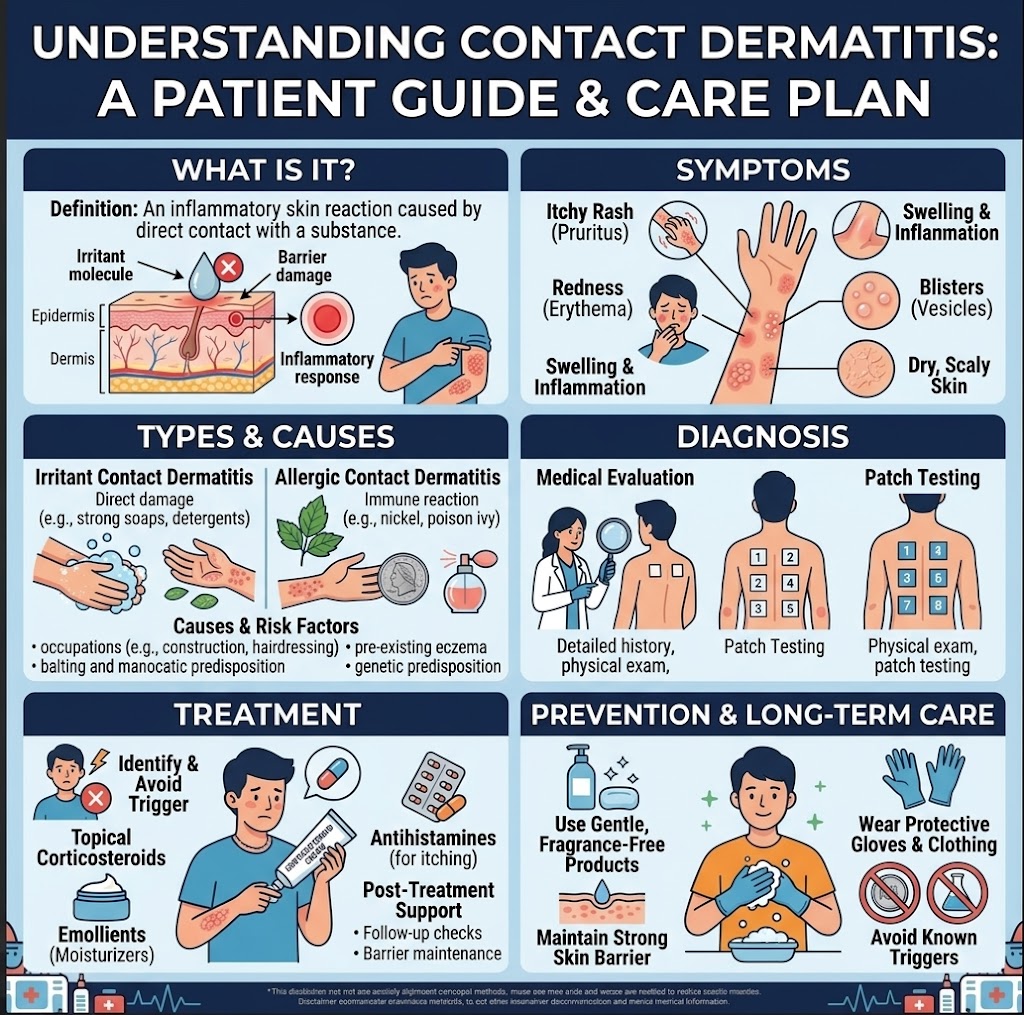
Contact dermatitis is an uncomfortable, itchy skin rash that develops when your skin touches a substance that either irritates it or causes an allergic reaction. This rash is not contagious, meaning it cannot spread from person to person. Many everyday items, like certain cosmetics, jewelry, or plants, can cause this reaction. The rash typically appears within hours or days of exposure. Successful treatment relies on identifying and avoiding the specific substance causing your reaction. Once the cause is removed, the rash usually fades within 2 to 4 weeks, though self-care steps can help soothe the skin in the meantime.
Understanding the Condition
Contact Dermatitis: An Itchy Skin Rash
Understanding the Condition
Common Symptoms
An Itchy Rash: The most common and defining symptom, often appearing on the exact skin area that touched the problematic substance.
Skin Color Changes and Texture: On brown or Black skin, patches may become darker than usual and feel leathery. On lighter skin, the skin might become dry, cracked, or scaly.
Bumps and Blisters: Small, raised bumps or fluid-filled blisters can appear, sometimes oozing fluid or forming a crust.
Swelling, Burning, or Tenderness: The affected skin area may feel swollen, hot, or painful to the touch.
Consultation Guide
Which Specialist to Meet
Before your visit, make a list of all products you use on your skin (soaps, lotions, makeup, jewelry), recent activities (gardening, new hobbies), and any new items you've touched. Note when your symptoms started, how they've changed, and what home remedies you’ve tried. Be prepared to discuss your medical history and any known allergies.
Book a doctor visit near me
Consultation Guide
Contact dermatitis is an uncomfortable, itchy skin rash that develops when your skin touches a substance that either irritates it or causes an allergic reaction. This rash is not contagious, meaning it cannot spread from person to person. Many everyday items, like certain cosmetics, jewelry, or plants, can cause this reaction. The rash typically appears within hours or days of exposure. Successful treatment relies on identifying and avoiding the specific substance causing your reaction. Once the cause is removed, the rash usually fades within 2 to 4 weeks, though self-care steps can help soothe the skin in the meantime.
You should first consult your primary care doctor. If the rash is severe, persistent, or the cause is unclear, your doctor may recommend seeing a dermatologist, a specialist in skin conditions.
Preparations Before Your Visit
Your doctor will review your health history, ask about potential exposures to irritants or allergens in your daily life (e.g., work, hobbies, new products), and thoroughly examine the characteristics and location of your rash. This helps identify clues about the possible cause.
Identify and Avoid Triggers: Once a cause is known, conscientiously avoid it. This means changing products, choosing hypoallergenic jewelry, or avoiding specific plants.
Prompt Skin Washing: After potential exposure to plant allergens (e.g., poison ivy), wash affected skin immediately with mild, fragrance-free soap and warm water to remove oils.
Wear Protective Gear: Use gloves, long sleeves, masks, or goggles when handling irritants (e.g., cleaning agents) or in environments with allergens (e.g., gardening).
Apply Barrier Creams: Specific creams or gels can form a protective skin layer. Consult your doctor for suitable product recommendations.
Maintain Skin Hydration: Regularly use fragrance-free moisturizers to keep skin healthy and intact, reducing susceptibility to irritation.
Pet Hygiene: Plant allergens can transfer via pet fur. If your pet contacted a problematic plant, bathe them to prevent allergen spread.
Material Alternatives: If reacting to metal fasteners in clothing, cover them or choose alternative materials like surgical steel or gold for piercings.
Diagnostic Procedures
Medical History and Physical Exam
What to Expect
Be prepared to share details about when the rash started, what you might have touched, and any prior skin conditions. The physical examination involves a visual inspection of the affected skin to assess its appearance and severity.
This specialized test identifies specific allergens causing allergic contact dermatitis. Small amounts of various common allergens are applied to your skin to check for a reaction.
What to Expect
Over approximately one week, you'll have three appointments. First, a dermatologist applies patches containing test substances to your back. These stay on for 48 hours, during which you must keep the area dry. On the second visit, the patches are removed, and an initial skin reading is done. A final reading occurs a few days later, as some reactions take longer to appear. You'll then receive a list of identified allergens and guidance on avoiding them in everyday products.
Treatment Options
Home Remedies and Self-Care
Cool Compresses: Apply a cool, damp cloth to soothe itching and reduce inflammation. (Duration: As needed for relief.)
Moisturizers: Regularly apply thick, fragrance-free lotions to restore the skin's barrier and aid healing. (Duration: Multiple times daily until rash clears and for ongoing skin health.)
Avoid Triggers: Crucial step: identify and completely avoid the substance causing the reaction to allow skin to heal. (Duration: Ongoing.)
Medications
Topical Corticosteroids: Creams or ointments applied directly to the rash to reduce inflammation, redness, and itching, promoting faster healing. (Duration: Typically 2-4 weeks, or as directed by doctor.)
Oral Antihistamines: For severe itching, oral medication can reduce sensation, especially to aid sleep. (Duration: As needed, usually short-term.)
Oral Corticosteroids: For very severe or widespread rashes, a short course of oral medication may be prescribed to powerfully reduce body-wide inflammation. (Duration: Typically a short course, 5-14 days, as directed by doctor.)
Antibiotics: If scratching leads to infection, oral or topical antibiotics treat bacterial growth. (Duration: As prescribed, usually 7-14 days for oral.)
Light Therapy: For chronic, widespread, or resistant cases, controlled exposure to specific light wavelengths may be used under specialist supervision. (Duration: Multiple sessions over weeks or months, as directed.)
Prevention & Long-Term Wellbeing
Prevention and Long-Term Wellbeing
Tags & Topics
Notice an error or need an update?
Help us keep medical information accurate. Report incorrect info or suggest an edit.


