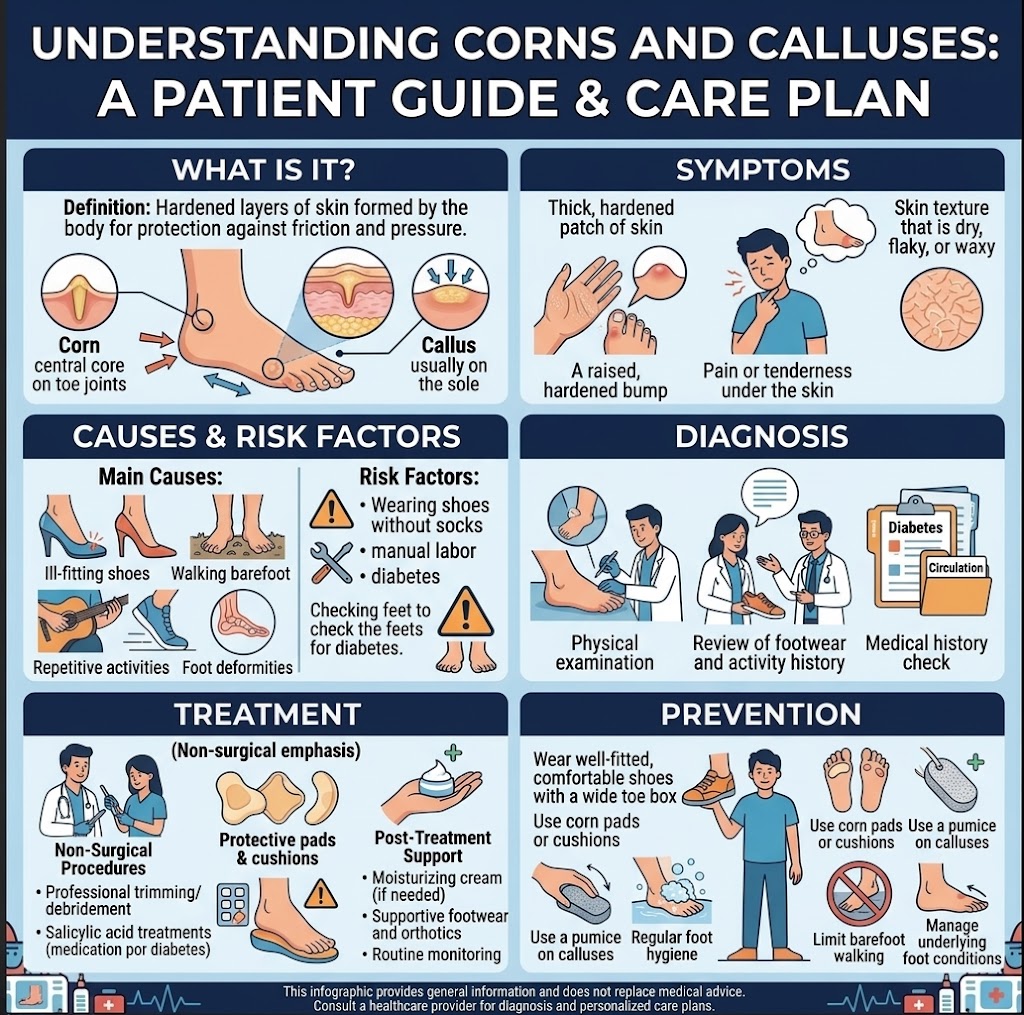
Corns and calluses are areas of thickened, hardened skin that form when your skin tries to protect itself from repeated friction or pressure. They commonly appear on the feet, toes, hands, and fingers. While often harmless, treatment is generally needed if they cause pain, discomfort, or if you are bothered by their appearance. For most individuals, these thickened skin patches can resolve simply by identifying and removing the source of the friction or pressure.
Understanding the Condition
Corns and Calluses: Understanding and Managing Hardened Skin
Understanding the Condition
Common Symptoms
General Signs: You might notice a thick, rough area of skin; a hardened, raised bump; tenderness or pain under the skin; or flaky, dry, or waxy skin.
Corns: Corns are typically smaller and deeper than calluses, often having a distinct hard center surrounded by swollen skin. They can be painful when pressed. Hard corns usually form on the top or outer edges of toes, while soft corns tend to develop between the toes, appearing softer and sometimes whitish due to moisture.
Calluses: Calluses are generally larger, wider, and have less defined borders than corns. They are rarely painful unless under extreme pressure. They commonly form on pressure points such as the heels, balls of the feet, palms of the hands, or knees, and can vary in size and shape.
Before your visit, make a list of your symptoms, including when they began and how they impact your daily life. Gather all the shoes you regularly wear, particularly those you suspect might be contributing to the problem. Be ready to discuss your complete medical history, including any current health conditions and all medications you are taking. It is also helpful to write down any questions you have for the doctor.
Book a doctor visit near me
During the examination, your doctor will ask about your symptoms, daily activities, footwear, and medical history. They will carefully look at your feet or hands where the hardened skin is present. They may press on the area to check for pain or tenderness. Sometimes, the doctor might gently trim a small superficial layer to get a clearer view of the skin's structure. This process is usually quick, painless, and does not require any special preparation.
Consultation Guide
Corns and calluses are areas of thickened, hardened skin that form when your skin tries to protect itself from repeated friction or pressure. They commonly appear on the feet, toes, hands, and fingers. While often harmless, treatment is generally needed if they cause pain, discomfort, or if you are bothered by their appearance. For most individuals, these thickened skin patches can resolve simply by identifying and removing the source of the friction or pressure.
Diagnosing corns and calluses typically involves a thorough physical examination of the affected area by a healthcare provider. The doctor will visually inspect the hardened skin and may gently feel it to assess its thickness, tenderness, and location. This examination helps distinguish between a corn and a callus and identify any underlying causes or potential complications.
Identify and Remove Cause: The most crucial step is to identify and eliminate the source of friction or pressure. This often means wearing properly fitting shoes and socks, using protective padding, or modifying activities. (Duration: Ongoing)
Warm Water Soaks: Soaking the affected area in warm, soapy water for 5 to 10 minutes can soften the skin, making it easier to gently remove some of the thickened layers. (Duration: As needed)
Gentle Exfoliation: After soaking, gently rub the corn or callus with a pumice stone, emery board, or washcloth to carefully remove softened skin. Be cautious not to remove too much skin, which could cause bleeding or infection. (Duration: Daily to weekly, as needed)
Moisturizing: Regularly apply a good quality moisturizer to keep the skin hydrated and soft, which can help prevent further hardening and cracking. Lotions containing urea or alpha hydroxy acids can be particularly effective. (Duration: Daily)
Trimming of Excess Skin: A healthcare professional, such as a podiatrist, can safely trim away excess hardened skin using a sterile scalpel. This provides immediate relief and is especially recommended for individuals with diabetes or poor circulation to prevent self-injury and infection. (Duration: One-time procedure, may require repeat visits if the cause persists)
Corrective Footwear or Orthotics: Custom-made shoe inserts (orthotics) or specialized footwear can redistribute pressure on the feet, helping to prevent the recurrence of corns and calluses by addressing biomechanical issues. (Duration: Ongoing use)
Surgical Interventions
Wear Proper Socks: Always wear socks with shoes to reduce friction, ensuring they fit well without bunching or being too tight. Seamless socks can be particularly beneficial. Avoid going sockless with shoes or sandals that cause rubbing.
Use Protective Coverings: Apply felt pads, non-medicated corn pads, or bandages over areas prone to friction. Toe separators or lamb's wool can also be placed between toes to prevent soft corns.
Protect Hands: When using hand tools or playing instruments that cause repeated pressure, wear padded gloves or apply protective padding (like cloth tape) to tool handles or instrument parts.
Maintain Good Foot Hygiene: Regularly wash and moisturize your feet. Inspect them daily for any signs of hardened skin or irritation, especially if you have conditions like diabetes.
Long-Term Monitoring and Care
Regular Self-Checks: Periodically examine your feet and hands for new areas of hardened skin or changes in existing corns and calluses. Early detection can help manage them effectively.
Professional Foot Care for High-Risk Individuals: If you have diabetes, poor circulation, or nerve damage, regular professional foot examinations are essential. A podiatrist can help prevent complications by expertly managing corns and calluses and monitoring overall foot health.
Diagnostic Procedures
You can start by consulting your general practitioner, who can often diagnose and suggest initial treatments or refer you to a specialist. For persistent or complex cases, a podiatrist (a foot and ankle specialist) or a dermatologist (a skin specialist) can provide expert care, especially if you have underlying conditions like diabetes or poor circulation.
Preparations Before Your Visit
What to Expect
Treatment Options
When to Seek Medical Attention: Consult a healthcare provider if a corn or callus becomes very painful, inflamed, red, or shows signs of infection (like pus or increased warmth). If you have diabetes, poor circulation, or any condition affecting blood flow to your feet, it is crucial to seek professional medical care before attempting any self-treatment, as even a minor foot injury can lead to serious complications such as infected open sores (ulcers).
Consultation Guide
Which Specialist to Meet
Over-the-Counter and Professional Medications
Medicated Patches or Creams: Products containing ingredients designed to soften and dissolve hardened skin, such as certain acids, are available. These come as patches, pads, or creams. Always follow package directions carefully and avoid using them on broken or delicate skin. (Duration: Varies; typically days to weeks, as directed)
Professional Procedures
Correction of Underlying Deformities: In rare cases, if a bone deformity (like a hammertoe or bunion) is causing chronic, painful corns or calluses that don't respond to other treatments, surgical correction may be considered. This procedure aims to realign bones or joints to remove the pressure point. (Duration: Varies by procedure, followed by recovery period)
Prevention & Long-Term Wellbeing
Home Remedies and Lifestyle Adjustments
Prevention Strategies
Wear Well-Fitting Shoes: Choose shoes that provide ample room for your toes to wiggle freely. Avoid tight shoes, high heels, or shoes that rub or pinch. Shop for shoes late in the day when your feet are slightly swollen to ensure a comfortable fit. If you use orthotics, wear them when trying on shoes.
Tags & Topics
Notice an error or need an update?
Help us keep medical information accurate. Report incorrect info or suggest an edit.


