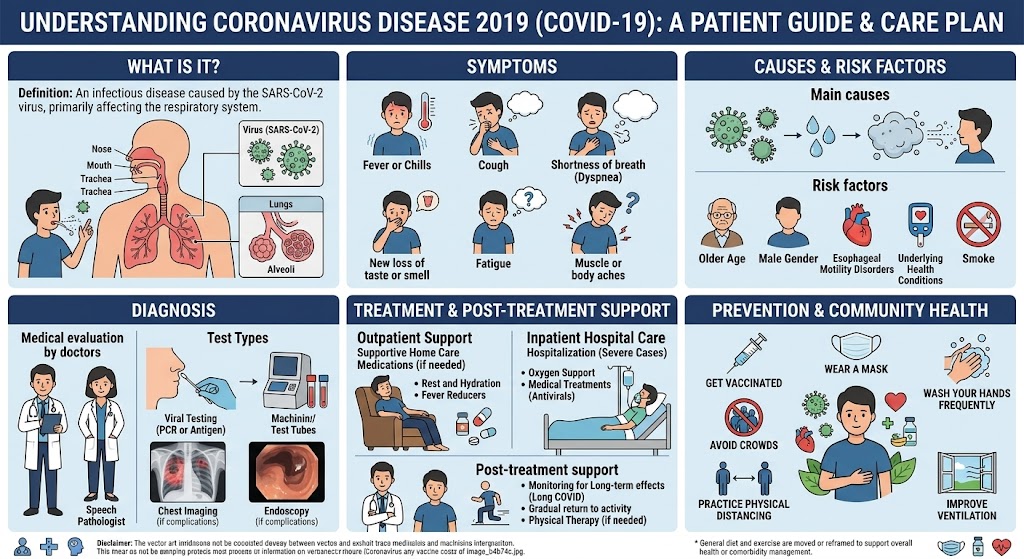
Coronavirus disease 2019 (COVID-19) is an illness caused by a virus known as SARS-CoV-2. It began spreading in late 2019 and became a global health crisis in 2020. The virus primarily spreads through airborne droplets from person to person, especially during close contact. While many individuals experience mild or no symptoms, older adults and those with certain health conditions face a higher risk of severe illness, hospitalization, or death. Staying up-to-date with vaccination is key to preventing serious outcomes. Other protective measures include good indoor ventilation, physical distancing, mask-wearing in appropriate settings, and good hygiene. Although most people recover without lasting effects, some may develop prolonged symptoms known as 'long COVID'.
Understanding the Condition
COVID-19: Understanding the Coronavirus Illness
Understanding the Condition
Coronavirus disease 2019 (COVID-19) is an illness caused by a virus known as SARS-CoV-2. It began spreading in late 2019 and became a global health crisis in 2020. The virus primarily spreads through airborne droplets from person to person, especially during close contact. While many individuals experience mild or no symptoms, older adults and those with certain health conditions face a higher risk of severe illness, hospitalization, or death. Staying up-to-date with vaccination is key to preventing serious outcomes. Other protective measures include good indoor ventilation, physical distancing, mask-wearing in appropriate settings, and good hygiene. Although most people recover without lasting effects, some may develop prolonged symptoms known as 'long COVID'.
Common Symptoms
Onset and Variability: Symptoms typically appear 2 to 14 days after contact with the virus. The number and type of symptoms can vary greatly; some people may have only a few or no symptoms at all. Those without symptoms but who test positive are called 'asymptomatic', while those who later develop symptoms are 'presymptomatic'. Both groups can still spread the virus.
Respiratory and General Symptoms: Common signs include shortness of breath, fever or chills, a cough, and cold-like symptoms such as congestion, a runny nose, or a sore throat.
Sensory and Fatigue: Many experience a loss of taste or smell, and extreme tiredness, known as fatigue.
Pain and Digestive Issues: Pain can manifest as headaches, body aches, or muscle aches. Digestive symptoms may include an upset stomach, vomiting, or loose stools (diarrhea).
Consultation Guide
Which Specialist to Meet
You should consult with your primary care physician first. Depending on the severity and specific symptoms, they may refer you to specialists such as an Infectious Disease Specialist, Pulmonologist (for lung issues), Cardiologist (for heart complications), or a Mental Health Professional (for psychological impacts).
Preparations Before Your Visit
Before your visit, prepare a list of all your symptoms, when they started, and how long they have lasted. Note any potential exposures to the virus, your vaccination status, and any existing medical conditions or medications you are currently taking. This information helps your doctor assess your situation accurately.
Book a doctor visit near me
Antigen tests look for specific proteins from the virus. They provide quick results and are convenient for at-home use, though they are generally less accurate than molecular tests, especially if you do not have symptoms.
You will typically collect a sample by swabbing your nose. The test kit includes instructions for processing the sample and reading the result, which usually appears within 15 to 30 minutes. If you test negative and have no symptoms, it's often recommended to repeat the test after 48 hours to confirm the result.
Rest and Hydration: For mild illness, resting and drinking plenty of fluids are crucial to support recovery. (Duration: Until symptoms resolve (typically days to a couple of weeks))
Over-the-Counter Symptom Relief: Pain relievers and fever reducers can help manage symptoms like fever, headaches, and body aches. (Duration: As needed for symptom relief)
Oral Antivirals: These prescription medications work by blocking the virus from multiplying in the body, helping to prevent mild illness from becoming severe. They are typically prescribed for people at high risk of serious illness. (Duration: Usually a 5-day course; must be started soon after symptom onset)
Mask-Wearing: Consider wearing a well-fitting mask in crowded indoor public spaces, if you have symptoms of illness, or if you are in close contact with someone who is sick, especially when local transmission rates are high.
Physical Distancing: Maintain a safe distance from others, particularly in indoor environments with poor airflow, to reduce the risk of airborne transmission.
Improve Indoor Airflow: Enhance ventilation in indoor spaces by opening windows, using fans, or utilizing air purifiers to disperse virus particles.
Surface Cleaning and Disinfection: Regularly clean and disinfect frequently touched surfaces (e.g., doorknobs, light switches, counters), especially if someone in your household is ill, though the risk of transmission from surfaces is generally low.
Safe Travel Practices: Plan ahead by ensuring vaccinations are up-to-date before traveling. Be prepared for potential illness during your trip and take extra precautions if you or your travel companions are at high risk.
Pet Interaction Guidelines: If you have COVID-19, limit close contact with your pets. While rare, pets can get infected. If your pet shows symptoms after exposure, contact your veterinarian for advice, but avoid taking them to the clinic yourself unless instructed.
Long-Term Management and Mental Health
Addressing Long COVID: If symptoms persist for months after initial infection or new symptoms emerge, seek medical evaluation. Ongoing research is helping to understand and manage 'long COVID', which can include a wide range of lingering health issues.
Mental Health Support: Cope with stress, anxiety, and loneliness by practicing healthy self-care, maintaining social connections, and seeking professional help if feelings of distress become overwhelming or lead to unhealthy coping mechanisms.
Consultation Guide
These highly accurate tests detect the genetic material of the virus that causes COVID-19. They are considered the most reliable method for diagnosing current infection.
Corticosteroids: These medications help reduce severe inflammation caused by the body's immune response to the infection. (Duration: Varies based on severity, usually days to weeks)
Diagnostic Procedures
Molecular Tests (PCR/NAAT)
What to Expect
A healthcare professional or you yourself will collect a sample, typically by swabbing the inside of your nose or throat. The swab is then sent to a lab for analysis. Results usually become available within hours to a few days.
Antigen Tests (Rapid/At-Home Tests)
What to Expect
Antibody Tests (Serology Tests)
These tests check for antibodies in your blood, which are proteins your immune system makes to fight off infections. An antibody test indicates a past infection or a response to vaccination, rather than a current infection. They are not used for diagnosing active COVID-19.
What to Expect
A blood sample will be drawn, usually from a vein in your arm. The sample is then sent to a lab to detect specific antibodies to the virus. Results typically show whether antibodies are present, which can be useful for understanding past exposure or vaccine response, or for diagnosing certain complications like multisystem inflammatory syndrome in children (MIS-C).
Treatment Options
Medications for High-Risk Individuals
Intravenous Antivirals: Administered through a vein, these medications also prevent the virus from spreading throughout the body and are used for both high-risk individuals with mild-to-moderate illness and those hospitalized with more severe disease. (Duration: Typically a 3 to 5-day course)
Preventative Antibodies: A specific type of antibody treatment may be authorized for individuals with weakened immune systems to help prevent them from getting COVID-19. (Duration: Single infusion offering several months of protection)
Hospital Treatments for Severe Illness
Immune-Modulating Therapies: Other medications that target specific parts of the immune system may be used to reduce inflammation and damage to organs. (Duration: Varies depending on patient response and clinical guidelines)
Convalescent Plasma Therapy: This involves giving patients antibodies from people who have recovered from COVID-19 to help fight the infection, especially in those with weakened immune systems. (Duration: Single or multiple infusions as needed)
Oxygen Support: Provided via nasal tubes or masks to help patients whose lungs are not effectively delivering oxygen to their body. (Duration: As long as necessary to maintain healthy oxygen levels)
Prevention & Long-Term Wellbeing
Advanced Breathing Support (Ventilators and ECMO): For critically ill patients with severe lung failure, a breathing machine (ventilator) may be used. In extreme cases, a heart-lung machine (extracorporeal membrane oxygenation, or ECMO) takes over the work of the heart and lungs, allowing these organs to rest and heal. (Duration: Can range from days to weeks, depending on the patient's recovery)
Prevention Strategies
Vaccination: Stay up-to-date with recommended vaccines to protect against serious illness, hospitalization, and death from COVID-19. Vaccination is especially important for individuals at higher risk, such as older adults, pregnant individuals, and those with weakened immune systems or chronic health conditions.
Good Hygiene Practices: Wash hands frequently and thoroughly with soap and water for at least 20 seconds. Avoid touching your face (eyes, nose, mouth) with unwashed hands.
Management of Underlying Conditions: Work closely with your healthcare providers to manage any pre-existing health conditions, as these can significantly impact the severity and recovery from COVID-19.
Tags & Topics
Notice an error or need an update?
Help us keep medical information accurate. Report incorrect info or suggest an edit.


