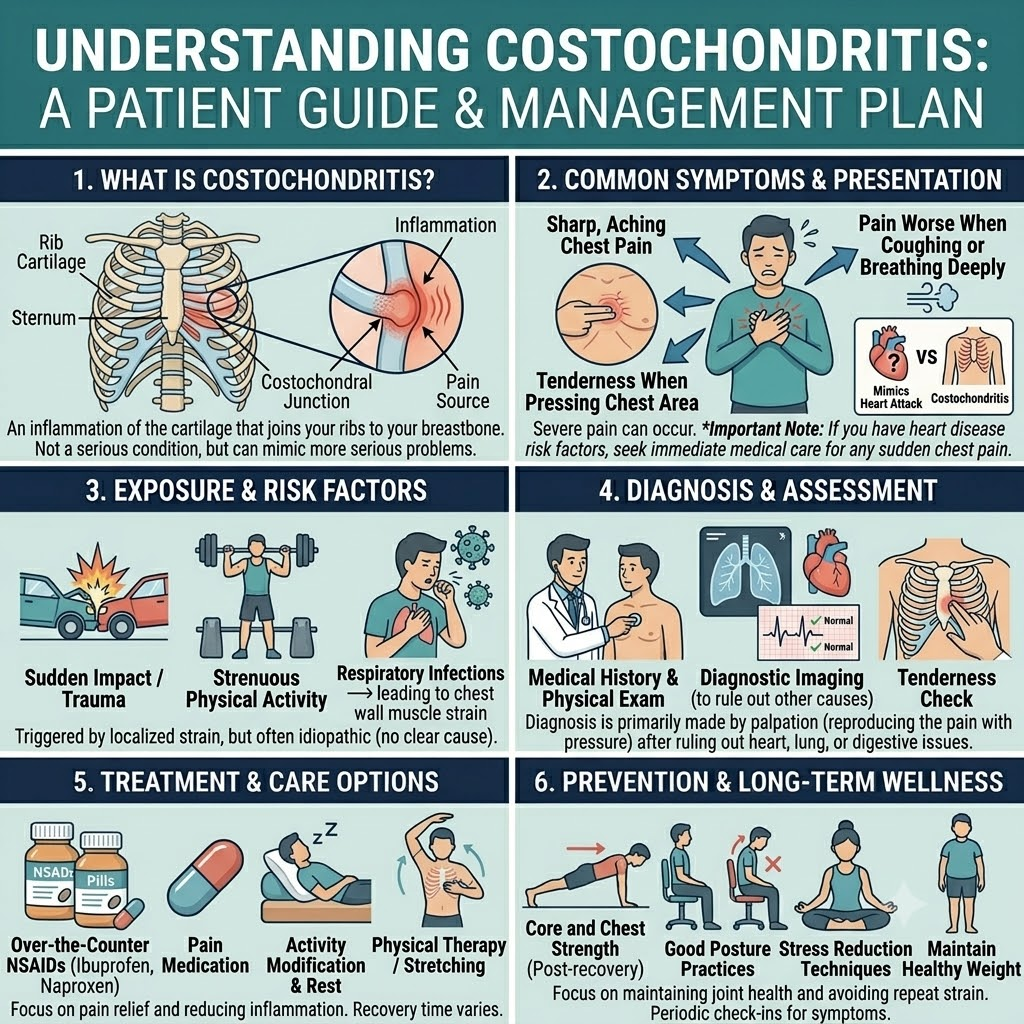
Costochondritis (kos-toe-kon-DRY-tis) is a common cause of chest pain, resulting from inflammation of the cartilage connecting your ribs to your breastbone (sternum). The pain can be sharp or aching and might feel similar to heart-related issues, making medical evaluation important. While its exact cause is often unknown, costochondritis usually resolves on its own with rest and pain management. If swelling accompanies the pain, it's known as Tietze syndrome.
Understanding the Condition
Understanding Costochondritis: Chest Wall Pain
Understanding the Condition
Common Symptoms
Location of Pain: Pain is most common in the upper ribs, often on the left side of the body. It's usually worst where the rib cartilage meets the breastbone, but can also occur where the cartilage connects to the rib itself.
Type of Pain: The pain is typically sharp, aching, or feels like pressure.
Pain Triggers: The pain often worsens with movement, physical activity, coughing, or deep breaths.
Pain Relief: Rest usually helps ease the pain.
Multiple Rib Involvement: The pain can affect more than one rib.
Consultation Guide
Which Specialist to Meet
For any new chest pain, consult your primary care doctor first. They will assess your condition and may refer you to a cardiologist (heart specialist) or a rheumatologist (joint and muscle specialist) if needed.
Preparations Before Your Visit
Before your visit, list your symptoms, medical history, all current medications, and any questions. Discuss recent activities, injuries, or illnesses.
Book a doctor visit near me
Your doctor will ask about your medical history and symptoms, then gently press on your chest to find tender areas. This helps identify costochondritis and rule out other causes.
Rest and Activity Modification: Avoid activities that worsen pain like strenuous exercise or heavy lifting. Rest allows inflamed cartilage to heal. (Duration: Until symptoms improve, usually several weeks.)
Heat or Cold Therapy: Apply a warm compress or ice pack to the painful area to reduce pain and inflammation. (Duration: As needed, 15-20 minutes at a time.)
Follow-up Care: If symptoms persist, worsen, or change, consult your doctor for evaluation or treatment adjustment.
Consultation Guide
Costochondritis (kos-toe-kon-DRY-tis) is a common cause of chest pain, resulting from inflammation of the cartilage connecting your ribs to your breastbone (sternum). The pain can be sharp or aching and might feel similar to heart-related issues, making medical evaluation important. While its exact cause is often unknown, costochondritis usually resolves on its own with rest and pain management. If swelling accompanies the pain, it's known as Tietze syndrome.
Blood tests check for inflammation, infection, or specific heart markers, helping rule out other causes of chest pain.
Diagnostic Procedures
Physical Exam and Medical History
What to Expect
The doctor will listen to your heart and lungs, and feel your chest. You might be asked to move or breathe deeply to see if pain worsens.
Electrocardiogram (ECG or EKG)
An ECG measures your heart's electrical activity. It's a quick, painless test used to check for heart problems that might mimic costochondritis pain.
What to Expect
Small, sticky patches (electrodes) are placed on your chest and limbs, connected to a machine. The test takes minutes and is not uncomfortable.
A chest X-ray uses radiation to create images of your lungs and heart, helping rule out lung conditions or other chest issues.
What to Expect
You stand or sit in front of the machine and hold your breath briefly. It's quick and painless.
What to Expect
A small blood sample is drawn from a vein in your arm. You might feel a brief pinch.
Treatment Options
Medications
Pain Relievers: Over-the-counter options like non-steroidal anti-inflammatory drugs (NSAIDs) or acetaminophen can manage pain. For severe cases, doctors may prescribe stronger anti-inflammatory medications. (Duration: As directed, usually weeks until pain subsides.)
Therapies
Physical Therapy: A physical therapist can guide you through stretches and exercises to improve posture, strengthen chest muscles, and relieve tension, also teaching proper breathing. (Duration: Several weeks, with regular home practice.)
Prevention & Long-Term Wellbeing
Home Remedies and Lifestyle Adjustments
Prevention
Avoid Overexertion: Be mindful of activities involving repetitive arm movements, heavy lifting, or sudden torso twists, especially if you've had costochondritis. Gradually increase activity.
Proper Posture: Maintain good posture, particularly when sitting or working, to prevent strain on your rib cage.
Managing Coughs: Treat persistent coughs promptly, as severe coughing can strain the chest wall and trigger pain.
Long-Term Wellbeing
Listen to Your Body: Heed your body's signals and rest as needed. Pushing through pain can worsen inflammation.
Stress Management: Practice relaxation techniques like deep breathing to help reduce muscle tension, which can contribute to chest discomfort.
Regular, Gentle Exercise: Once acute pain lessens, engage in low-impact exercises like walking or swimming to maintain flexibility without straining the chest.
Tags & Topics
Notice an error or need an update?
Help us keep medical information accurate. Report incorrect info or suggest an edit.


