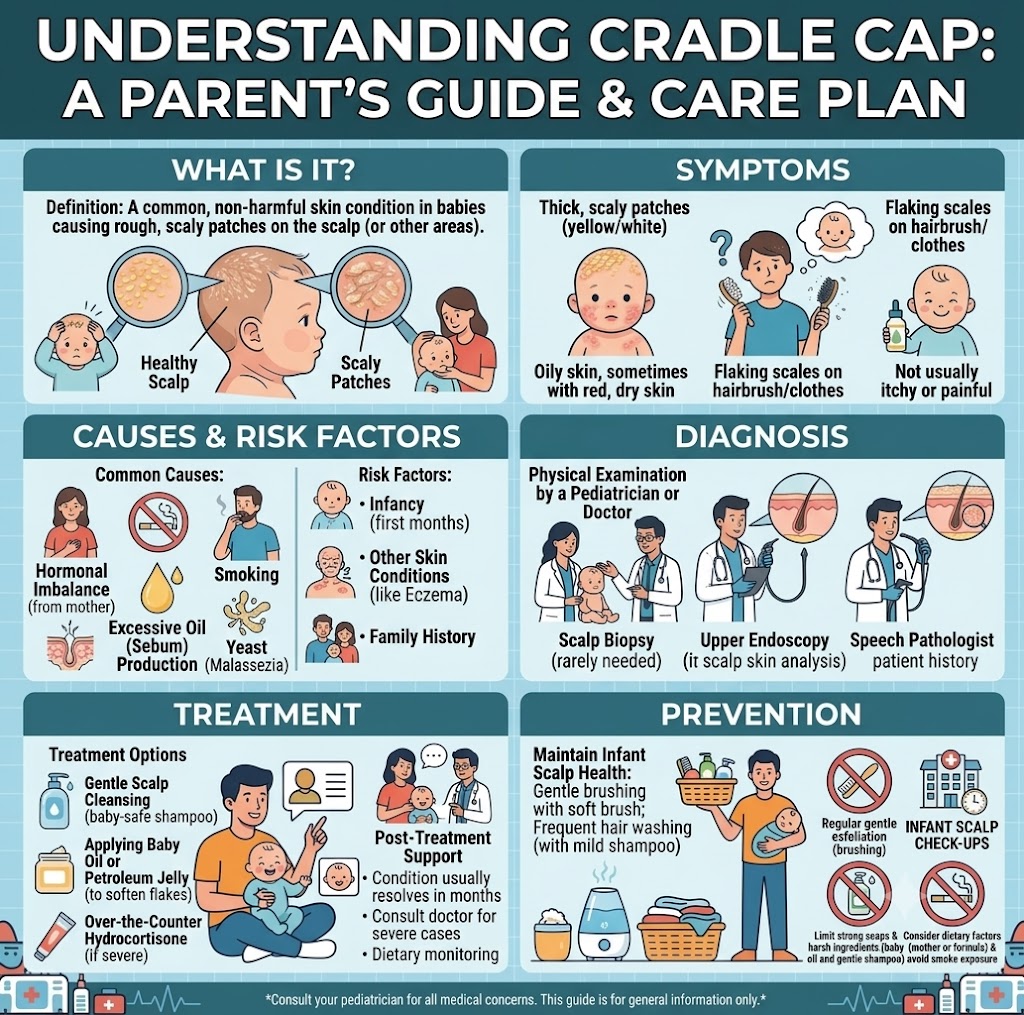
Cradle cap, medically known as infantile seborrheic dermatitis, is a very common and harmless skin condition affecting newborns and young babies. It appears as crusty, oily, or scaly patches on a baby's scalp, which can be white or yellow. While it may look unpleasant, it is not painful or itchy for the baby and typically resolves on its own within weeks to a few months with simple home care.
Understanding the Condition
Cradle Cap: Understanding and Managing Your Baby's Scalp Condition
Understanding the Condition
Cradle cap, medically known as infantile seborrheic dermatitis, is a very common and harmless skin condition affecting newborns and young babies. It appears as crusty, oily, or scaly patches on a baby's scalp, which can be white or yellow. While it may look unpleasant, it is not painful or itchy for the baby and typically resolves on its own within weeks to a few months with simple home care.
Common Symptoms
Scaly Patches and Crusts: Thick, patchy scaling or crusts appear on the scalp. These can be white or yellow in color.
Oily or Dry Skin with Flakes: The affected skin might feel oily or dry, covered with flaky white or yellow scales. These flakes are often shed.
Mild Skin Redness: There may be mild redness or inflammation in the affected areas, though this is usually not significant.
Appearance on Different Skin Tones: On lighter skin, cradle cap typically presents as yellow, crusty, or greasy patches. On darker skin tones, these patches may appear as flaky white or yellow scales against the baby’s natural skin, and sometimes a slight discoloration or change in skin texture may be more noticeable.
Other Affected Areas: Similar scales can also appear on the ears, eyelids, nose, or groin area, though the scalp is most common.
Consultation Guide
Which Specialist to Meet
For initial concerns or if home remedies are not effective, your baby's pediatrician or family doctor is the primary specialist to consult. If the condition is persistent, severe, or spreads extensively, a pediatric dermatologist (a skin specialist for children) may be recommended.
Preparations Before Your Visit
Before your visit, prepare a list of your baby's symptoms, noting when they first appeared, how they have changed, and any discomfort (though cradle cap is usually not itchy). Also, inform the doctor about any home treatments you've tried and their effectiveness. It's helpful to have a list of any medications your baby is currently taking.
Book a doctor visit near me
During the examination, your baby's doctor will gently inspect their scalp, looking for the typical signs of cradle cap, such as crusts, scales, or oily patches. They may also check other areas like the face, ears, or diaper area if symptoms have spread. This examination is quick, painless, and involves no special instruments beyond the doctor's visual assessment.
Diagnostic Procedures
Cradle cap is almost always diagnosed based on a visual examination of your baby's skin. The doctor will carefully look at your baby's scalp and any other affected areas to identify the characteristic scaly patches.
What to Expect
Treatment Options
Gentle Scalp Washing: Wash your baby's scalp daily with a mild, tear-free baby shampoo. This helps to loosen and remove the scales. Gently massage the shampoo into the scalp with your fingertips or a soft brush. (Duration: Continue daily until the condition clears, which typically takes a few weeks to a few months.)
Loosening Scales: Before shampooing, you can gently rub a small amount of mineral oil, baby oil, or petroleum jelly onto the affected areas. Let it sit for a few minutes (e.g., 10-15 minutes) to soften the scales, then gently brush with a soft-bristled baby brush or fine-toothed comb to lift them before rinsing and shampooing. (Duration: Apply before washing, as needed, until scales are easily removed.)
Avoid Scratching: Although cradle cap is usually not itchy, avoid scratching or picking at the scales, as this can irritate the skin or lead to infection. (Duration: Ongoing.)
Medications (Prescription, if needed)
Medicated Shampoos or Lotions: If home care isn't effective or the condition is severe, your doctor might prescribe a medicated shampoo or cream. These products often contain ingredients that help control yeast growth or reduce inflammation. They are used as directed by the doctor. (Duration: Typically used for a short period, as prescribed by the doctor, often for several days to a few weeks.)
Prevention & Long-Term Wellbeing
Prevention and Long-Term Wellbeing
Regular Scalp Hygiene: Shampooing your baby's hair every few days with a mild baby shampoo can help prevent the buildup of oils and scales that contribute to cradle cap.
Gentle Brushing: After shampooing, gently brush your baby's scalp with a soft baby brush to help remove any loose flakes and stimulate the scalp.
Moisturizing (if dry): If your baby's scalp tends to be dry, a mild, unscented baby lotion or natural oil (like mineral oil) can be used sparingly after washing to keep the skin moisturized.
Avoid Harsh Products: Do not use adult shampoos, soaps, or harsh chemicals on your baby's sensitive scalp, as these can strip natural oils and worsen irritation.
Tags & Topics
Notice an error or need an update?
Help us keep medical information accurate. Report incorrect info or suggest an edit.


