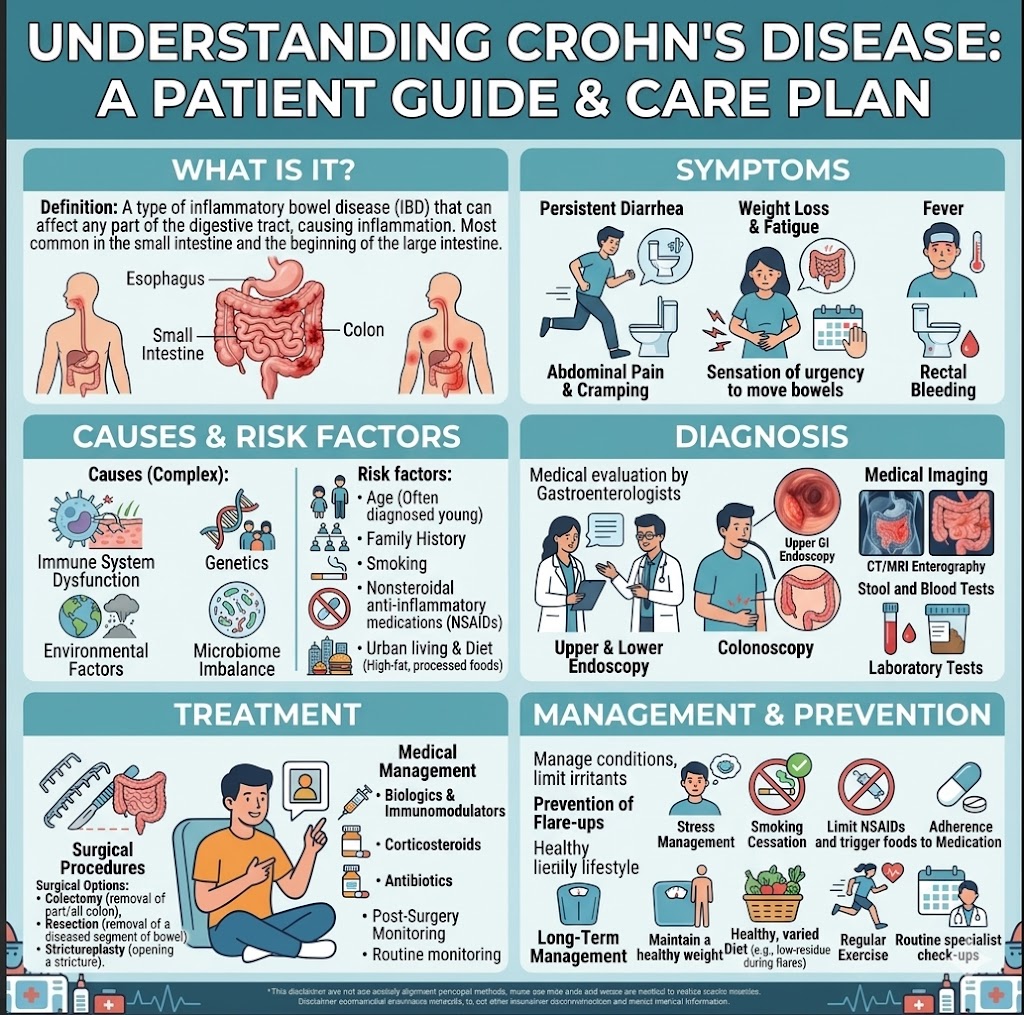
Crohn's disease is a type of inflammatory bowel disease (IBD) causing persistent swelling and irritation (inflammation) in the digestive tract. This can lead to severe belly pain, chronic diarrhea, extreme tiredness, weight loss, and malnutrition. It commonly affects the end of the small and beginning of the large intestine, with inflammation often reaching deeper layers. While painful and debilitating, current treatments significantly reduce symptoms, induce long-term remission, and heal inflammation, enabling many to live full lives. The exact cause is unknown, but genetics and an abnormal immune system response are believed to play a role.
Understanding the Condition
Crohn's Disease: Understanding, Symptoms, and Management
Understanding the Condition
Crohn's disease is a type of inflammatory bowel disease (IBD) causing persistent swelling and irritation (inflammation) in the digestive tract. This can lead to severe belly pain, chronic diarrhea, extreme tiredness, weight loss, and malnutrition. It commonly affects the end of the small and beginning of the large intestine, with inflammation often reaching deeper layers. While painful and debilitating, current treatments significantly reduce symptoms, induce long-term remission, and heal inflammation, enabling many to live full lives. The exact cause is unknown, but genetics and an abnormal immune system response are believed to play a role.
Common Symptoms
Belly Pain and Cramping: Discomfort or sharp pains in the abdomen, often severe and persistent.
Severe Diarrhea: Frequent, loose bowel movements, potentially with blood.
Blood in the Stool: Visible or hidden blood, indicating internal bleeding.
Fatigue: Overwhelming tiredness not relieved by rest, often due to inflammation or anemia.
Reduced Appetite and Weight Loss: Lack of desire to eat and unintentional weight loss from poor nutrient absorption or pain.
Mouth Sores: Painful ulcers or lesions in the mouth.
Anal Pain or Drainage (Fistula): Discomfort or discharge near the anus, often from a fistula (an abnormal tunnel to the skin).
Before your visit, note symptoms, medications, family history, and questions. A food diary can identify triggers.
Book a doctor visit near me
Anti-inflammatory Drugs: Reduce inflammation. For mild symptoms or severe flares. (Duration: Varies; long-term for maintenance, short-term for flares.)
Immune System Suppressors: Calm overactive immune response causing inflammation, including biologics. (Duration: Typically long-term for management and remission.)
Antibiotics: Treat bacterial infections (abscesses, fistulas); may reduce harmful gut bacteria. (Duration: Short-term courses as needed.)
Stress Reduction: Stress can worsen symptoms. Practice meditation, yoga, or counseling to manage stress.
Consultation Guide
Inflammation Outside the Bowel: Severe cases can cause inflammation in skin, eyes, joints, or lead to issues like kidney stones and anemia.
Consultation Guide
Which Specialist to Meet
A healthcare professional will draw a small sample of blood from a vein, typically in your arm. This is a quick procedure and may cause a brief pinch.
Barium Enema (Colon X-ray)
Strictureplasty: Widens narrowed bowel segments (strictures) caused by scarring, preserving intestine. (Duration: One-time procedure; recovery weeks.)
Quit Smoking: Smoking is a major risk factor for developing and worsening Crohn's. Quitting is vital for management.
Stay Hydrated: Crucial for preventing dehydration, especially with diarrhea. Drink plenty of fluids.
Avoid NSAIDs: Nonsteroidal anti-inflammatory drugs (e.g., ibuprofen) can worsen bowel inflammation. Discuss pain relief alternatives with doctor.
Long-Term Monitoring and Support
Diagnostic Procedures
Alkaline Phosphatase (ALP) Blood Test
Measures alkaline phosphatase, an enzyme mainly from liver and bones. High levels may suggest liver or bone issues related to Crohn's.
What to Expect
An X-ray of the large intestine after it's coated with barium liquid for clearer imaging. Helps find abnormalities.
What to Expect
Expect bowel preparation, then barium inserted rectally with X-rays. You might feel a sense of fullness or mild cramping.
You swallow a pill-sized camera that takes thousands of pictures of your small intestine. Images transmit to a wearable recorder.
What to Expect
Expect fasting, then swallow the capsule and wear the recorder for about 8 hours. The capsule passes naturally.
A flexible tube with a camera views the entire large intestine and end of the small intestine. Detects inflammation, polyps, or changes.
What to Expect
What to Expect
Expect to lie on a table that slides into a machine. Contrast dye may be given. It's a painless procedure.
Fecal Occult Blood Test (FOBT)
Checks for tiny, hidden blood in a stool sample, which can signal bleeding from inflammation or polyps.
What to Expect
Examines the rectum and lower large intestine with a flexible tube and camera. Detects inflammation or polyps.
What to Expect
Expect lower bowel preparation (enema). The tube is inserted; you may feel pressure. It is shorter than a colonoscopy, often without sedation.
Home Enteral Nutrition (Tube Feeding): Tube feeding provides liquid nutrition directly to stomach/small intestine when oral intake is insufficient. (Duration: Temporary (flares) or long-term.)
Bowel Resection (Colectomy or Ileostomy): Removes diseased intestine. May require an ostomy (opening for waste into external pouch), temporary or permanent. (Duration: One-time surgery; recovery weeks-months. Ostomy care lifelong if permanent.)
Fistula Repair: Surgical treatment to close or manage abnormal tunnels between intestines or organs/skin. (Duration: One-time procedure; recovery weeks.)
Treatment Options
Expect to collect small stool samples at home over a few days using a kit. Follow dietary/medication instructions.
Flexible Sigmoidoscopy
Medications
Anti-diarrhea Medications: Relieve frequent bowel movements. (Duration: Used as needed.)
Pain Relievers: Manage abdominal pain. Discuss safe options with doctor; some worsen inflammation. (Duration: Used as needed.)
Vitamin and Mineral Supplements: Address nutritional deficiencies (e.g., iron, B-12) from poor absorption. (Duration: Ongoing, based on needs.)
Procedures and Therapies
Acupuncture: Alternative therapy using thin needles for pain/well-being; not a primary Crohn's treatment. (Duration: Varies, multiple sessions.)
Minimally Invasive Surgery: Uses smaller incisions (e.g., laparoscopy) for less pain, faster recovery. (Duration: One-time procedure; recovery weeks.)
Regular Medical Follow-ups: Essential for monitoring disease activity, adjusting treatment, and screening for complications.
Colon Cancer Screening: Increased risk with colon-affected Crohn's. Regular colonoscopies recommended, often earlier and more frequently.
Bone Density Screening: Monitor bone health, especially with long-term corticosteroid use (increases osteoporosis risk).
Skin Examinations: Routine skin checks advisable due to increased risk of skin conditions and cancers from some treatments.
Mental Health Support: Seek support from therapists or counselors to manage anxiety and depression with chronic illness.
Patient Support Groups: Connect with others for emotional support, shared experiences, and advice on living with Crohn's.
Prevention & Long-Term Wellbeing
Begin with your primary care doctor for referral to a gastroenterologist (digestive system specialist). A dietitian can help with diet, and a mental health professional can offer emotional support.
Preparations Before Your Visit
Expect bowel preparation and sedation. The scope is gently inserted; biopsies or polyp removal are possible. Recovery from sedation follows.
CT Scan (Computerized Tomography)
Uses X-rays and computer processing to create detailed cross-sectional images of internal organs, tissues, and blood vessels. Identifies inflammation or complications.
Abscess Drainage: Surgical removal of pus collections (abscesses) from inflammation/fistulas. (Duration: One-time procedure; recovery weeks.)
Lifestyle and Self-Management
Dietary Management: Identify and avoid trigger foods via a food diary. Work with a dietitian for balanced nutrition.
Regular Exercise: Active lifestyle improves mood, bone health, and immunity. Moderate exercise is beneficial during remission. Consult doctor.
Tags & Topics
Notice an error or need an update?
Help us keep medical information accurate. Report incorrect info or suggest an edit.


