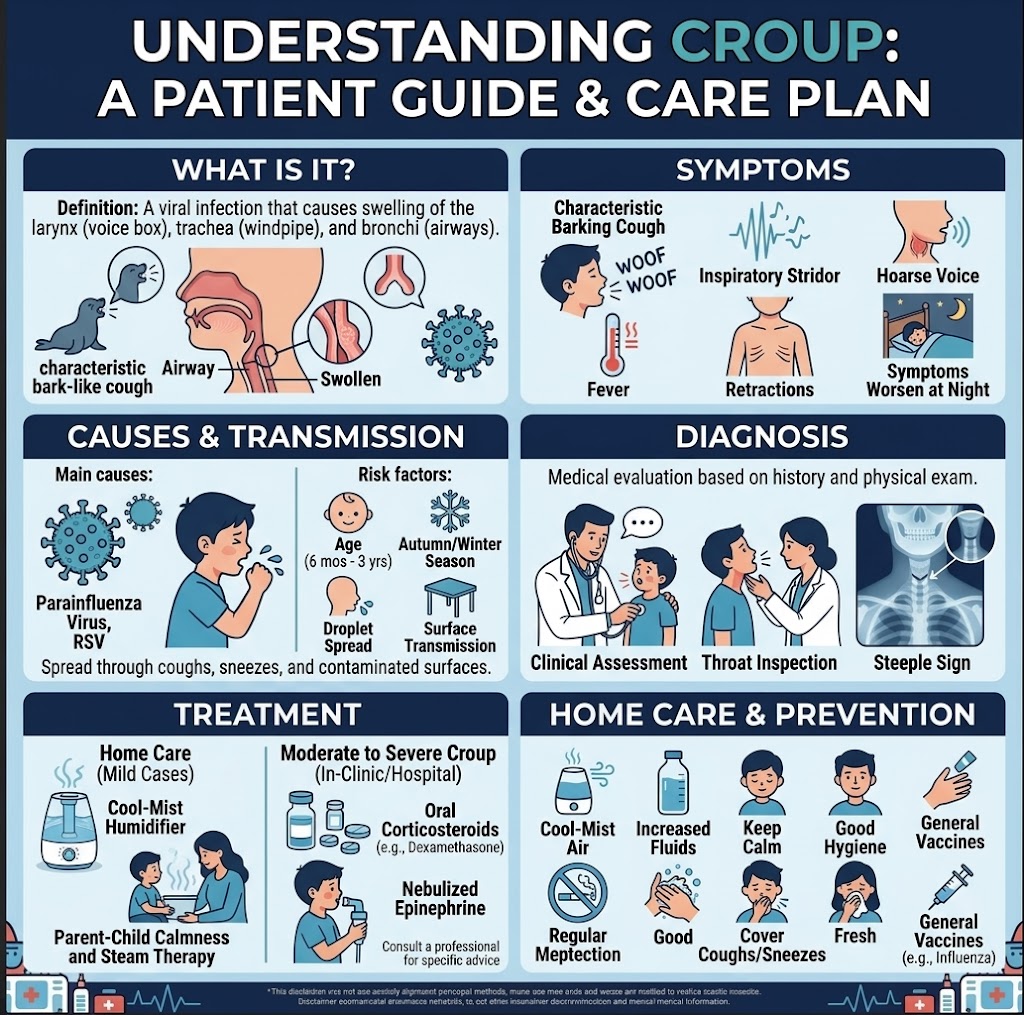
Croup is a common childhood viral infection causing swelling in the upper airway, specifically around the voice box (larynx) and windpipe (trachea). This narrowing of air passages leads to a distinctive harsh, barking cough, often described as sounding like a seal. A high-pitched whistling sound (stridor) may occur when breathing in. While it can be frightening, croup is usually not serious, and most children recover with careful home care.
Understanding the Condition
Croup: Understanding and Managing an Upper Airway Infection
Understanding the Condition
Croup is a common childhood viral infection causing swelling in the upper airway, specifically around the voice box (larynx) and windpipe (trachea). This narrowing of air passages leads to a distinctive harsh, barking cough, often described as sounding like a seal. A high-pitched whistling sound (stridor) may occur when breathing in. While it can be frightening, croup is usually not serious, and most children recover with careful home care.
Common Symptoms
Barking Cough: A harsh, dry cough that sounds like a seal. This is the most recognizable symptom.
Noisy Breathing (Stridor): A high-pitched, squeaky, or whistling sound that occurs when your child breathes in, indicating a narrowed airway.
Hoarseness: The child's voice may sound rough or raspy due to swelling around the vocal cords.
Difficulty Breathing: Visible effort to breathe, such as rapid breathing, flaring nostrils, or chest retractions (skin pulling in around the ribs with each breath).
Fever: Often present, usually low-grade.
Cold-like Symptoms: Croup often begins with a runny nose, sneezing, and mild cough, similar to a common cold, before the barking cough develops.
Worsening at Night: Symptoms, especially the cough and noisy breathing, tend to intensify at night, possibly due to changes in body position or cooler air.
Signs Requiring Immediate Medical Attention: Seek immediate medical care if your child exhibits: bluish or grayish skin around the mouth, nose, or fingernails (cyanosis); severe trouble breathing or very rapid breathing; drooling or difficulty swallowing; unusually anxious, restless, or lethargic behavior; a high fever (over 102°F or 39°C) unresponsive to fever reducers; or no improvement with home treatment or symptoms lasting longer than 5 days.
Consultation Guide
Which Specialist to Meet
You should typically consult with your child's primary care provider, such as a pediatrician or family doctor. In severe or emergency situations, an emergency medicine physician will provide immediate care, and a hospital stay may involve specialists like pediatric intensivists.
Preparations Before Your Visit
Before your visit, be prepared to describe your child's symptoms in detail: when they started, how often they occur, what makes them better or worse, and your child's fever temperature. Bring a list of any medications your child is currently taking, and any questions you have for the doctor. Understanding your child's recent medical history, including vaccinations, is also helpful.
Book a doctor visit near me
Croup is most often diagnosed based on a physical examination and the characteristic signs and symptoms. The doctor will listen to your child's breathing and cough, examine their throat, and ask about the onset and progression of symptoms. In most cases, no further tests are needed.
Staying Calm and Comforting: Crying can worsen symptoms by constricting the airway. Comforting and reassuring your child can help them breathe more easily. Try to keep them calm with quiet activities. (Duration: Throughout the illness)
Hydration: Offer plenty of fluids to prevent dehydration, especially if your child has a fever. Small, frequent sips are often better than large amounts. (Duration: Throughout the illness)
Elevated Head Position: For older children, sleeping with their head slightly elevated (e.g., using an extra pillow) may help make breathing more comfortable. Do not use extra pillows for infants. (Duration: During sleep, as needed)
Corticosteroids: Prescribed medications that reduce swelling in the airway. They are very effective in alleviating croup symptoms. (Duration: Usually a single dose or a short course, often 1-2 days)
Fever and Pain Reducers: Over-the-counter medications can help manage fever and discomfort. (Duration: As needed for symptoms)
Watch for Recurrence: Croup can sometimes recur, especially in children prone to it. Be vigilant for the return of symptoms and know how to manage them at home or when to seek medical advice.
Understand Emergency Signs: Educate yourself on the signs of severe breathing distress that require immediate medical attention to act quickly if your child's condition worsens.
Consultation Guide
While not routinely performed for typical croup, a chest X-ray may be ordered if your doctor suspects another condition, if the diagnosis is unclear, or if the croup is unusually severe. An X-ray can help rule out other causes of breathing difficulties, such as pneumonia or a foreign object in the airway. It can sometimes show a characteristic narrowing of the windpipe, known as a 'steeple sign,' which supports a croup diagnosis.
Diagnostic Procedures
Clinical Examination and Observation
What to Expect
Your child will be examined in a comfortable setting. The doctor will observe their breathing effort, listen to their chest and throat with a stethoscope, and likely look into their mouth and nose. They may gently feel your child's neck. The process is quick and generally painless, though your child might be slightly uncomfortable during the examination of their throat.
What to Expect
Your child will be asked to lie still on a table or stand against a special plate. A technician will position them carefully and may provide a lead apron for protection. The X-ray machine will take images of the chest, which is a very quick and painless process. You might be able to stay with your child, often wearing a lead apron yourself, to help keep them calm. No special preparation is typically needed beforehand.
Treatment Options
Home Care and Comfort
Humidified Air: Using a cool-mist humidifier in your child's room or sitting with your child in a steamy bathroom for 10-15 minutes can help soothe irritated airways and ease coughing. (Duration: As needed, especially at night)
Medications
Nebulized Epinephrine: In severe cases requiring hospital care, this inhaled medication rapidly reduces swelling in the airway for temporary relief. (Duration: Short-acting, given in a medical setting as needed, effects last a few hours)
Hospital-Based Treatments
Oxygen Therapy: If your child's oxygen levels are low due to severe breathing difficulties, oxygen may be administered through a mask or nasal tubes. (Duration: As long as necessary until oxygen levels stabilize)
Intravenous Fluids: If your child is dehydrated and unable to drink, fluids may be given through an IV. (Duration: As long as necessary to correct dehydration)
Close Monitoring: Children with severe croup are monitored closely in the hospital for breathing difficulties and overall condition. (Duration: Typically 1 to 3 days, depending on severity and improvement)
Prevention & Long-Term Wellbeing
Prevention
Good Hand Hygiene: Frequent and thorough hand washing with soap and water, especially after coughing or sneezing and before eating, helps prevent the spread of respiratory viruses.
Avoid Exposure: Limit contact with individuals who are sick with colds or other respiratory infections, particularly during peak cold and flu seasons.
Vaccinations: Ensure your child is up-to-date on all recommended immunizations, including the flu shot. While there isn't a specific vaccine for croup, preventing other respiratory illnesses can reduce the overall risk of airway infections.
Long-Term Monitoring and Management
Follow Medical Advice: Adhere to your healthcare provider's instructions for home care and follow-up appointments to ensure a complete recovery and address any ongoing concerns.
Tags & Topics
Notice an error or need an update?
Help us keep medical information accurate. Report incorrect info or suggest an edit.


