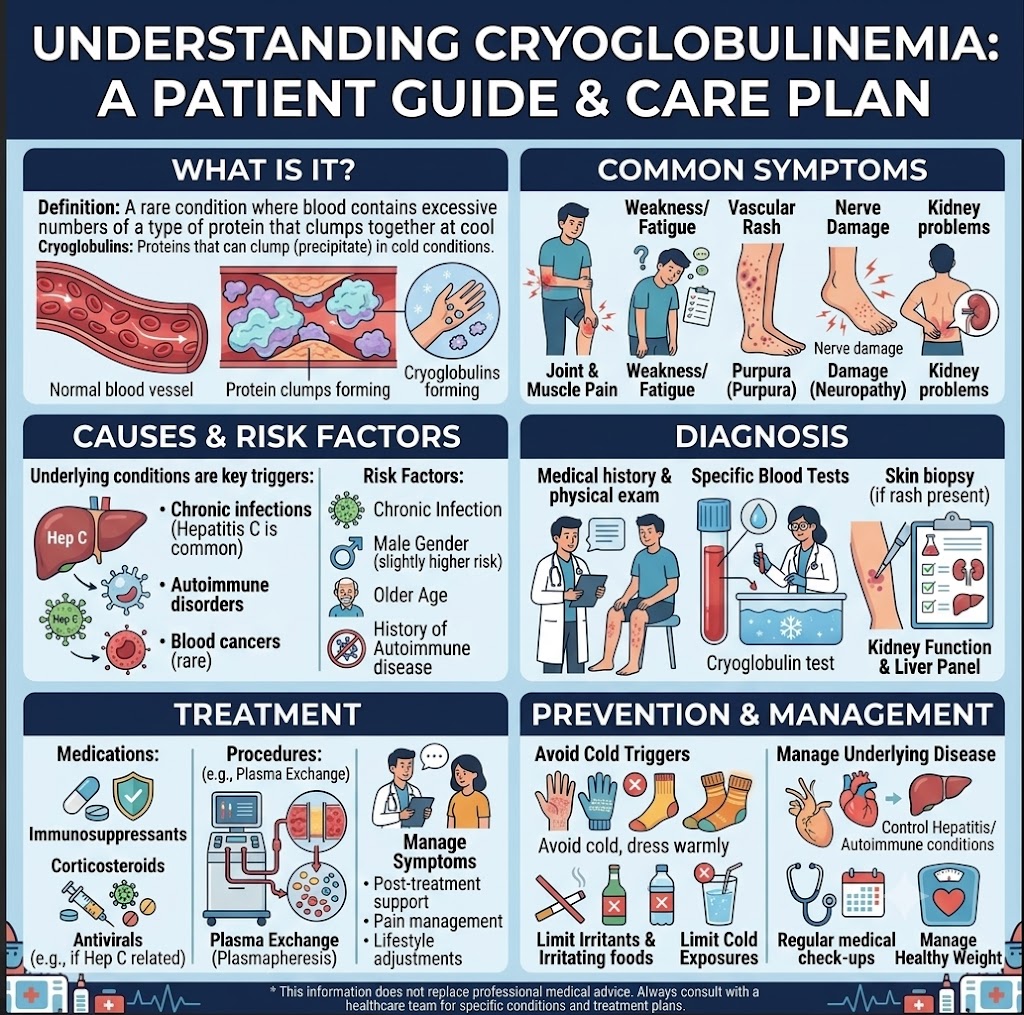
Cryoglobulinemia (kry-o-glob-u-lih-NEE-me-uh) is a rare group of conditions where abnormal proteins, called cryoglobulins, are present in the blood. These proteins clump together at temperatures below normal body temperature (98.6°F or 37°C). This clumping can block small blood vessels, leading to inflammation (vasculitis). The resulting reduced blood flow and inflammation can damage various parts of the body, including skin, joints, nerves, and organs like the kidneys and liver. It is often linked to underlying infections (especially Hepatitis C), certain blood cancers, or autoimmune diseases (such as lupus). Some people have no symptoms, while others experience symptoms that come and go.
Understanding the Condition
Cryoglobulinemia: When Cold Affects Your Blood Proteins
Understanding the Condition
Cryoglobulinemia (kry-o-glob-u-lih-NEE-me-uh) is a rare group of conditions where abnormal proteins, called cryoglobulins, are present in the blood. These proteins clump together at temperatures below normal body temperature (98.6°F or 37°C). This clumping can block small blood vessels, leading to inflammation (vasculitis). The resulting reduced blood flow and inflammation can damage various parts of the body, including skin, joints, nerves, and organs like the kidneys and liver. It is often linked to underlying infections (especially Hepatitis C), certain blood cancers, or autoimmune diseases (such as lupus). Some people have no symptoms, while others experience symptoms that come and go.
Common Symptoms
Skin Manifestations: Most common are purple or reddish-brown spots (lesions) on the legs, which can appear black or brown on darker skin. Open leg sores (ulcers) may also develop.
Joint Pain: Pain, stiffness, and swelling in the joints, often resembling rheumatoid arthritis.
Nerve Damage (Peripheral Neuropathy): Numbness, tingling, weakness, or a burning sensation, typically in the fingers and toes, due to nerve damage.
Consultation Guide
Which Specialist to Meet
You might first see your primary care doctor, who may refer you to specialists such as a rheumatologist (for joint and autoimmune issues), a nephrologist (for kidney problems), an infectious disease specialist (if an infection is suspected), a hematologist (for blood disorders), or a neurologist (for nerve damage).
Preparations Before Your Visit
Before your visit, list all symptoms, including when they started and their frequency. Bring a comprehensive list of all your medications, supplements, and past medical conditions. Prepare any questions you wish to ask your doctor.
Book a doctor visit near me
Relieving Symptoms: Pain relievers for joint discomfort, topical creams for skin lesions, and specific medications for nerve pain (neuropathy) are used. Physical therapy aids stiffness and weakness. (Duration: As needed, potentially ongoing.)
Addressing Infections Quickly: Since infections can trigger or worsen symptoms, seek medical attention for any new illness promptly. Follow vaccination recommendations from your doctor.
Managing Stress: Stress management techniques like meditation, deep breathing, yoga, or engaging in hobbies can help mitigate disease flares and improve overall well-being.
Vigilant Skin and Wound Care: Regularly inspect your skin, especially on the legs and feet, for any new spots, sores, or changes. Report any non-healing wounds to your doctor immediately to prevent infection and worsening.
Consultation Guide
Blood Tests for Cryoglobulins & Underlying Causes
Specific blood tests identify cryoglobulins and screen for underlying causes like Hepatitis C, HIV, and autoimmune markers. Kidney and liver function are also assessed.
Treating the Root Cause: Treatment primarily focuses on managing or curing the underlying condition: antiviral therapy (e.g., Hepatitis C), targeted cancer treatments, or immunosuppressants for autoimmune diseases. (Duration: Highly variable, from several months to lifelong management, depending on the specific cause.)
Diagnostic Procedures
What to Expect
A standard blood draw from your arm. The cryoglobulin sample requires careful warm handling during transport to the lab, preventing premature clumping. The procedure is quick, with minimal discomfort.
Urinalysis checks for protein or blood in your urine, indicating kidney involvement. A 24-hour collection may measure total protein loss over a day.
What to Expect
You will provide a routine urine sample. For the 24-hour test, you'll collect all urine over a day in a special container provided by your clinic.
Tissue Biopsy (Skin, Kidney, or Nerve)
A small tissue sample from affected skin, kidney, or nerve is examined under a microscope to confirm vasculitis, identify cryoglobulin deposits, and assess damage.
What to Expect
For a skin or nerve biopsy, local anesthetic numbs the area. A small piece of tissue is removed, sometimes requiring stitches. You might feel pressure. Healing takes 1-2 weeks. For a kidney biopsy, done in a hospital, local anesthetic numbs the back. A needle, guided by ultrasound, collects kidney samples. You'll need to lie flat for several hours afterward to prevent bleeding. Mild soreness is common.
Nerve Conduction Studies (NCS) & Electromyography (EMG)
These tests measure nerve signal speed (NCS) and muscle electrical activity (EMG) to detect and characterize nerve damage (neuropathy).
What to Expect
For NCS, electrodes are taped to your skin, delivering brief, mild electrical pulses causing tingling. For EMG, thin needles are inserted into muscles for electrical activity, causing slight pokes or aches. Both are generally tolerable.
Consistent Doctor Visits: Scheduled follow-up appointments are vital to monitor disease progression, assess organ function, and adjust treatment. Regular blood and urine tests track your condition.
Minimizing Cold Exposure: Always dress warmly, particularly hands and feet, even indoors. Avoid cold environments, cold water, and cold drinks. This is the most important self-management strategy.
Treatment Options
Medications
Immune-Modulating Medications: Drugs that reduce immune system activity or inflammation are often prescribed. Corticosteroids offer rapid control; other drugs target specific immune pathways to prevent cryoglobulin production and vasculitis. (Duration: Weeks or months initially, then tapered or maintained at lower doses long-term, based on disease activity.)
Blood Filtration (Plasmapheresis): For severe cases, particularly with organ involvement, blood is circulated through a machine that removes the plasma containing harmful cryoglobulins, returning the treated blood to the body. This quickly lowers cryoglobulin levels. (Duration: Typically performed in a series of sessions over several days to weeks.)
Surgical Procedures
Managing Severe Complications with Surgery: Surgery is not for cryoglobulinemia itself but for its severe complications, such as non-healing ulcers requiring debridement, or kidney transplantation in cases of end-stage kidney failure. (Duration: One-time procedure, with recovery varying based on complexity. Transplant requires lifelong anti-rejection medications.)
Prevention & Long-Term Wellbeing
Lifestyle and Home Remedies
Protecting from Cold and General Wellness: Crucially, avoid cold temperatures to prevent cryoglobulin clumping. Dress warmly, wear layers, gloves, and warm socks. Limit exposure to air conditioning and cold drinks. Maintaining a healthy diet, gentle exercise, and stress management supports overall health. (Duration: Lifelong commitment.)
Long-Term Monitoring and Prevention
Adopting a Healthy Lifestyle: Eat a balanced diet, stay hydrated, and engage in moderate exercise. Avoid smoking and excessive alcohol, which can worsen overall health and blood vessel issues.
Tags & Topics
Notice an error or need an update?
Help us keep medical information accurate. Report incorrect info or suggest an edit.


