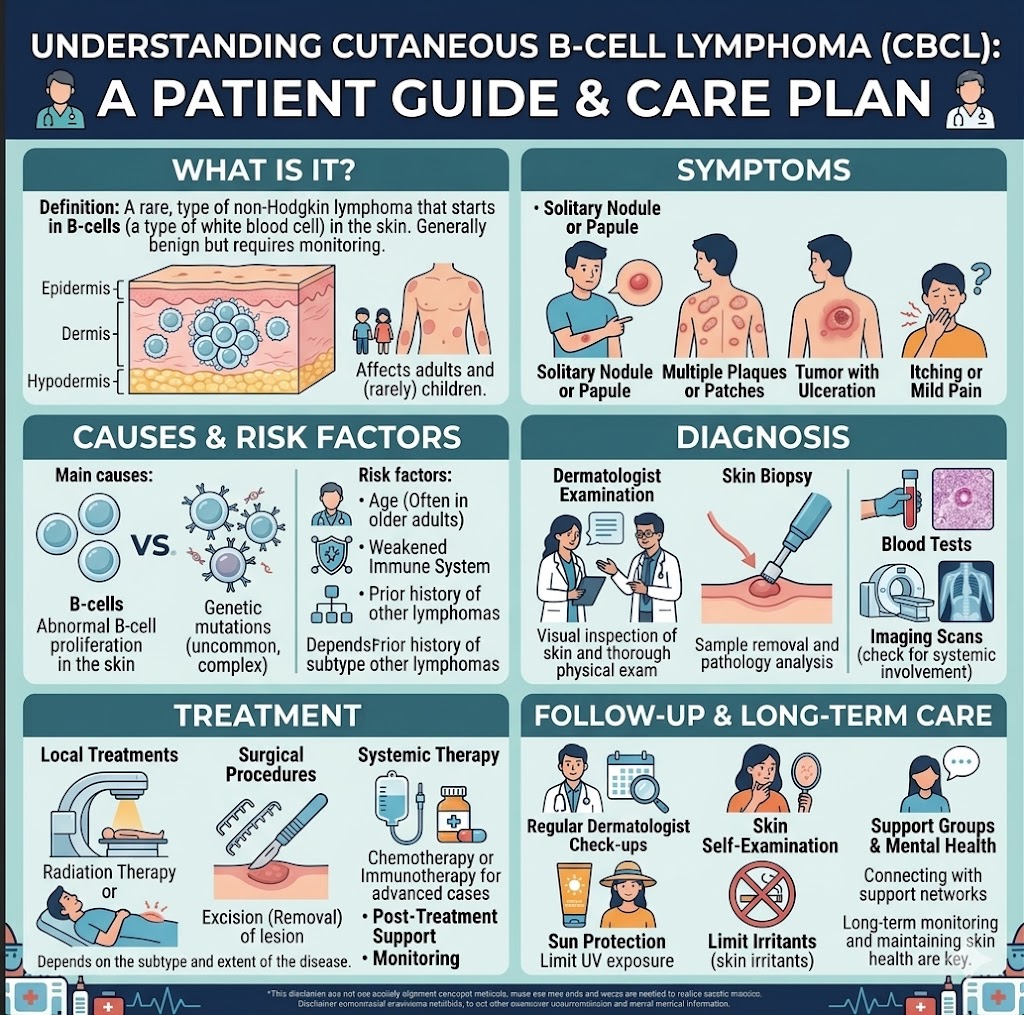
Cutaneous B-cell lymphoma is a rare type of cancer that specifically affects the skin, originating from a type of white blood cell called B lymphocytes. These B-cells normally fight infections, but in this condition, their DNA changes, causing them to grow uncontrollably and accumulate in the skin. While the exact cause is unknown, risk factors include older age (over 50), a weakened immune system (due to medications or conditions like HIV), certain tick-borne bacterial infections (Borrelia burgdorferi in some regions), and chronic skin irritation from foreign substances like tattoo ink. It's a form of non-Hodgkin lymphoma and its prognosis varies greatly depending on the specific type, ranging from slow-growing and highly curable to fast-growing with a higher risk of spreading or returning.
Understanding the Condition
Understanding Cutaneous B-Cell Lymphoma: A Patient Guide
Understanding the Condition
Common Symptoms
Primary Cutaneous Follicle Center Lymphoma: Appears as firm, painless bumps or lesions. Their color can vary (red, pink, or matching skin tone). Most commonly found on the head (especially the scalp), neck, and upper torso. These typically grow slowly.
Primary Cutaneous Marginal Zone B-Cell Lymphoma: Characterized by bumps or lesions that are often soft. They may appear red, purple, or match your skin tone. This type frequently develops on the torso or upper arms, often with multiple bumps present. It usually grows slowly.
Primary Cutaneous Diffuse Large B-Cell Lymphoma, Leg Type: Presents as nodules or tumors, most often on one or both lower legs, though it can appear elsewhere. Their color can be red, blue, or similar to your skin tone. This type tends to grow quickly and has a higher chance of spreading beyond the skin. Signs of spread may include swollen lymph nodes, drenching night sweats, fever, persistent fatigue, and unexplained weight loss.
Intravascular Diffuse Large B-Cell Lymphoma: Symptoms are often distinct, appearing as bumps, patchy areas of skin, or resembling spider veins; the skin may feel hard. It can be purple or match your skin tone. This aggressive type commonly appears on the torso or thighs. Because it forms in small blood vessels throughout the body, it can also affect organs like the brain, causing symptoms such as confusion, weakness, fever, and fatigue before skin symptoms appear.
Consultation Guide
Which Specialist to Meet
You should consult with a dermatologist, a doctor specializing in skin conditions, who may then refer you to an oncologist, a cancer specialist. A team approach involving both specialists is common.
Preparations Before Your Visit
Before your visit, make a detailed list of all your symptoms, when they started, and how they have changed. Include any relevant medical history, current medications, and questions you have for the doctor. Bringing a family member or friend can also be helpful for support and to assist in recalling information.
Book a doctor visit near me
Observation ('Watch and Wait'): For very slow-growing types with minimal or no symptoms, regular monitoring is employed instead of immediate active treatment. This involves close follow-up appointments. (Duration: Ongoing, as long as the condition remains stable and symptoms are manageable.)
Radiation Therapy: Utilizes high-energy beams to target and destroy cancer cells while minimizing damage to surrounding healthy tissue. It's often focused directly on the affected skin areas. (Duration: Typically administered over several weeks, with short daily sessions (e.g., 5-10 minutes per session, 5 days a week).)
Self-Monitoring for Changes: Be vigilant for any new or recurring skin lesions, changes in existing skin areas, or the development of systemic symptoms such as persistent fever, night sweats, or unexplained weight loss. Report these promptly to your doctor.
Understand Your Specific Type: Be informed about your specific type of lymphoma, its prognosis, and its likelihood of relapse or spreading. This knowledge empowers you to participate actively in your care.
Consultation Guide
Cutaneous B-cell lymphoma is a rare type of cancer that specifically affects the skin, originating from a type of white blood cell called B lymphocytes. These B-cells normally fight infections, but in this condition, their DNA changes, causing them to grow uncontrollably and accumulate in the skin. While the exact cause is unknown, risk factors include older age (over 50), a weakened immune system (due to medications or conditions like HIV), certain tick-borne bacterial infections (Borrelia burgdorferi in some regions), and chronic skin irritation from foreign substances like tattoo ink. It's a form of non-Hodgkin lymphoma and its prognosis varies greatly depending on the specific type, ranging from slow-growing and highly curable to fast-growing with a higher risk of spreading or returning.
The area of skin to be biopsied will be numbed with a local anesthetic injection, which may cause a brief sting. Depending on the lesion, your doctor may perform a 'shave biopsy' (scraping off the top layer), a 'punch biopsy' (removing a deeper, circular piece), or an 'excisional biopsy' (removing the entire lesion with a small margin). The procedure is quick, and while shave biopsies may not need stitches, punch and excisional biopsies usually do. You might feel some pressure but generally no pain during the removal.
Bone Marrow Exam (Aspiration and Biopsy)
This two-part procedure collects samples of liquid bone marrow (aspiration) and a small piece of solid bone marrow (biopsy) to determine if the lymphoma has spread beyond the skin to the bone marrow.
You will lie down, usually on your stomach or side. The back of your hip bone (pelvis) is a common site, which will be numbed with a local anesthetic. A thin needle is used to draw out liquid marrow, which can cause a brief, sharp pain or pulling sensation. Then, a slightly larger needle removes a small core of bone and marrow. You might feel pressure or a dull ache. The site is then bandaged, and you may experience soreness for a few days.
CT Scan (Computed Tomography Scan)
You will lie on a narrow table that slides into a large, doughnut-shaped machine. The scanner moves around you, taking multiple images. You may be asked to hold your breath briefly. The process is generally painless, though you might hear whirring sounds. Sometimes, a contrast dye is injected into a vein to enhance image clarity, which can cause a warm sensation throughout your body.
PET Scan (Positron Emission Tomography Scan)
A small amount of radioactive tracer is injected into a vein in your arm or hand. You'll wait about an hour for the tracer to circulate and be absorbed by active cells. Then, you'll lie on a table that slides into the PET scanner. The scan typically takes about 30 minutes. It is a painless procedure, and the tracer usually doesn't cause any sensation. You'll be advised to drink plenty of fluids after the scan to help your body eliminate the tracer.
Diagnostic Procedures
A procedure to remove a small sample of skin tissue for laboratory analysis. This helps to accurately diagnose the specific type of lymphoma and confirm the presence of cancer cells.
What to Expect
What to Expect
An imaging test that uses X-rays and computer processing to create detailed cross-sectional images of your body. It helps healthcare professionals check for any signs of lymphoma spread to internal organs or lymph nodes.
What to Expect
An imaging test that uses a small amount of a radioactive tracer to highlight areas of increased metabolic activity, which can indicate the presence of cancer cells. Often combined with a CT scan (PET-CT) for detailed anatomical and functional information.
What to Expect
Seek Emotional Support: Connect with family, friends, support groups, or mental health professionals to help cope with the emotional and psychological impact of a cancer diagnosis and its long-term management.
Treatment Options
Procedures and Therapies
Surgery: Involves the physical removal of the cancerous lesion along with a small margin of healthy tissue. This is often an option for localized tumors. (Duration: A single procedure, followed by a recovery period of days to weeks for wound healing.)
Medications
Skin-Directed Medicines: Medications applied directly to the skin (topical) or injected directly into the lesions. These are designed to treat the cancer locally without affecting the entire body. (Duration: Varies from weeks to several months, depending on the specific medication and patient response.)
Chemotherapy: Uses powerful drugs, given intravenously or orally, to kill rapidly dividing cancer cells throughout the body. It's considered for widespread or more aggressive forms of lymphoma. (Duration: Administered in cycles, typically lasting several months, with rest periods between cycles.)
Immunotherapy: Also known as biological therapy, this treatment helps boost your body's own immune system to recognize and attack cancer cells more effectively. (Duration: Highly variable, ranging from weeks to many months or even years, depending on the specific agent and treatment plan.)
Manage Immune System Health: If you have a weakened immune system due to medication or illness, discuss strategies with your doctor to mitigate potential risks and maintain immune function.
Tick Bite Prevention: In regions where tick-borne bacteria (like Borrelia burgdorferi) are prevalent, take precautions against tick bites and seek prompt treatment for any suspected infections.
Long-Term Monitoring & Relapse Management
Regular Follow-Up Appointments: Even after successful treatment, consistent follow-up visits with your healthcare team are crucial. Some types of cutaneous B-cell lymphoma have a risk of returning (relapse).
Prevention & Long-Term Wellbeing
Prevention & Risk Management
Maintain a Healthy Lifestyle: Although there's no guaranteed prevention, supporting overall health through a balanced diet, regular exercise (as advised by your doctor), and stress management can contribute to a stronger immune system.
Tags & Topics
Notice an error or need an update?
Help us keep medical information accurate. Report incorrect info or suggest an edit.


