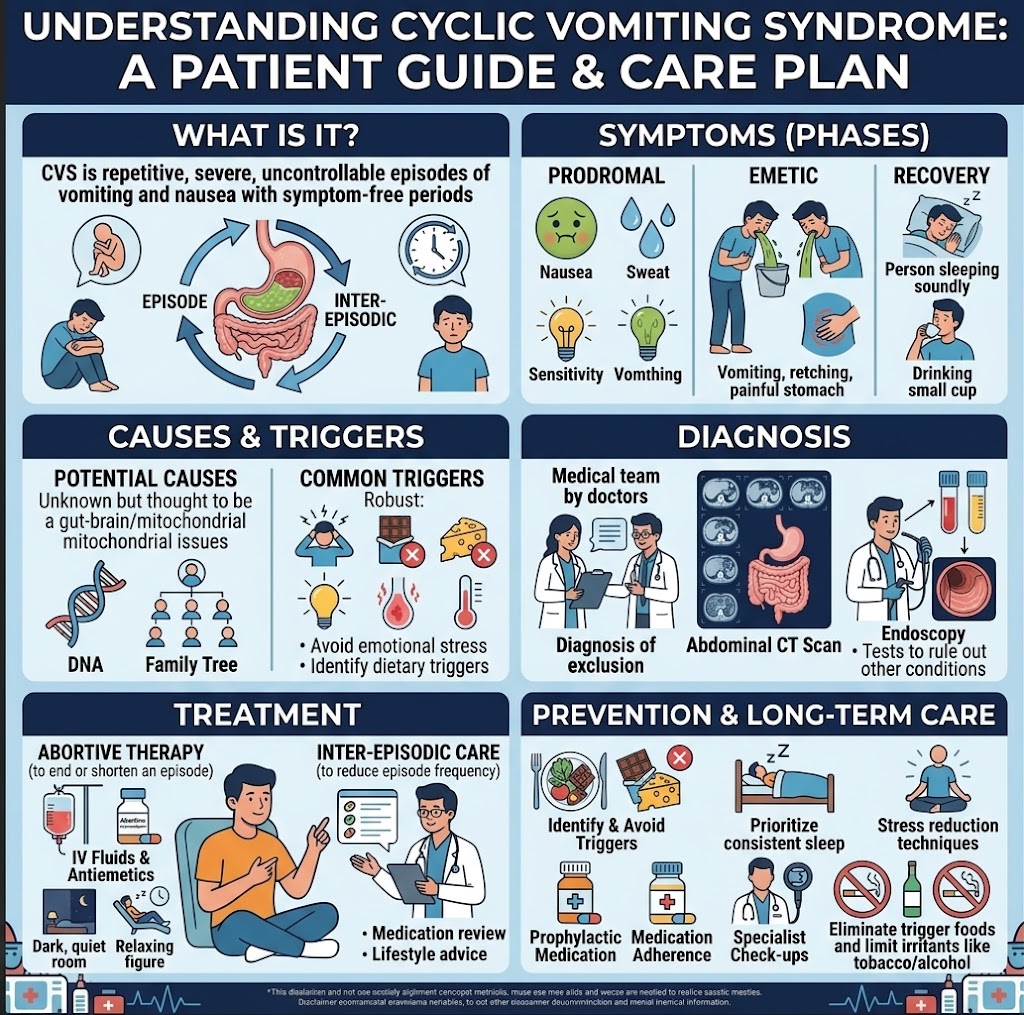
Cyclic Vomiting Syndrome (CVS) is a condition that causes sudden, severe episodes of nausea and vomiting. These intense episodes can last from a few hours to several days, followed by symptom-free periods that can extend for weeks or even months. A defining feature of CVS is that these episodes tend to be very similar each time: they often start at the same time of day, last for a similar duration, and present with consistent symptoms and intensity. CVS can affect people of all ages, though it frequently begins in children, typically between 3 and 7 years old. While its exact cause remains unknown, and diagnosis can be challenging due to vomiting being a common symptom of many conditions, treatment focuses on managing symptoms and avoiding known triggers.
Understanding the Condition
Cyclic Vomiting Syndrome
Understanding the Condition
Cyclic Vomiting Syndrome (CVS) is a condition that causes sudden, severe episodes of nausea and vomiting. These intense episodes can last from a few hours to several days, followed by symptom-free periods that can extend for weeks or even months. A defining feature of CVS is that these episodes tend to be very similar each time: they often start at the same time of day, last for a similar duration, and present with consistent symptoms and intensity. CVS can affect people of all ages, though it frequently begins in children, typically between 3 and 7 years old. While its exact cause remains unknown, and diagnosis can be challenging due to vomiting being a common symptom of many conditions, treatment focuses on managing symptoms and avoiding known triggers.
Common Symptoms
Main Symptoms: Severe, sudden nausea and repeated vomiting, often many times per hour; stomach pain; headache; sensitivity to light (photophobia); pale skin.
Other Symptoms During an Episode: Diarrhea; dizziness or feeling lightheaded; mild fever.
Urgent Medical Attention: Seek immediate medical attention if you or your child experiences blood in vomit. Prolonged vomiting can lead to severe dehydration, which can be life-threatening. Watch for signs of dehydration such as: less frequent urination, extreme thirst, dry mouth, reduced tears, sunken eyes, and fast heartbeat.
Consultation Guide
Which Specialist to Meet
If you suspect Cyclic Vomiting Syndrome or experience recurring severe vomiting, start by consulting your primary care doctor. They can provide initial assessment and referrals. Depending on your symptoms and medical history, you may be referred to a specialist in digestive diseases (Gastroenterologist) or a nerve and brain specialist (Neurologist), as CVS can involve both body systems.
Preparations Before Your Visit
Before your appointment, try to keep a detailed diary of your vomiting episodes, noting when they start, how long they last, associated symptoms, and anything you think might have triggered them. This information is vital for an accurate diagnosis.
Book a doctor visit near me
Diagnosing Cyclic Vomiting Syndrome is challenging; there isn't a single test, and symptoms mimic many other conditions. Diagnosis involves reviewing symptoms, medical history, physical exams, and tests to rule out other causes. A CT scan uses specialized X-ray equipment and a computer to create detailed cross-sectional images ('slices') of bones, blood vessels, and soft tissues. It offers more detail than standard X-rays, helping doctors look for problems in organs like the brain, stomach, or intestines.
Stay Hydrated: Drink plenty of fluids daily, especially during symptom-free periods, to prevent dehydration.
Communicate with Healthcare Providers: Maintain open communication, reporting any changes in symptoms, triggers, or treatment effectiveness to optimize your plan.
Consultation Guide
Intravenous (IV) Fluid Administration: If vomiting causes severe dehydration, fluids and electrolytes are administered directly into a vein to restore hydration, often in an emergency. (Duration: A few hours to a day, as needed during a severe episode)
Diagnostic Procedures
CT Scan (Computerized Tomography Scan)
What to Expect
You will lie on a movable table that slides into a large, donut-shaped machine. It rotates, taking images; you may hear humming. A contrast dye might be given orally or via IV for clearer views. You must stay still; the scan takes only a few minutes and is generally painless.
This procedure visually examines your upper digestive system (esophagus, stomach, and first part of the small intestine). A doctor uses a long, thin, flexible tube called an endoscope, with a tiny camera, to look for abnormalities, inflammation, ulcers, or other conditions.
What to Expect
You'll typically receive a sedative to relax and make you sleepy; your throat may be numbed. The endoscope is gently guided down your throat. You might feel pressure but no pain. The doctor views images on a screen. The procedure usually takes 15-30 minutes. After, you'll recover from sedation and need a ride home.
Treatment Options
Medications
Acute Episode Relief Medications: Taken at episode onset to stop or lessen vomiting and nausea. May include anti-nausea medications, pain relievers, and sometimes sedatives. (Duration: As needed during an episode, typically for hours to a few days)
Preventive Medications: For frequent/severe episodes, daily medications may be prescribed to reduce future episodes. These can include migraine-like medications or those affecting nerve signals. (Duration: Long-term, usually several months to years, or as directed)
Therapies
Biofeedback: Teaches control over involuntary body functions like heart rate and breathing. Sensors provide real-time info, helping you relax and manage stress, a potential CVS trigger. (Duration: Typically 6-12 sessions over several weeks/months, with ongoing practice)
Cognitive Behavioral Therapy (CBT): Helps identify and change unhelpful thinking patterns/behaviors. Effectively manages stress, anxiety, and depression linked to CVS, providing coping strategies. (Duration: Often involves 8-20 sessions over several weeks/months, with techniques for lifelong use)
Adhere to Treatment Plans: Consistently take prescribed preventive medications and have acute relief medications ready as instructed.
Prevention & Long-Term Wellbeing
Home Remedies and Lifestyle Changes
Trigger Avoidance and Supportive Care: Identify and avoid specific triggers (stress, lack of sleep, certain foods, motion sickness) to reduce episode frequency. During an episode, rest in a dark, quiet room, stay hydrated with small sips of clear fluids, and avoid solid foods. (Duration: Ongoing, for long-term management)
Prevention and Long-Term Management
Identify and Avoid Triggers: Keep a detailed diary to pinpoint personal triggers (stress, lack of sleep, specific foods, emotional excitement). Actively minimize exposure.
Stress Management Techniques: Practice relaxation methods (deep breathing, meditation, yoga). Biofeedback and CBT help manage stress and anxiety effectively.
Maintain a Regular Routine: Establish consistent sleep, balanced meal times, and a predictable daily schedule to support body rhythm and reduce stress.
Balanced Diet: Eat nutritious meals regularly. Avoiding certain foods (highly processed/sugary) or eating smaller, frequent meals can be beneficial.
Regular Physical Activity: Engage in moderate exercise to reduce stress and improve health, but avoid overexertion if it's a trigger.
Tags & Topics
Notice an error or need an update?
Help us keep medical information accurate. Report incorrect info or suggest an edit.


