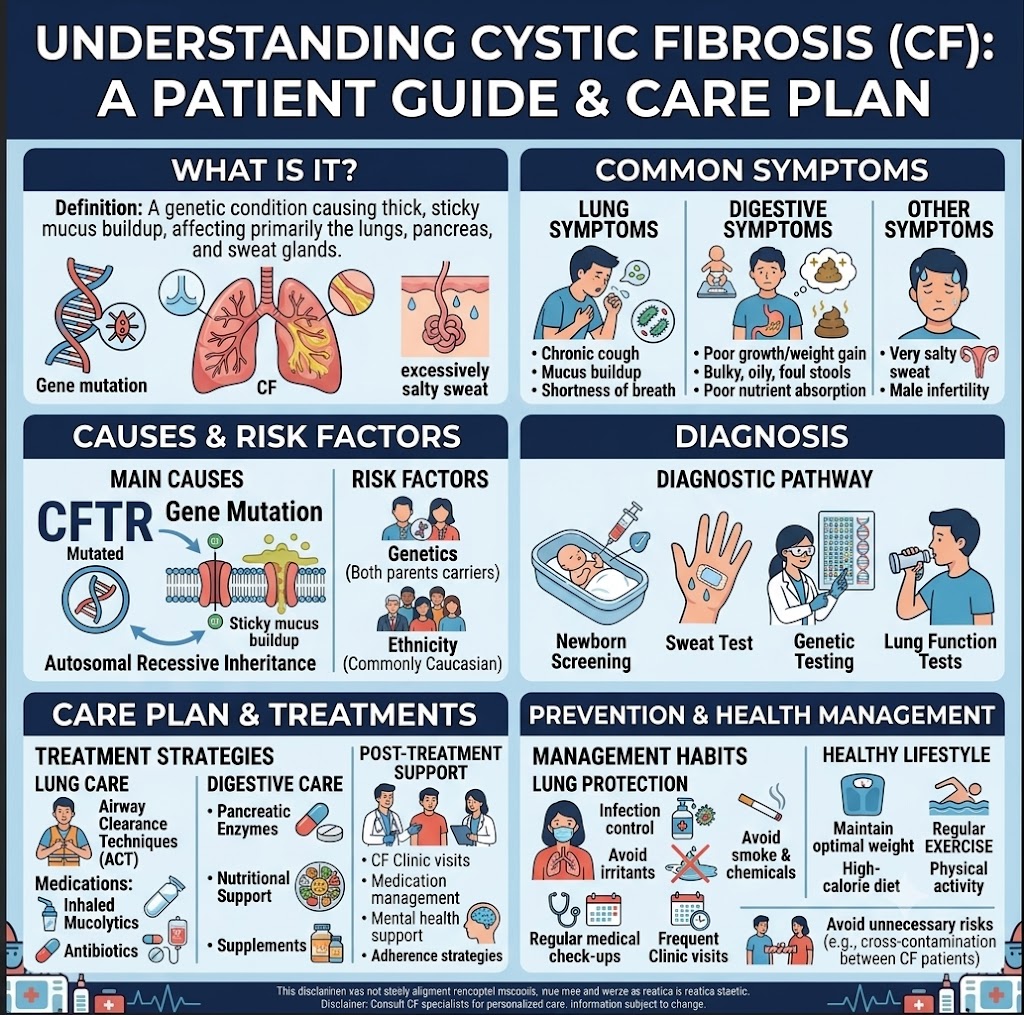
Cystic fibrosis (CF) is an inherited condition that causes widespread damage, primarily to the lungs and digestive system. It affects cells responsible for producing mucus, sweat, and digestive juices. Normally, these bodily fluids are thin and slippery, allowing for smooth movement within organs. However, in people with CF, a change in a specific gene (called CFTR) causes these secretions to become abnormally thick and sticky. This thick mucus can clog vital pathways, particularly in the lungs and pancreas, leading to various health problems. With ongoing daily care, screening, and improved treatments, individuals with CF can live longer, often into their mid-50s or beyond, and maintain a better quality of life. Some individuals are diagnosed later in life, even into adulthood.
Understanding the Condition
Cystic Fibrosis: Understanding the Condition and Management
Understanding the Condition
Common Symptoms
Salty-Tasting Skin: Parents often notice their child's skin tastes unusually salty when kissed. This is due to higher than normal salt levels in sweat.
Persistent Cough with Mucus: A cough that doesn't go away and brings up thick, sticky mucus. This is a common sign of blocked airways in the lungs.
Wheezing and Shortness of Breath: A squeaking sound during breathing (wheezing) and difficulty performing physical activity due to reduced lung function.
Frequent Lung Infections: Repeated bouts of bronchitis, pneumonia, or other lung infections, as thick mucus creates a breeding ground for germs. These can sometimes be resistant to antibiotics.
Nasal and Sinus Issues: Chronic stuffy nose, irritated and swollen nasal passages, repeated sinus infections, and soft growths in the nose called nasal polyps.
Poor Growth and Weight Gain: Despite eating, children with CF may struggle to gain weight and grow due to difficulty absorbing nutrients.
Before your appointment, gather information about your family's medical history, especially any relatives with CF. Make a list of all your symptoms, including when they started and how often they occur. Bring a list of any medications, supplements, or treatments you are currently using. Prepare a list of questions you want to ask your healthcare team to ensure all your concerns are addressed.
Book a doctor visit near me
In many countries, including the U.S., babies are screened for CF shortly after birth, before symptoms even appear. This involves a simple blood test.
Oral & Intravenous Antibiotics: Used to treat and prevent lung infections. Stronger forms may be needed for symptom flare-ups. (Duration: As needed for infections)
Strict Treatment Adherence: Consistently follow all prescribed medications, airway clearance techniques, and nutritional plans. This is crucial for managing symptoms and improving outcomes.
Regular Medical Monitoring: Maintain frequent check-ups with your CF healthcare team to monitor lung function, nutrition, and detect complications early.
Open Communication with Healthcare Team: Actively participate in your care. Communicate openly about symptoms, treatments, and any concerns. Early and effective treatment significantly improves quality of life and life expectancy.
Consultation Guide
Cystic fibrosis (CF) is an inherited condition that causes widespread damage, primarily to the lungs and digestive system. It affects cells responsible for producing mucus, sweat, and digestive juices. Normally, these bodily fluids are thin and slippery, allowing for smooth movement within organs. However, in people with CF, a change in a specific gene (called CFTR) causes these secretions to become abnormally thick and sticky. This thick mucus can clog vital pathways, particularly in the lungs and pancreas, leading to various health problems. With ongoing daily care, screening, and improved treatments, individuals with CF can live longer, often into their mid-50s or beyond, and maintain a better quality of life. Some individuals are diagnosed later in life, even into adulthood.
Diagnostic Procedures
Severe Constipation or Intestinal Blockage: Thick mucus can block the intestines, leading to severe constipation, a condition called distal intestinal obstruction syndrome (DIOS), or even a section of the intestine sliding into another.
Inflamed Pancreas (Pancreatitis): Repeated episodes of pancreas inflammation, causing abdominal pain.
Other Organ Problems (Less Common or Later Onset): This can include liver disease (jaundice, fatty liver, cirrhosis, gallstones), diabetes (due to pancreas damage), and in adults, infertility.
Consultation Guide
Which Specialist to Meet
If you suspect cystic fibrosis, begin by consulting your primary care doctor. They can then refer you to specialists such as a pulmonologist (lung specialist), a gastroenterologist (digestive system specialist), or a genetic counselor. For children, a pediatric CF specialist team is often involved.
Preparations Before Your Visit
What to Expect
A small blood sample is taken, usually from your baby's heel, shortly after birth. This sample is then tested for specific markers that can indicate CF.
This is the most common and reliable test for CF. It measures the amount of salt (chloride) in a person's sweat. People with CF have higher levels of chloride.
What to Expect
A small device is placed on the skin, usually on the forearm, to stimulate sweating. The sweat is collected and then analyzed for its salt content. The process is painless and typically takes about 30-60 minutes.
This test looks for changes in the CFTR gene, which is responsible for cystic fibrosis. It can confirm a diagnosis or identify if someone is a carrier of the gene.
What to Expect
A blood sample or a cheek swab is collected. This sample is then sent to a lab to analyze your DNA for specific gene changes linked to CF.
An X-ray uses radiation to create images of the inside of your body, particularly bones and lungs. It can help identify signs of lung damage or infection.
What to Expect
You will stand or lie down in front of an X-ray machine. You may be asked to hold your breath for a few seconds while the image is taken. The procedure is quick.
CT Scan (Computed Tomography)
A CT scan uses multiple X-ray images and computer processing to create detailed cross-sectional pictures of organs, bones, and soft tissues. This can provide more detailed views of the lungs or other affected organs than a standard X-ray.
What to Expect
You will lie on a movable table that slides into a large, donut-shaped machine. A contrast dye may be given orally or intravenously to enhance image clarity. You'll need to remain still during the scan, which can take 10-30 minutes.
Management of Complications: Treatments for conditions like diabetes, liver disease, or intestinal blockages as they occur. (Duration: Ongoing, as complications develop)
Genetic Counseling and Testing: If CF runs in your family, consider genetic testing for you and your partner before or during pregnancy to understand the risk of having a child with CF. This involves a blood test and discussion with a genetic counselor.
Long-Term Management and Quality of Life
Treatment Options
Medications and Therapies
Airway Clearance Techniques: Physical methods and devices to help loosen and clear thick mucus from the lungs. (Duration: Daily, lifelong)
Inhaled Medications: Bronchodilators to open airways, mucus-thinning agents, and inhaled antibiotics to manage lung health. (Duration: Daily, as prescribed)
Anti-Inflammatory Medications: To reduce swelling and inflammation in the airways. (Duration: Long-term, as prescribed)
Pancreatic Enzyme Supplements: Pills taken with meals and snacks to help the body absorb nutrients. (Duration: With every meal and snack, lifelong)
Nasal Polyp Removal: Surgery to remove growths in the nose that hinder breathing. (Duration: One-time, but recurrence is possible)
Oxygen Therapy: Supplemental oxygen to aid breathing when lung function is severely reduced. (Duration: As needed, often long-term)
Lung Transplant: A surgical option for severe, end-stage lung disease, replacing diseased lungs with healthy donor lungs. (Duration: One-time major surgery, followed by lifelong monitoring)
Prevention & Long-Term Wellbeing
Nutritional Support: High-calorie, high-fat diets, vitamin supplements (A, D, E, K), and sometimes tube feeding for adequate calorie intake. (Duration: Daily, lifelong; tube feeding as needed)
Procedures and Surgical Interventions
Prevention
Healthy Lifestyle Choices: Adopt a nutritious, often high-calorie, diet. Engage in regular physical activity as tolerated, and strictly avoid smoking and exposure to respiratory irritants.
Immunizations: Stay up-to-date with all recommended vaccinations, especially for respiratory infections, to minimize illness severity.
Tags & Topics
Notice an error or need an update?
Help us keep medical information accurate. Report incorrect info or suggest an edit.


