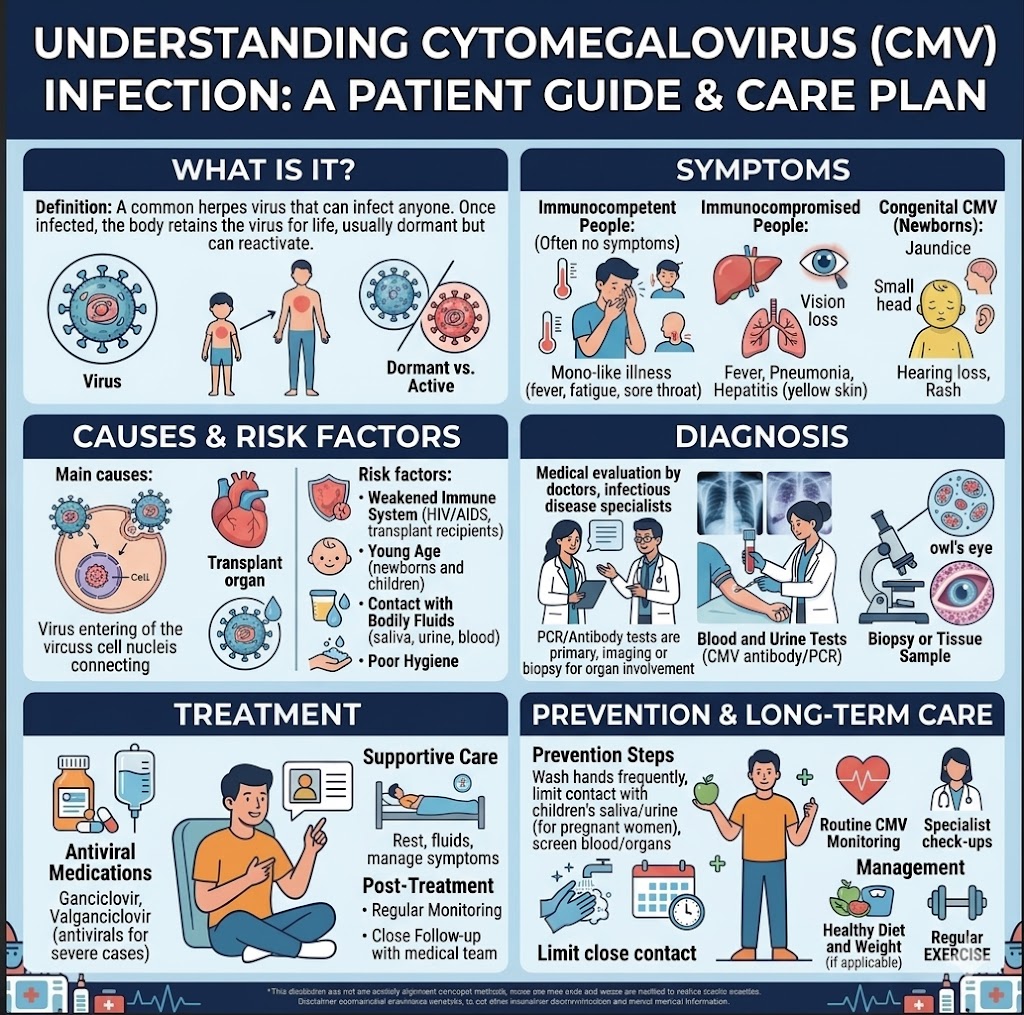
Cytomegalovirus (CMV) is a very common virus that can infect anyone. Once you're infected, the virus stays in your body for life. CMV spreads through bodily fluids like saliva, urine, blood, semen, and breast milk. While most healthy people who get CMV have no noticeable symptoms, it can be a serious concern for pregnant individuals and those with weakened immune systems. For pregnant people, an active CMV infection can be passed to the baby, potentially causing health issues. For people with weakened immune systems, CMV can lead to severe illness and, in rare cases, can be life-threatening.
Understanding the Condition
Cytomegalovirus (CMV) Infection: What You Need to Know
Understanding the Condition
Cytomegalovirus (CMV) is a very common virus that can infect anyone. Once you're infected, the virus stays in your body for life. CMV spreads through bodily fluids like saliva, urine, blood, semen, and breast milk. While most healthy people who get CMV have no noticeable symptoms, it can be a serious concern for pregnant individuals and those with weakened immune systems. For pregnant people, an active CMV infection can be passed to the baby, potentially causing health issues. For people with weakened immune systems, CMV can lead to severe illness and, in rare cases, can be life-threatening.
Common Symptoms
Common Symptoms
No Symptoms (Asymptomatic): It's important to note that most healthy people infected with CMV experience no symptoms at all and may not even realize they have the virus.
Symptoms in Vulnerable Groups: Symptoms are more likely to occur and be more severe in newborns infected during pregnancy (congenital CMV), people with weakened immune systems (such as organ transplant recipients), and pregnant individuals experiencing their first CMV infection.
Consultation Guide
Which Specialist to Meet
For general concerns about CMV, you can start with a general practitioner or family doctor. If you are pregnant or planning a pregnancy, an obstetrician/gynecologist (OB/GYN) or a maternal-fetal medicine specialist is the appropriate specialist. Individuals with weakened immune systems should consult an infectious disease specialist or the healthcare team managing their underlying condition.
Preparations Before Your Visit
Before your visit, gather your medical history, including any past illnesses, vaccinations, and current medications (prescription and over-the-counter). Be ready to discuss any symptoms you've experienced and any questions or concerns you have about CMV, especially regarding pregnancy or immune system health. For pregnant individuals, it's helpful to know your estimated due date and any previous pregnancy complications.
Book a doctor visit near me
Symptom Relief Medications: For healthy individuals who experience mild symptoms like fever or body aches, over-the-counter medications can help manage discomfort. (Duration: As needed, typically for a few days to a week.)
Antiviral Medications: These medications are prescribed for individuals with weakened immune systems (e.g., organ transplant recipients) or for newborns with symptomatic congenital CMV. They help slow down the virus's ability to multiply, reducing the severity of the infection and preventing complications. (Duration: Several weeks to months, depending on the individual's condition and the severity of the infection, as determined by a physician. In some cases, long-term or prophylactic treatment may be necessary.)
Rest and Fluids: Adequate rest helps your body fight the infection, and staying hydrated by drinking plenty of fluids is important, especially if you have a fever. (Duration: As long as symptoms persist.)
Safe Practices Around Young Children: Young children often carry and shed CMV without symptoms. Pregnant individuals or those with weakened immune systems should be mindful of hand hygiene when handling children's diapers, toys, and bodily fluids.
Developmental Monitoring for Congenital CMV: Babies born with symptomatic congenital CMV require long-term follow-up with specialists (e.g., audiologists, ophthalmologists, developmental pediatricians) to monitor for potential hearing loss, vision problems, and developmental delays, and to intervene early if needed.
Consultation Guide
A healthcare professional will draw a small sample of blood, usually from a vein in your arm. This is a quick procedure, similar to any routine blood test, and typically causes only a brief pinch or sting. The blood sample is then sent to a lab for analysis.
Diagnostic Procedures
This test checks for the presence of the CMV virus itself or antibodies your body produces in response to the infection. Different types of antibodies (IgM, IgG) can indicate a recent infection versus a past infection.
What to Expect
A saliva test can detect the CMV virus, particularly useful for diagnosing congenital CMV in newborns within the first few weeks of life.
What to Expect
For newborns, a healthcare provider will gently swab the inside of the baby's mouth to collect a saliva sample. For older children or adults, you might be asked to spit into a collection tube. This is a simple, non-invasive procedure.
Similar to saliva, a urine test can detect the presence of the CMV virus, especially in newborns with suspected congenital CMV.
What to Expect
A urine sample will be collected. For babies, a special collection bag might be used or a catheter may be inserted for a sterile sample. For older children or adults, you will be asked to provide a sample in a sterile container. This procedure is generally straightforward and takes only a few minutes.
Amniocentesis (for suspected congenital CMV)
Amniocentesis is a prenatal diagnostic test performed during pregnancy. When a pregnant person has a new CMV infection, particularly early in pregnancy, this procedure can be used to determine if the virus has passed to the baby.
What to Expect
This procedure is usually performed by an obstetrician or maternal-fetal medicine specialist between 14 and 20 weeks of pregnancy. You will lie on an examination table, and an ultrasound wand will be used to visualize your baby's position and identify a safe area to insert a needle. Your abdomen will be cleaned with an antiseptic. Guided by ultrasound, a thin, hollow needle will be carefully inserted through your abdominal wall and into the uterus to withdraw a small sample of amniotic fluid. This fluid contains fetal cells and other substances that can be tested for CMV. The procedure typically takes about 10-15 minutes, though the needle insertion itself is very brief. You may feel some pressure or mild cramping during the procedure. After the fluid is collected, the needle is removed. You will typically be advised to rest for the remainder of the day.
Regular Monitoring for Immunocompromised Individuals: People with weakened immune systems may require ongoing medical surveillance to monitor for CMV reactivation and to manage or prevent complications. This could involve regular blood tests.
Treatment Options
Medications
Prevention & Long-Term Wellbeing
Prevention
Frequent Handwashing: Wash your hands thoroughly with soap and water for at least 20 seconds, especially after contact with body fluids (e.g., changing diapers, blowing noses, caring for young children), before eating, and after using the restroom.
Avoid Touching Face: Try not to touch your eyes, nose, or mouth, especially after handling used tissues or diapers, to prevent transferring the virus.
Do Not Share Personal Items: Avoid sharing food, drinks, eating utensils, or toothbrushes with others, especially young children, as CMV can be transmitted through saliva.
Tags & Topics
Notice an error or need an update?
Help us keep medical information accurate. Report incorrect info or suggest an edit.


