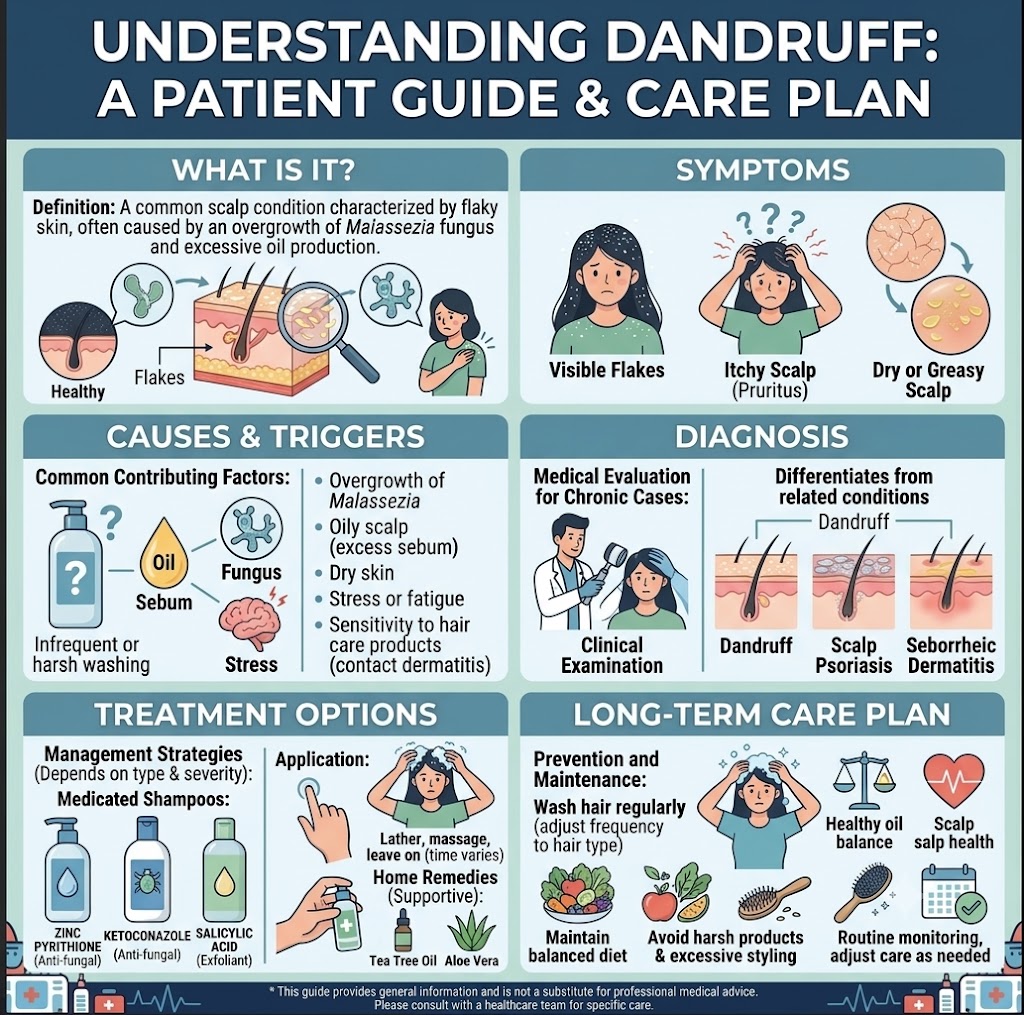
Dandruff is a very common condition where small, dry flakes of skin shed from the scalp. While it is not contagious or harmful to your health, it can be bothersome and sometimes difficult to manage. Dandruff is essentially a mild form of a skin condition known as seborrheic dermatitis, which primarily affects the scalp. Although there's no permanent cure, its symptoms can usually be effectively controlled with appropriate care and treatment.
Understanding the Condition
Understanding Dandruff: Causes, Symptoms, and Management
Understanding the Condition
Dandruff is a very common condition where small, dry flakes of skin shed from the scalp. While it is not contagious or harmful to your health, it can be bothersome and sometimes difficult to manage. Dandruff is essentially a mild form of a skin condition known as seborrheic dermatitis, which primarily affects the scalp. Although there's no permanent cure, its symptoms can usually be effectively controlled with appropriate care and treatment.
Common Symptoms
Skin Flakes: Visible flakes of dry skin that can appear on your scalp, hair, eyebrows, and even on your shoulders.
Itchy Scalp: A persistent sensation of itchiness on the scalp.
Scaly, Crusty Scalp in Infants (Cradle Cap): In babies, dandruff can present as thick, greasy, yellowish or brownish scales and crusts on the scalp.
Consultation Guide
Which Specialist to Meet
If your dandruff symptoms do not improve with basic care, it is advisable to consult a primary care provider or a dermatologist. A dermatologist is a skin specialist who can accurately diagnose the cause and recommend tailored treatment.
Preparations Before Your Visit
Before your appointment, avoid washing your hair with any special shampoos or products for at least 24-48 hours, as this allows the doctor to observe your scalp's natural condition. Be prepared to discuss your symptoms, including how long you've had dandruff, what makes it worse, and any previous treatments you've tried.
Book a doctor visit near me
Antifungal and Anti-Inflammatory Shampoos: If regular shampooing isn't enough, medicated shampoos containing active ingredients are often recommended. These ingredients are designed to reduce irritation, control the growth of fungus that contributes to dandruff, and rehydrate the scalp. It's important to leave the shampoo on your scalp for at least 5 minutes to allow the active ingredients to work effectively before rinsing. (Duration: Use 2-3 times a week, or as directed by your doctor. Symptoms may improve within a few weeks, but continued use may be necessary for long-term management.)
Understand Your Triggers: Dandruff symptoms can worsen due to factors like stress, or during cold, dry weather. Identifying and managing these triggers through stress-reduction techniques or proper scalp care in challenging weather can help.
Consistent Treatment Adherence: Dandruff has no cure, meaning symptoms can return even after successful treatment. Consistent adherence to your recommended scalp care routine and medicated shampoos is crucial for long-term symptom control.
Monitor Symptoms and Seek Professional Advice: If your dandruff doesn't improve with regular use of medicated shampoos, or if symptoms become severe, consult your healthcare professional. They can offer further guidance, rule out other conditions, or adjust your treatment plan.
Consultation Guide
Scalp Hygiene: Regularly washing your hair helps to reduce oil and skin cell buildup, which can contribute to dandruff. Avoid harsh hair products if you suspect sensitivity, as this can cause contact dermatitis and worsen flaking.
Lifestyle and Health Awareness: While dandruff can affect almost anyone, it is more common in males, often starts in young adulthood, and can be influenced by certain health conditions like Parkinson's disease, HIV, or a weakened immune system. Being aware of these risk factors can help you discuss them with your doctor for tailored advice.
Diagnostic Procedures
Physical Examination of the Scalp
A healthcare professional will carefully examine your scalp, hair, and sometimes other areas like eyebrows or ears, looking for specific signs of dandruff. This helps them determine whether your flaking is due to an oily scalp, dryness, irritation, or a combination of factors. They will assess the extent of flaking, redness, or any signs of other skin conditions.
What to Expect
During the examination, you will sit comfortably while the doctor visually inspects your scalp. They may part your hair in several places to get a clear view of the skin. Sometimes, a magnifying tool might be used for a more detailed look. This procedure is entirely non-invasive, quick, and painless.
Treatment Options
Home Care and Over-the-Counter Solutions
Regular Gentle Shampooing: For mild dandruff, regularly washing your hair with a gentle, non-medicated shampoo can help remove flakes and reduce oil buildup. (Duration: Ongoing, as part of your regular hair care routine.)
Shampoo Rotation: Dandruff treatments can sometimes become less effective over time. To maintain effectiveness, healthcare providers often recommend rotating between two or three different medicated shampoos that contain different active ingredients. This helps prevent the scalp from becoming accustomed to one specific formula. (Duration: Ongoing, switching shampoos every few weeks or months as advised by your doctor.)
Prevention & Long-Term Wellbeing
Prevention and Managing Triggers
Tags & Topics
Notice an error or need an update?
Help us keep medical information accurate. Report incorrect info or suggest an edit.


