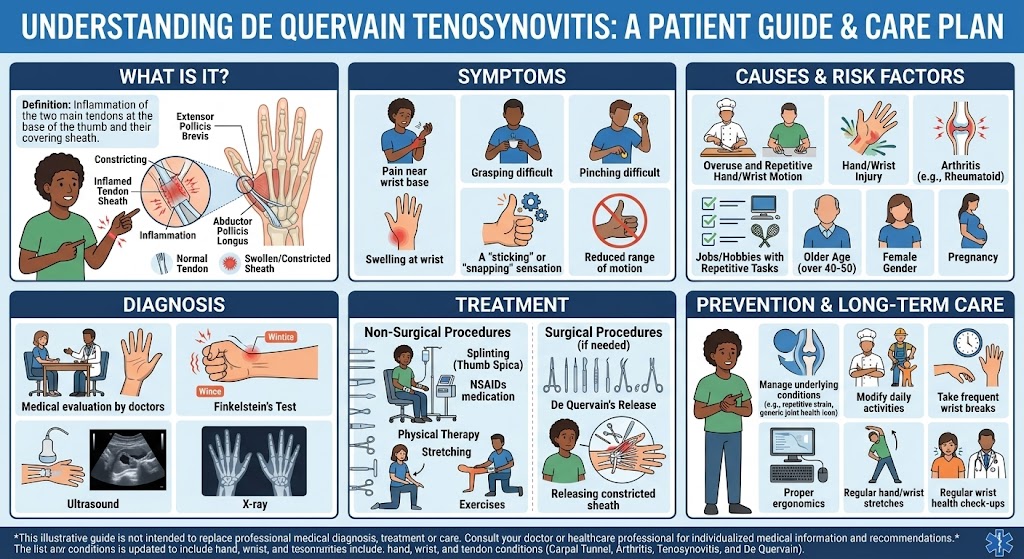
De Quervain tenosynovitis (pronounced dih-kwer-VAIN ten-oh-sine-oh-VIE-tis) is a painful condition affecting two specific rope-like structures, called tendons, on the thumb side of your wrist. These tendons are encased in a protective tunnel and help you move your thumb. When you have De Quervain's, the tunnel around these tendons becomes irritated and inflamed, causing the tendons to swell and rub against the tunnel, leading to pain. You'll likely feel this pain when you turn your wrist, grip objects, or make a fist. While the exact cause isn't fully understood, activities involving repeated hand or wrist movements, such as certain sports, repetitive lifting, or even caring for a baby, can worsen the condition.
Understanding the Condition
Understanding De Quervain's Tenosynovitis
Understanding the Condition
Common Symptoms
Pain Near Thumb Base: An aching or sharp pain felt at the base of the thumb, extending into the wrist. This pain often worsens with activity.
Swelling: Noticeable swelling, tenderness, or a small bump on the thumb side of the wrist.
Difficulty Moving: Trouble moving your thumb and wrist, especially during grasping, pinching, or making a fist due to pain and stiffness.
Catching Sensation: A 'sticking,' 'catching,' or 'stop-and-go' feeling when you move your thumb, often accompanied by a clicking sound.
Spreading Pain: If left untreated, the pain may spread further into the thumb or forearm, making daily activities more challenging.
Consultation Guide
Which Specialist to Meet
Before your visit, make a detailed list of your symptoms, including when they started, what activities make them better or worse, and their severity. Note any past treatments you've tried, such as rest, ice, or pain relievers. Compile a list of all medications, vitamins, and supplements you are currently taking. Be prepared to describe your daily activities, hobbies, and job, as these can help the doctor identify potential repetitive motions contributing to the condition. Also, write down any questions you have for your doctor to ensure all your concerns are addressed.
Book a doctor visit near me
Continue Therapeutic Exercises: Regularly perform any strengthening and stretching exercises prescribed by your therapist, even after your symptoms improve, to maintain flexibility and strength and help prevent the condition from returning.
Monitor Symptoms: Pay close attention to any early signs of discomfort or pain. Addressing these promptly by resting or adjusting activities can prevent the condition from worsening.
Ergonomic Adjustments: Ensure your workspace, computer setup, and frequently used tools are arranged ergonomically to support neutral wrist and hand positions, minimizing strain during daily tasks.
Consultation Guide
De Quervain tenosynovitis (pronounced dih-kwer-VAIN ten-oh-sine-oh-VIE-tis) is a painful condition affecting two specific rope-like structures, called tendons, on the thumb side of your wrist. These tendons are encased in a protective tunnel and help you move your thumb. When you have De Quervain's, the tunnel around these tendons becomes irritated and inflamed, causing the tendons to swell and rub against the tunnel, leading to pain. You'll likely feel this pain when you turn your wrist, grip objects, or make a fist. While the exact cause isn't fully understood, activities involving repeated hand or wrist movements, such as certain sports, repetitive lifting, or even caring for a baby, can worsen the condition.
During the Finkelstein test, your doctor will ask you to bend your thumb across your palm and then make a fist, covering your thumb with your fingers. Next, you will be asked to bend your wrist towards your little finger. If you have De Quervain's, this specific movement will typically cause sharp pain on the thumb side of your wrist, indicating tendon inflammation. The doctor may also gently press on the thumb side of your wrist to check for tenderness or visible swelling. In most cases, additional tests like X-rays are not needed to diagnose De Quervain's but may be used to rule out other potential issues, such as arthritis or a wrist fracture.
Diagnostic Procedures
You should initially consult a general practitioner, who can provide a preliminary diagnosis and may then refer you to a hand surgeon (an orthopedic surgeon specializing in hand conditions), a rheumatologist (if an inflammatory condition is suspected), or a physical or occupational therapist.
Preparations Before Your Visit
This is the primary physical examination used to diagnose De Quervain's tenosynovitis. It helps identify the condition by stretching the affected tendons on the thumb side of the wrist.
What to Expect
Treatment Options
Home Remedies & Self-Care
Rest and Activity Modification: Avoid activities that worsen the pain, especially repetitive thumb and wrist movements. Modify how you perform daily tasks to reduce strain on the affected tendons. (Duration: Continuous, as needed, for relief and healing.)
Cold Application: Apply ice packs or cold compresses to the painful area to help reduce swelling and discomfort. (Duration: 15-20 minutes, several times a day, as needed.)
Medications
Over-the-Counter Pain Relievers: Nonsteroidal anti-inflammatory drugs (NSAIDs) can help reduce pain and inflammation associated with the condition. (Duration: Short-term use, as directed by a healthcare provider.)
Corticosteroid Injections: A small amount of corticosteroid medication is injected directly into the tendon sheath (the tunnel around the tendons) to significantly reduce swelling and pain. (Duration: Relief can last for weeks to months; often, only one or two injections are sufficient.)
Therapies
Splinting or Bracing: Wearing a splint or brace that supports your thumb and wrist can limit movement, allowing the inflamed tendons to rest and heal. (Duration: Typically worn for 4 to 6 weeks, or as advised by your doctor or therapist.)
Physical/Occupational Therapy: A therapist can teach you specific exercises to strengthen your muscles, improve your range of motion, and provide guidance on modifying daily activities to prevent recurrence. (Duration: Varies, typically several weeks of regular sessions.)
Surgical Procedures
Surgical Release: If other treatments do not provide lasting relief, a surgeon may perform a procedure to open the tendon sheath, creating more space and allowing the tendons to glide freely without friction. (Duration: A single procedure, with recovery typically taking several weeks to a few months.)
Prevention & Long-Term Wellbeing
Prevention
Modify Repetitive Activities: Identify and adjust activities that involve repetitive thumb and wrist motions. Use proper body mechanics, utilize ergonomic tools, and alternate hands when possible to reduce strain on your tendons.
Use Proper Lifting Techniques: When lifting babies or heavy objects, use your palms and arms to support the weight rather than gripping with your thumb and wrist. This reduces stress on the delicate tendons.
Take Regular Breaks: If your job or hobbies involve frequent or sustained hand and wrist movements, take short, regular breaks to stretch and rest your hands and wrists.
Maintain a Healthy Lifestyle: Staying physically active and maintaining a healthy weight can reduce overall stress on your joints and tendons, potentially lowering your risk for inflammatory conditions.
Long-Term Monitoring & Management
Tags & Topics
Notice an error or need an update?
Help us keep medical information accurate. Report incorrect info or suggest an edit.


