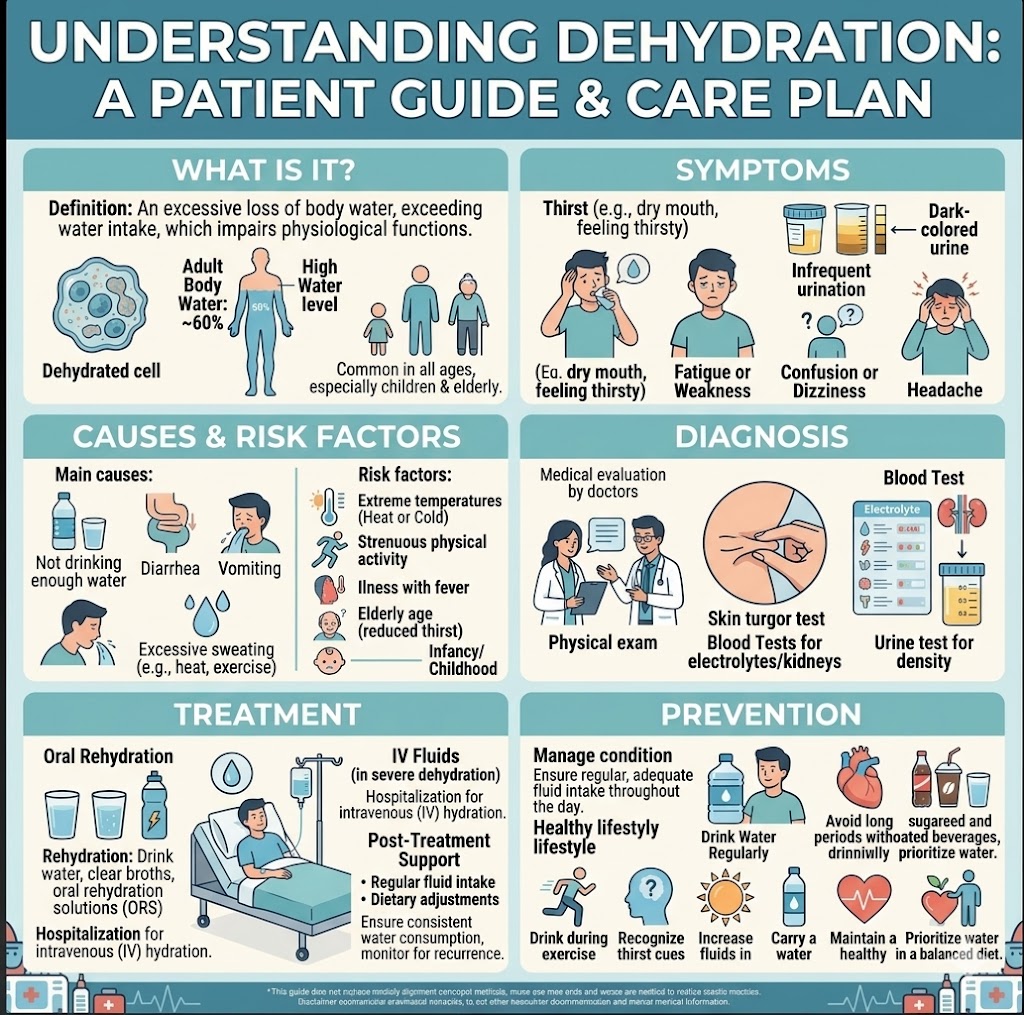
Dehydration happens when your body loses or uses more fluids than it takes in, meaning it doesn't have enough water and other essential fluids to function properly. This can happen to anyone, but it's particularly serious for infants, young children, and older adults. Common causes include diarrhea and vomiting in young children, certain medical conditions or medications (like water pills) in older adults, or simply not drinking enough during hot weather or strenuous activity. Mild to moderate dehydration can often be corrected by drinking more fluids, but severe dehydration requires immediate medical attention.
Understanding the Condition
Dehydration: Understanding Fluid Balance and Your Health
Understanding the Condition
Common Symptoms
Severe Dehydration (Adults): Extreme thirst, not urinating, very dry skin, sunken eyes, low blood pressure, rapid heartbeat and breathing, confusion, irritability, or unconsciousness. This is a medical emergency.
Infants and Young Children: Dry mouth and tongue, no tears when crying, fewer wet diapers than usual (e.g., no wet diapers for three hours or more), sunken soft spot on the head (fontanelle), sunken eyes, listlessness or irritability.
Consultation Guide
Which Specialist to Meet
Start by consulting your primary care provider or family doctor. For infants and children, a pediatrician is the appropriate specialist. In cases of severe dehydration, emergency medical care is needed immediately. Older adults with chronic conditions may benefit from consultation with a geriatrician.
Preparations Before Your Visit
Before your visit, be prepared to discuss your symptoms, recent fluid intake, any illnesses (like vomiting or diarrhea), medications you are taking (including over-the-counter drugs and supplements), and your typical daily activities. Consider keeping a brief log of your fluid intake and output if possible.
Book a doctor visit near me
The doctor will ask about your symptoms and medical history. They will perform a thorough physical check, which may include feeling your pulse, checking your blood pressure, examining your skin, and looking at your mouth and eyes. This is a non-invasive procedure.
Increased Fluid Intake: For mild dehydration, slowly sipping water, clear broths, ice chips, or sports drinks (without excessive sugar) can help. Avoid plain water in large quantities quickly, especially if you have been exercising heavily, as it can worsen electrolyte imbalances. (Duration: Until symptoms resolve, typically 1-2 days, with ongoing daily fluid maintenance.)
Oral Rehydration Solutions (ORS): Specifically formulated solutions containing water, salts, and sugar in precise proportions to replace lost fluids and electrolytes more effectively than plain water. These are especially beneficial for infants and children with diarrhea and vomiting. (Duration: Administered until dehydration is corrected and fluid loss subsides, often several hours to 1-2 days.)
Medical Interventions
Intravenous (IV) Fluid Replacement: For moderate to severe dehydration, especially if oral intake is difficult or ineffective, fluids are administered directly into a vein through an IV line. This allows for rapid rehydration and correction of electrolyte imbalances under medical supervision. (Duration: Typically several hours to a few days, depending on severity and patient response, usually in a hospital or emergency setting.)
Consultation Guide
Dehydration happens when your body loses or uses more fluids than it takes in, meaning it doesn't have enough water and other essential fluids to function properly. This can happen to anyone, but it's particularly serious for infants, young children, and older adults. Common causes include diarrhea and vomiting in young children, certain medical conditions or medications (like water pills) in older adults, or simply not drinking enough during hot weather or strenuous activity. Mild to moderate dehydration can often be corrected by drinking more fluids, but severe dehydration requires immediate medical attention.
Treatment of Underlying Cause: Addressing the root cause of dehydration is crucial. This may involve medications to stop vomiting or diarrhea, antibiotics for infections, or adjusting dosages of medications (like diuretics) that contribute to fluid loss, all under medical guidance. (Duration: Varies widely depending on the underlying condition, from a few days to long-term management.)
Diagnostic Procedures
A doctor will examine you for signs of dehydration such as dry skin, reduced skin elasticity, low blood pressure, rapid heart rate, and changes in mental status. They will also check your temperature and breathing.
What to Expect
Urinalysis (Urine Test)
This test examines a sample of your urine to check its appearance, concentration, and content. For example, highly concentrated urine can indicate dehydration, while the presence of certain substances might point to underlying conditions affecting fluid balance, like kidney problems or infections.
What to Expect
You will be asked to provide a urine sample, typically a 'mid-stream clean catch.' This involves cleaning the genital area, beginning to urinate into the toilet, then collecting a sample in a sterile cup mid-stream, and finishing urination in the toilet. The sample is then sent to a lab for analysis, where it will be visually inspected, tested with a dipstick, and examined under a microscope. The process is quick and non-invasive.
Blood tests can measure electrolyte levels (like sodium, potassium), kidney function (creatinine, BUN), and blood sugar. These tests help determine the severity of dehydration and identify any imbalances that need correction, as well as assess the function of organs that can be affected by dehydration.
What to Expect
A healthcare professional will draw a small sample of blood, usually from a vein in your arm, using a needle. You might feel a brief sting or pinch. The blood sample is then sent to a lab for analysis. This is a quick procedure, generally taking only a few minutes.
Treatment Options
Home Remedies and Oral Rehydration
Manage Chronic Conditions: If you have medical conditions like diabetes or kidney disease, or take medications that affect fluid balance, work closely with your doctor to manage these conditions and adjust your fluid intake as advised.
Regular Medical Check-ups: Maintain regular appointments with your healthcare provider to monitor your overall health and address any ongoing risks for dehydration.
Educate Caregivers: For individuals who require assistance, ensure caregivers are educated on the signs of dehydration and strategies for maintaining adequate fluid intake.
Prevention & Long-Term Wellbeing
Prevention and Daily Hydration Strategies
Consistent Fluid Intake: Drink fluids regularly throughout the day, even if you don't feel thirsty. Water is the best choice, but fruit juices, milk, and broths also contribute to fluid intake. Keep a water bottle handy as a visual reminder.
Adjust for Activity and Environment: Increase your fluid intake significantly when exercising, spending time in hot or humid weather, or at high altitudes. Carry extra water when participating in outdoor activities.
Proactive Hydration During Illness: When experiencing fever, vomiting, or diarrhea, it's critical to proactively drink more fluids, such as oral rehydration solutions or clear broths, to prevent dehydration from setting in.
Monitor Urine Color: A simple way to check hydration is by observing your urine color. Light yellow, like lemonade, generally indicates good hydration, while dark yellow or amber urine suggests you need more fluids.
Awareness in Vulnerable Groups: Pay close attention to hydration in infants, young children, and older adults, as they are more susceptible to dehydration and may not express thirst effectively. Offer fluids regularly.
Long-Term Monitoring and Management
Tags & Topics
Notice an error or need an update?
Help us keep medical information accurate. Report incorrect info or suggest an edit.


