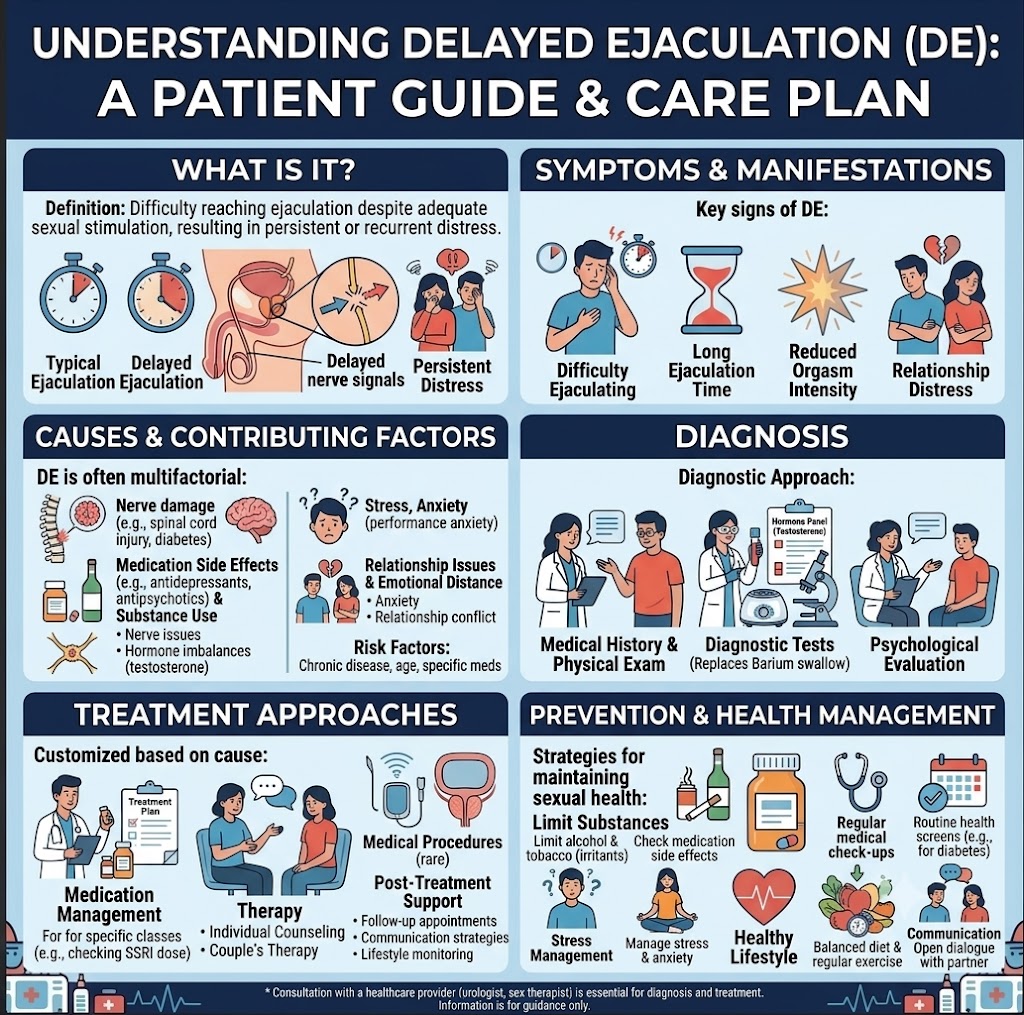
Delayed ejaculation is a condition where a man takes an unusually long time to reach climax and release semen during sexual arousal, or sometimes cannot ejaculate at all. This issue can be temporary or lifelong, stemming from various health conditions, surgeries, medicines, or psychological factors. Treatment focuses on identifying and addressing the underlying cause. It's considered a problem if it's ongoing and causes distress for the individual or their partner.
Understanding the Condition
Common Symptoms
Prolonged Sexual Stimulation: Requiring a significantly long period of sexual activity or stimulation to reach orgasm and ejaculate. There isn't a fixed timeframe, but it's notable when it feels unusually long.
Inability to Ejaculate (Anejaculation): Some individuals may be completely unable to ejaculate, even with extensive stimulation.
Before your visit, it's helpful to: * Note down your symptoms, including how long they've been occurring and what specific challenges you face. * List all medications, supplements, and herbal remedies you are currently taking, including dosages. * Be prepared to discuss your medical history, any recent surgeries, and your sexual history. * Consider bringing your partner if you feel comfortable, as their perspective can be valuable. * Write down any questions you have for your doctor.
Book a doctor visit near me
Consultation Guide
Delayed Ejaculation: Understanding, Causes, and Support
Understanding the Condition
Delayed ejaculation is a condition where a man takes an unusually long time to reach climax and release semen during sexual arousal, or sometimes cannot ejaculate at all. This issue can be temporary or lifelong, stemming from various health conditions, surgeries, medicines, or psychological factors. Treatment focuses on identifying and addressing the underlying cause. It's considered a problem if it's ongoing and causes distress for the individual or their partner.
Emotional Distress: The delay causes significant frustration, anxiety, or worry for the individual or their partner.
Interruption of Sexual Activity: Sexual encounters may end prematurely due to fatigue, physical discomfort, loss of erection, or the partner's desire to stop before ejaculation occurs.
Difficulty During Partnered Sex: Trouble reaching orgasm during sexual intercourse or other activities with a partner, even if ejaculation is possible through masturbation (though some cannot ejaculate even then).
Types of Delayed Ejaculation: This condition can be 'lifelong' (present since sexual maturity) or 'acquired' (developing after a period of normal function). It can also be 'generalized' (occurring in all situations and with any partner) or 'situational' (only happening under specific conditions or with certain partners).
Consultation Guide
Which Specialist to Meet
You should start by consulting your primary care physician. They can conduct an initial assessment and, if needed, refer you to specialists such as a urologist (a doctor specializing in the male reproductive and urinary systems) or a mental health professional (like a psychologist or psychiatrist) if psychological factors are suspected.
Preparations Before Your Visit
Reviewing Current Medications: If certain medications (like some antidepressants, high blood pressure drugs, or water pills) are identified as a cause, your doctor may suggest adjusting the dosage, switching to an alternative medication, or temporarily stopping the medication under strict medical supervision. It is crucial not to alter your medication regimen without consulting your doctor. (Duration: As directed by your physician; typically ongoing while alternative treatments are explored.)
Psychotherapy (Talk Therapy): Individual or couples therapy can help address underlying psychological factors such as depression, anxiety, stress, performance anxiety, relationship problems, poor body image, or cultural/religious inhibitions. A therapist can provide coping strategies and help process emotional challenges. (Duration: Duration varies based on individual needs, often several weeks to many months of regular sessions.)
Behavioral Therapy: Techniques focused on changing sexual habits or patterns. This might include structured exercises or advice on sexual stimulation techniques. (Duration: Typically short-term, lasting several weeks or months, as directed by a therapist.)
Treating Underlying Medical Conditions: Effectively managing chronic health issues like diabetes or multiple sclerosis, which can be risk factors for delayed ejaculation, is crucial. (Duration: Ongoing, as part of your overall health management.)
Diagnostic Procedures
A urinalysis is a laboratory test of your urine. It helps detect a wide range of disorders, including urinary tract infections, kidney disease, and diabetes. For delayed ejaculation, it can help rule out underlying physical conditions that might be contributing to the problem.
What to Expect
You will be asked to provide a urine sample, typically by urinating into a sterile cup. This is usually done in a private restroom at the clinic. The sample is then sent to a lab where it's examined for its appearance, concentration, and the presence of various substances like protein, blood, or bacteria. The procedure is quick, straightforward, and generally painless.
Psychological Evaluation / Talk Therapy Assessment
This involves talking with a mental health professional (like a psychologist, psychiatrist, or therapist) to explore thoughts, emotions, behaviors, and life experiences that might be contributing to delayed ejaculation. It's an important step to identify any underlying mental health conditions, relationship issues, stress, or anxiety.
What to Expect
Treatment Options
Medication Adjustments
Mindful Medication Management: Regularly review all your medications with your doctor to ensure they are not contributing to sexual side effects. Never stop or change medications without medical advice.
Stress and Anxiety Reduction: Implement stress-reducing techniques such as mindfulness, meditation, regular exercise, or hobbies. Seek professional help for managing anxiety or depression.
Prevention & Long-Term Wellbeing
During a psychological evaluation, you will have a confidential conversation with a mental health professional. They will ask you questions about your sexual history, relationships, stressors, mental health history (such as depression or anxiety), lifestyle, and any cultural or religious beliefs that might influence your sexual experience. This 'talk therapy' approach helps you understand your specific issues and how they might affect your sexual function, allowing the professional to assess if psychological factors are at play. Sessions typically last 45-60 minutes.
Lifestyle and Home Remedies
Managing Alcohol Consumption: Reducing or eliminating excessive alcohol intake, especially long-term heavy drinking, can significantly improve sexual function. (Duration: Ongoing commitment for long-term improvement.)
Addressing Relationship Issues: Open and honest communication with your partner can alleviate stress and improve intimacy, positively impacting sexual satisfaction. Couples counseling can be beneficial. (Duration: Ongoing effort; couples therapy typically lasts several weeks to months.)
Prevention and Long-Term Management
Open Communication with Partner: Maintain honest and empathetic discussions with your partner about your sexual experiences and any concerns. This fosters understanding and reduces stress.
Regular Health Check-ups: Undergo routine medical examinations to identify and manage any underlying health conditions early, such as diabetes or high blood pressure, which can affect sexual function.
Healthy Lifestyle Choices: Limit alcohol intake, avoid substance misuse, eat a balanced diet, and get regular physical activity to support overall health and well-being, including sexual health.
Seeking Mental Health Support: If psychological factors like performance anxiety, relationship problems, or body image issues are present, engage in psychotherapy or counseling to address these concerns.
Tags & Topics
Notice an error or need an update?
Help us keep medical information accurate. Report incorrect info or suggest an edit.


