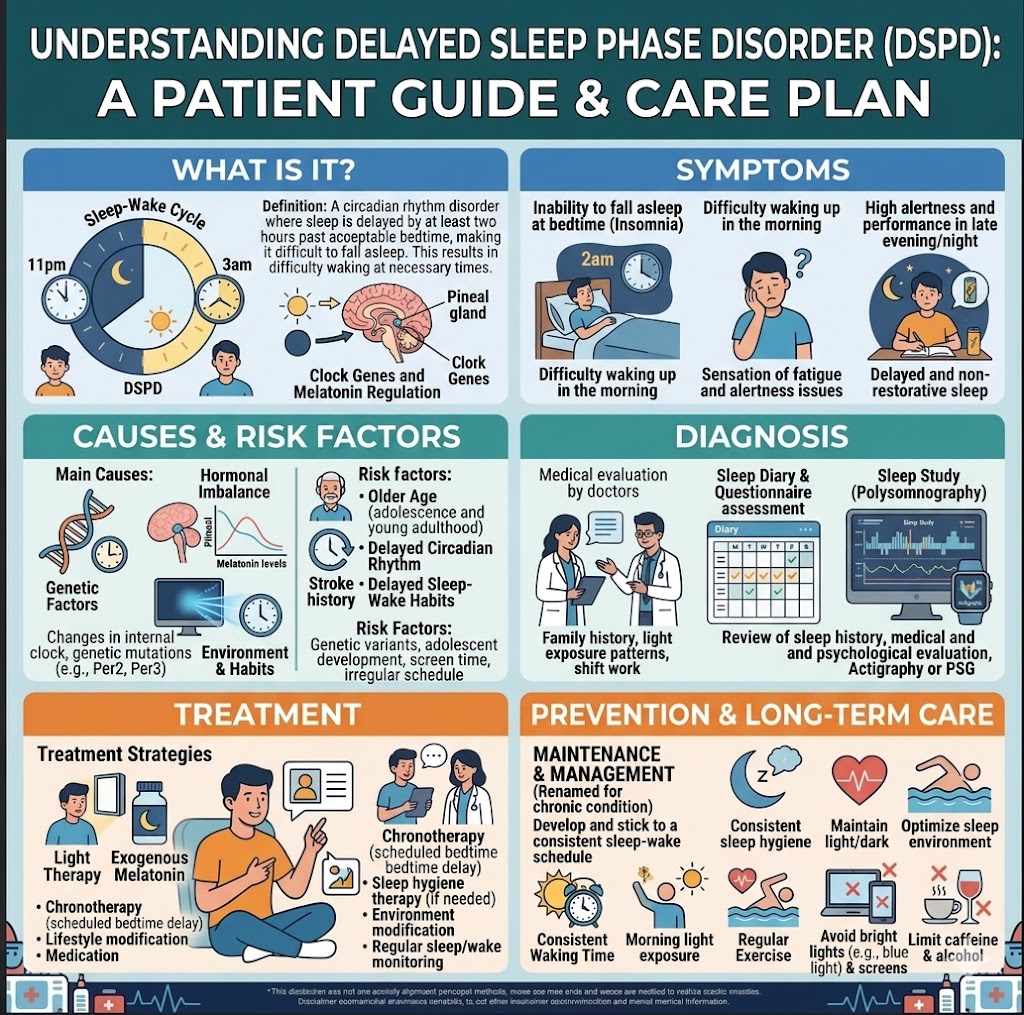
Delayed Sleep-Wake Phase Disorder (DSWPD) occurs when your body's internal clock, or circadian rhythm, is significantly delayed compared to typical societal schedules. This means you naturally want to fall asleep and wake up much later, usually by two hours or more, than most people. While you can get enough sleep, this delayed schedule makes it very difficult to meet early morning commitments like work or school. Treatments often involve adjusting sleep habits, using light therapy, and sometimes taking supplements to help reset this internal clock.
Understanding the Condition
Delayed Sleep-Wake Phase Disorder (DSWPD)
Understanding the Condition
Common Symptoms
Difficulty falling asleep at desired times: Experiencing insomnia when trying to sleep at a conventional bedtime.
Trouble waking up in the morning: Significant challenges waking early enough for work, school, or other social obligations.
Extreme daytime drowsiness: Feeling excessively sleepy and tired during the day.
Difficulty staying alert during the day: Struggling to maintain focus and concentration throughout the day.
Consultation Guide
Which Specialist to Meet
Begin with a primary care physician, who may refer you to a sleep specialist or neurologist. For children, consult a pediatrician who can refer to a pediatric sleep specialist.
Preparations Before Your Visit
Regular Check-ups: Follow up with your healthcare provider to monitor progress, adjust treatments, and address new symptoms.
Stress Management Techniques: Practice relaxation techniques like meditation or deep breathing to manage stress, which impacts sleep quality.
Educate Family and Employers: Inform family, educators, or employers about your condition to gain understanding and support, potentially discussing flexible scheduling.
Support Groups: Connect with others facing similar sleep challenges for shared experiences, coping strategies, and emotional support.
Diagnostic Procedures
Medical History and Sleep Diary Review
What to Expect
The doctor will ask detailed questions about your sleep habits, daytime alertness, and daily routines. Your sleep diary provides crucial objective data for this discussion.
A small, watch-like device worn on your wrist records movement to estimate sleep and wake times over several days or weeks in your natural environment.
What to Expect
You'll wear a painless wrist device for 1-2 weeks. It continuously records your movement, offering objective data on your sleep-wake rhythm without interfering with daily activities.
Polysomnography (Overnight Sleep Study)
An overnight test in a sleep lab monitoring brain waves, breathing, heart rate, and muscle activity. Primarily used to rule out other sleep disorders.
What to Expect
You'll spend a night in a sleep lab with sensors painlessly attached to monitor various bodily functions during sleep, helping identify any underlying sleep issues.
Treatment Options
Delayed Sleep-Wake Phase Disorder (DSWPD) occurs when your body's internal clock, or circadian rhythm, is significantly delayed compared to typical societal schedules. This means you naturally want to fall asleep and wake up much later, usually by two hours or more, than most people. While you can get enough sleep, this delayed schedule makes it very difficult to meet early morning commitments like work or school. Treatments often involve adjusting sleep habits, using light therapy, and sometimes taking supplements to help reset this internal clock.
Keep a detailed sleep diary for 1-2 weeks, recording sleep/wake times, naps, sleep quality, and caffeine/alcohol intake. List all current medications and supplements. Be ready to discuss lifestyle habits (screen time, exercise, meal times) and prepare questions for your doctor.
Book a doctor visit near me
Medications
Melatonin Supplementation: Taking a low-dose melatonin supplement at a precise time in the evening (a few hours before desired bedtime) to cue sleep preparation and shift your internal clock forward. (Duration: Daily for several weeks/months, under professional guidance.)
Other Sleep-Regulating Medications: A specialist may prescribe other medications to influence the sleep-wake cycle or reduce severe daytime sleepiness, typically for specific situations or short-term use. (Duration: Varies.)
Prevention & Long-Term Wellbeing
Your doctor will assess your sleep patterns, health, and lifestyle. A detailed sleep diary (1-2 weeks recommended) helps reveal your actual sleep-wake schedule.
Lifestyle and Behavioral Adjustments
Sleep Hygiene Improvement: Establish a consistent daily sleep schedule, even on weekends. Create a relaxing bedtime routine in a dark, quiet, cool room, avoiding stimulants or heavy meals before bed. (Duration: Ongoing, as a daily practice.)
Chronotherapy: Under medical supervision, gradually shift your bedtime and wake-up time later each day until the desired schedule is achieved, helping to reset your internal clock. (Duration: Several weeks to months.)
Light Therapy (Bright Light Exposure): Using a specialized bright light box each morning, shortly after waking, to signal to your brain it's morning and shift your internal clock earlier. (Duration: Daily for weeks/months to establish rhythm, then maintenance as needed.)
Prevention
Maintain Consistent Schedule: Stick to a regular sleep and wake-up time daily, including weekends, to stabilize your internal body clock.
Optimize Sleep Environment: Ensure your bedroom is dark, quiet, and cool (15-19°C or 60-67°F).
Limit Evening Light Exposure: Reduce exposure to bright light, especially blue light from screens, for 1-2 hours before bedtime.
Regular Physical Activity: Exercise moderately during the day, avoiding strenuous workouts close to bedtime.
Mindful Eating and Drinking: Avoid caffeine and alcohol, particularly in the afternoon/evening. Limit heavy meals before sleep.
Long-Term Monitoring and Support
Tags & Topics
Notice an error or need an update?
Help us keep medical information accurate. Report incorrect info or suggest an edit.


