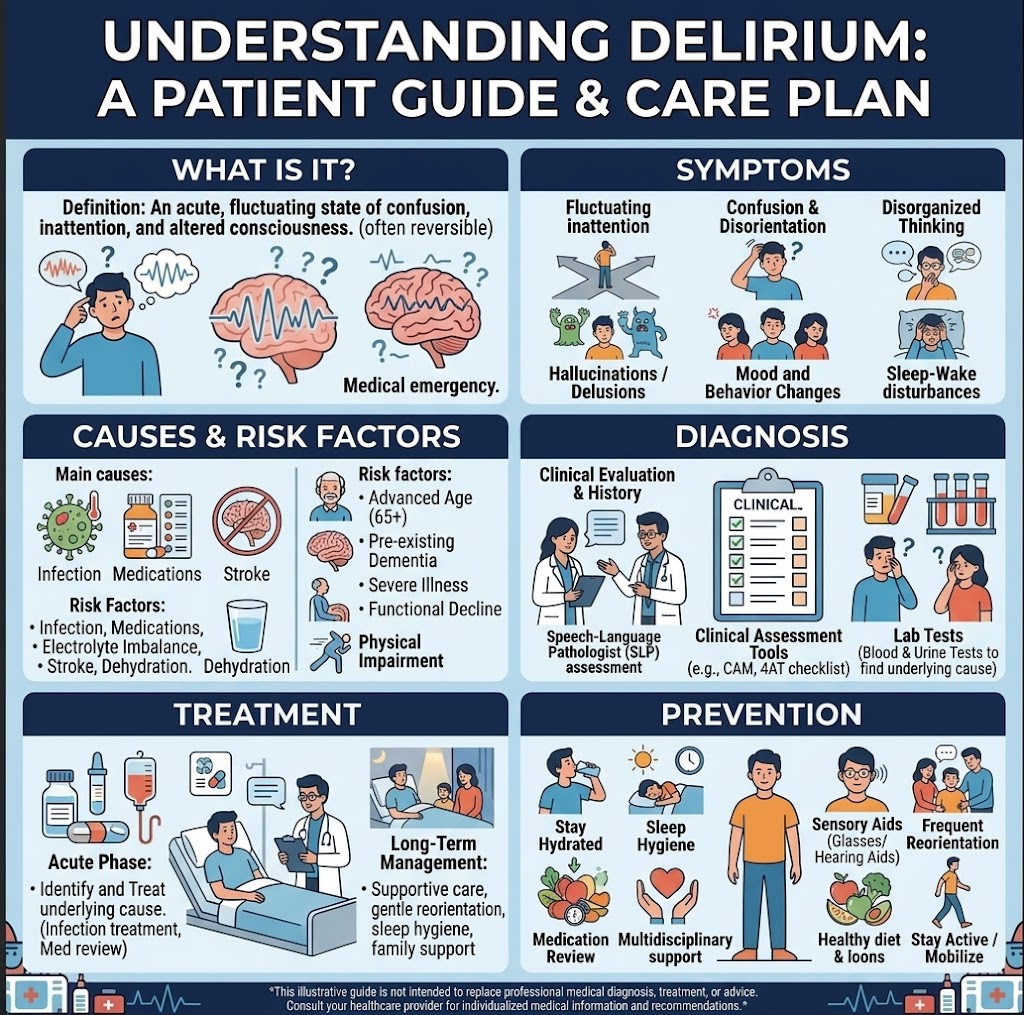
Delirium is a sudden and serious shift in mental abilities, leading to confused thinking and a reduced awareness of one's surroundings. It typically develops quickly, within hours or a few days. This condition is often triggered by one or more factors, such as severe illness, body imbalances, certain medications, infections, surgery, or substance use and withdrawal. It requires prompt medical attention.
Understanding the Condition
Delirium: A Sudden and Serious Change in Mental State
Understanding the Condition
Common Symptoms
Difficulty Paying Attention: Trouble focusing on a conversation or task, easily getting distracted, or getting 'stuck' on an idea rather than responding appropriately to questions or new information.
Disorientation: Not knowing where you are, what day it is, or even who you are. This includes confusion about recent events or familiar people.
Memory Problems: Difficulty recalling recent events or information, even things that happened just moments ago.
Speech and Language Difficulties: Problems with clear speech, trouble recalling words, speaking in rambling or nonsensical ways, or difficulty understanding what others are saying.
Reduced Engagement: Becoming withdrawn, having very little activity, or showing minimal response to people and events in the surroundings.
Trouble with Reading and Writing: An inability or significant difficulty in reading text or writing coherently.
Consultation Guide
Which Specialist to Meet
Before your visit, be prepared to describe the sudden changes in thinking, behavior, and awareness. Note when symptoms started, how quickly they developed, what makes them better or worse, and any recent illnesses, new medications or changes to existing ones, alcohol or drug use, or recent hospitalizations or surgeries. Bring a list of all current medications, supplements, and any pre-existing health conditions.
Book a doctor visit near me
Medications for Symptom Management
Medications for Agitation or Sleep Disturbances: In cases of severe agitation or insomnia that pose a risk to the patient or others, doctors may prescribe specific medications for short-term symptom relief. These are used cautiously and at the lowest effective dose. (Duration: As needed, typically for a short duration until the underlying cause is resolved and other supportive measures take effect.)
Early Recognition of Symptoms: Caregivers and family members should be aware of the signs of delirium to seek prompt medical attention if symptoms reappear, as early intervention can improve outcomes.
Consultation Guide
You should first consult a primary care doctor. Depending on the cause and severity, they may refer you to a neurologist (a brain and nervous system specialist), a geriatrician (a specialist for older adults), a psychiatrist (if mental health aspects are prominent), or a hospitalist/critical care specialist if immediate hospitalization is needed.
Preparations Before Your Visit
A comprehensive assessment of your nervous system, including the brain, spinal cord, nerves, and muscles. It helps identify issues and their potential causes.
A healthcare professional will draw a small amount of blood, usually from a vein in your arm. This is a quick procedure and may cause a brief pinch or sting. The blood sample is then sent to a lab for detailed analysis.
Brain Imaging (CT or MRI Scan)
Addressing the Underlying Cause
Diagnostic Procedures
Neurological Examination
What to Expect
A doctor, often a neurologist, will ask about your medical history and conduct various tests. These may include checking your balance, coordination, reflexes, muscle strength, senses, memory, and overall mental state. The exam can take anywhere from a few minutes to over an hour.
Urinalysis (Urine Test)
This test analyzes a urine sample to detect conditions like urinary tract infections, kidney disease, or diabetes, which can sometimes trigger delirium.
What to Expect
You will be asked to provide a urine sample, typically collected in a sterile cup. This sample is then sent to a lab for analysis of its appearance, concentration, and contents. Abnormal results may prompt further testing.
Blood samples are analyzed to check for infections, chemical imbalances (such as low sodium or calcium), organ function (kidney, liver), nutritional deficiencies, or other medical conditions that could be contributing to delirium.
What to Expect
Imaging tests like computed tomography (CT) or magnetic resonance imaging (MRI) create detailed pictures of the brain. These scans help identify structural issues such as stroke, bleeding, tumors, or other brain damage that might be causing delirium.
What to Expect
For a CT scan, you will lie on a table that slides into a large, doughnut-shaped machine that uses X-rays. For an MRI, you will lie on a table that moves into a long, tunnel-like machine that uses powerful magnets and radio waves. Both procedures are painless, but an MRI can be noisy, and you will need to stay very still. Sometimes, a contrast dye may be injected to enhance the images.
Treatment Options
Delirium is a sudden and serious shift in mental abilities, leading to confused thinking and a reduced awareness of one's surroundings. It typically develops quickly, within hours or a few days. This condition is often triggered by one or more factors, such as severe illness, body imbalances, certain medications, infections, surgery, or substance use and withdrawal. It requires prompt medical attention.
Treatment of Infection: Administering appropriate medications to clear bacterial, viral, or fungal infections. (Duration: Typically days to weeks, depending on the type and severity of infection.)
Correction of Body Imbalances: Restoring normal levels of electrolytes (like sodium or calcium), blood sugar, or addressing dehydration through intravenous fluids or oral supplements. (Duration: Hours to days, often continuously monitored until stability is achieved.)
Medication Adjustment: Stopping, reducing, or changing medications that are suspected of causing or contributing to delirium. This is done under strict medical supervision. (Duration: Immediate adjustment, with effects noticeable within hours to days.)
Management of Medical Conditions: Treating conditions like heart failure, lung disease, or liver problems that may be exacerbating brain function. (Duration: Ongoing as part of chronic disease management, with acute adjustments during delirium episodes.)
Supportive Care and Therapies
Review Medications Regularly: Discuss all medications, including over-the-counter drugs and supplements, with your doctor or pharmacist to identify any that could contribute to confusion or interact negatively.
Create a Familiar and Supportive Environment: Especially for older adults or those in hospital settings, having familiar objects, consistent caregivers, and natural light can help prevent confusion.
Long-Term Monitoring and Support
Prevention & Long-Term Wellbeing
Maintaining a Calm and Familiar Environment: Ensuring the person is in a quiet, well-lit, and familiar setting, with consistent caregivers, clocks, and calendars to aid orientation. Reducing noise and unnecessary disturbances. (Duration: Ongoing throughout the recovery process, often continuing until full resolution.)
Ensuring Adequate Sleep: Promoting natural sleep patterns by maintaining a regular sleep schedule, ensuring a dark and quiet room at night, and limiting daytime naps. (Duration: Ongoing throughout the recovery process.)
Proper Nutrition and Hydration: Providing regular meals and ensuring sufficient fluid intake to prevent dehydration and nutrient deficiencies. Assistance may be needed for eating and drinking. (Duration: Ongoing throughout the recovery process.)
Cognitive Engagement: Gentle reorientation techniques, reminding the person of who they are, where they are, and the date, without argument. Engaging in familiar, calming activities. (Duration: Ongoing as tolerated during the recovery period.)
Prevention Strategies
Maintain Healthy Lifestyle Habits: Ensure good sleep hygiene, regular physical activity, a balanced diet, and adequate hydration. These practices support overall brain health and resilience.
Manage Chronic Conditions Effectively: Work closely with your healthcare provider to control conditions like diabetes, heart disease, and kidney problems, as poorly managed chronic illnesses increase delirium risk.
Regular Vision and Hearing Checks: Address any vision or hearing loss with appropriate aids (glasses, hearing aids) to help maintain orientation and reduce sensory deprivation.
Post-Delirium Follow-up: Regular medical check-ups are important after an episode of delirium to monitor recovery, address any lingering cognitive issues, and prevent recurrence.
Cognitive Assessment: If cognitive decline persists after delirium, further assessment by a neurologist or neuropsychologist may be recommended to evaluate memory and thinking skills.
Caregiver Support: Caregivers may benefit from education and support resources to understand delirium, manage its effects, and cope with the challenges of caregiving.
Tags & Topics
Notice an error or need an update?
Help us keep medical information accurate. Report incorrect info or suggest an edit.


