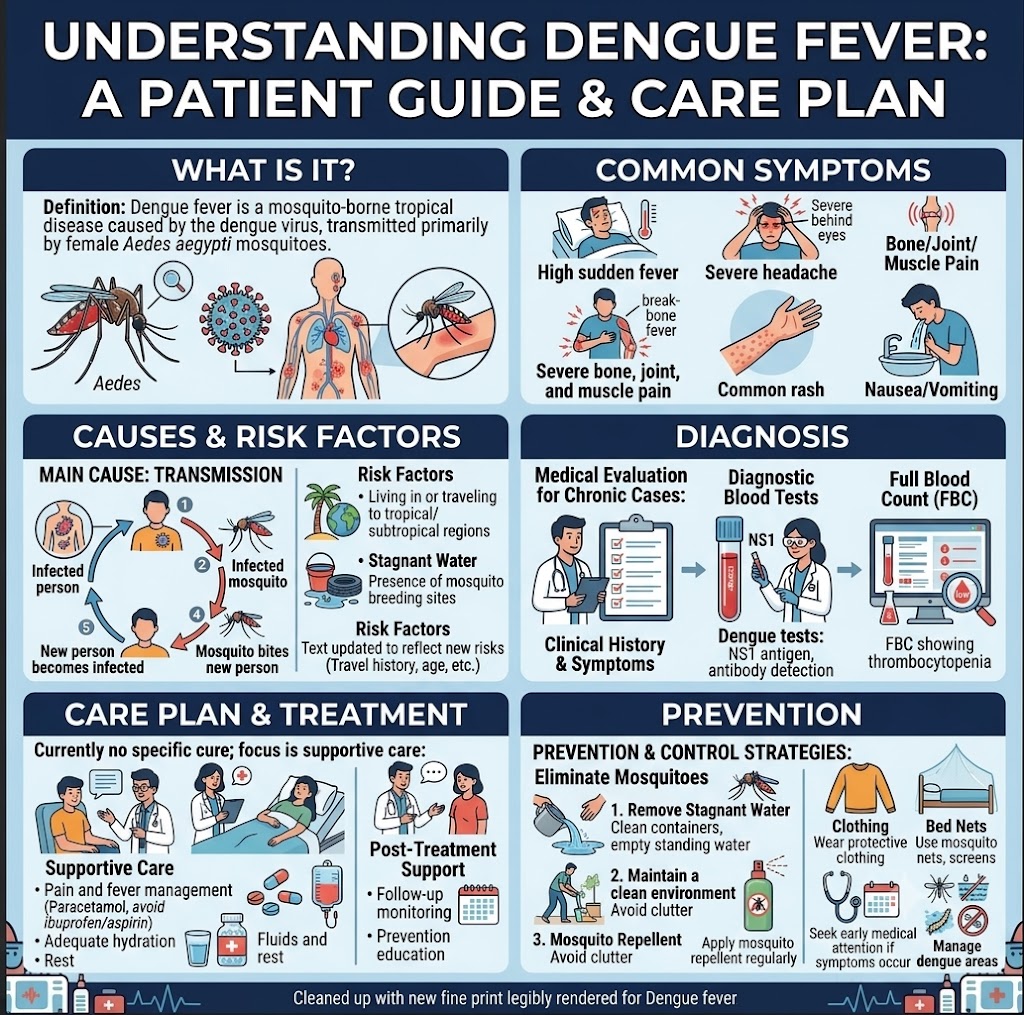
Dengue fever, pronounced DENG-gey, is a viral infection transmitted by mosquitoes, commonly found in tropical and subtropical regions worldwide. While often presenting as a mild illness with high fever and flu-like symptoms, dengue can progress to a severe form. This severe type, known as severe dengue or dengue hemorrhagic fever, is a medical emergency that can lead to dangerous bleeding, a sudden and critical drop in blood pressure (shock), and may be life-threatening. Millions contract dengue globally each year, with the disease expanding into new geographical areas.
Understanding the Condition
Dengue Fever: Understanding the Mosquito-Borne Illness
Understanding the Condition
Dengue fever, pronounced DENG-gey, is a viral infection transmitted by mosquitoes, commonly found in tropical and subtropical regions worldwide. While often presenting as a mild illness with high fever and flu-like symptoms, dengue can progress to a severe form. This severe type, known as severe dengue or dengue hemorrhagic fever, is a medical emergency that can lead to dangerous bleeding, a sudden and critical drop in blood pressure (shock), and may be life-threatening. Millions contract dengue globally each year, with the disease expanding into new geographical areas.
Common Symptoms
Mild Dengue Symptoms: Many people with dengue infection experience no symptoms. When symptoms do appear, usually 4 to 10 days after a bite from an infected mosquito, they can be mistaken for other illnesses like the flu. These typically include: a high fever (around 104 F or 40 C), severe muscle, bone, or joint pain, pain behind the eyes, and swollen glands. Most individuals recover from mild dengue within approximately one week.
Warning Signs of Severe Dengue (Medical Emergency): In some cases, symptoms can worsen rapidly, becoming life-threatening. This severe form, also called dengue hemorrhagic fever or dengue shock syndrome, occurs when blood vessels become damaged and leak fluid, and the number of clot-forming cells (platelets) in the blood drops significantly. Warning signs usually begin 1 to 2 days after the fever has subsided and require immediate medical attention. These signs include: severe abdominal pain, persistent vomiting, bleeding from gums or nose, blood in urine, stools, or vomit, bruising-like bleeding under the skin, difficult or rapid breathing, and irritability or restlessness. Severe dengue can lead to internal bleeding, organ failure, shock, and potentially death.
Consultation Guide
Which Specialist to Meet
If you suspect dengue fever, you should first consult a general practitioner or family doctor. For severe symptoms or complications, you may be referred to an infectious disease specialist, an emergency physician, or a critical care team.
Preparations Before Your Visit
Before your visit, make a note of all your symptoms, when they started, and any recent travel to tropical or subtropical regions. Be prepared to discuss your medical history and any medications you are currently taking. It's also helpful to note if you have had dengue fever before, as this increases the risk of severe illness upon reinfection.
Book a doctor visit near me
Rest and Hydration: For mild dengue, ample rest is crucial to help your body recover. Drinking plenty of fluids, such as water, oral rehydration solutions, or fruit juices, is essential to prevent dehydration, especially with fever and potential vomiting. (Duration: Typically 1-2 weeks, until symptoms subside.)
Fever and Pain Management: Over-the-counter medications can help manage fever and body aches. It is important to avoid certain pain relievers that can increase the risk of bleeding complications. Always consult with a healthcare provider for appropriate medication recommendations. (Duration: As needed, for the duration of symptoms.)
Hospital-based Care for Severe Dengue
Intravenous (IV) Fluid Therapy: For severe dengue, hospitalization is often required. IV fluids are administered to replace fluids lost due to leaking blood vessels and prevent dehydration and shock, helping to stabilize blood pressure. (Duration: Varies, typically several days to a week, depending on the patient's condition.)
Blood Transfusion: A blood transfusion is a procedure where donated blood or specific blood components are delivered into a patient's vein. It is used to replace significant blood loss from internal bleeding or to supplement critically low levels of blood components, such as platelets, which are essential for clotting. This is a common and generally safe procedure, though mild complications can occur. (Duration: A single transfusion usually takes a few hours. May be repeated as needed.)
Consultation Guide
A healthcare professional will draw a small amount of blood, typically from a vein in your arm, using a needle. You might feel a brief pinch or sting. The blood sample will then be sent to a laboratory for analysis. The procedure is usually quick and causes minimal discomfort.
Complete Blood Count (CBC)
Diagnostic Procedures
Blood Test for Dengue Virus/Antibodies
This test involves analyzing a sample of your blood to detect the dengue virus itself or antibodies your body produces in response to the infection. It helps confirm whether you have dengue and can sometimes identify the specific type of dengue virus.
What to Expect
A CBC is a common blood test that measures various components of your blood, including red blood cells, white blood cells, and platelets. In dengue fever, a low platelet count (thrombocytopenia) is a key indicator of disease progression, especially in severe cases, as platelets are crucial for blood clotting.
What to Expect
Similar to the dengue virus test, a small blood sample will be drawn from a vein in your arm. This is a routine procedure, and you might feel a slight pressure or sting during the collection. The sample is then sent for laboratory analysis to check for abnormalities in your blood cell counts.
Treatment Options
Monitoring and Organ Support: Patients with severe dengue are closely monitored for vital signs, bleeding, and signs of organ damage. Depending on the complications, treatments may include medications to support organ function or other specific interventions. (Duration: Throughout hospitalization, until stable.)
Prevention & Long-Term Wellbeing
Prevention Strategies
Mosquito Bite Prevention: The most effective way to prevent dengue is to avoid mosquito bites. Stay in air-conditioned or well-screened buildings, as dengue-carrying mosquitoes are most active from dawn to dusk but can also bite at night. When outdoors, wear long-sleeved shirts, long pants, socks, and shoes. Use mosquito repellent containing effective ingredients like DEET on exposed skin, and apply permethrin to clothing, gear, or bed netting.
Mosquito Population Control: Reduce mosquito breeding habitats around your home. The mosquitoes that spread dengue lay eggs in standing water. At least once a week, empty, scrub, and clean containers that can hold water, such as planting containers, animal dishes, and flower vases. Keep standing water containers covered between cleanings.
Dengue Vaccination: Vaccines for dengue fever are available for specific populations, generally for individuals aged 6 to 60 who live in areas where dengue is common and have had a confirmed dengue infection previously. These vaccines involve a series of doses over several months. It's important to understand that vaccination is one tool in prevention but does not replace the need for mosquito bite prevention and population control.
Long-Term Monitoring and Awareness
Increased Risk of Severe Disease Upon Reinfection: After recovering from dengue fever, you gain immunity to the specific type of virus that infected you. However, there are four types of dengue viruses, and you can be infected again by a different type. A prior dengue infection significantly increases your risk of developing severe dengue if you are infected again by another type of the virus. Therefore, ongoing vigilance against mosquito bites is crucial.
Awareness of Pregnancy Risks: Women who contract dengue during pregnancy may pass the virus to their baby during childbirth. Additionally, there is a higher risk of complications such as pre-term birth, low birth weight, or fetal distress in babies born to mothers infected with dengue during pregnancy.
Tags & Topics
Notice an error or need an update?
Help us keep medical information accurate. Report incorrect info or suggest an edit.


