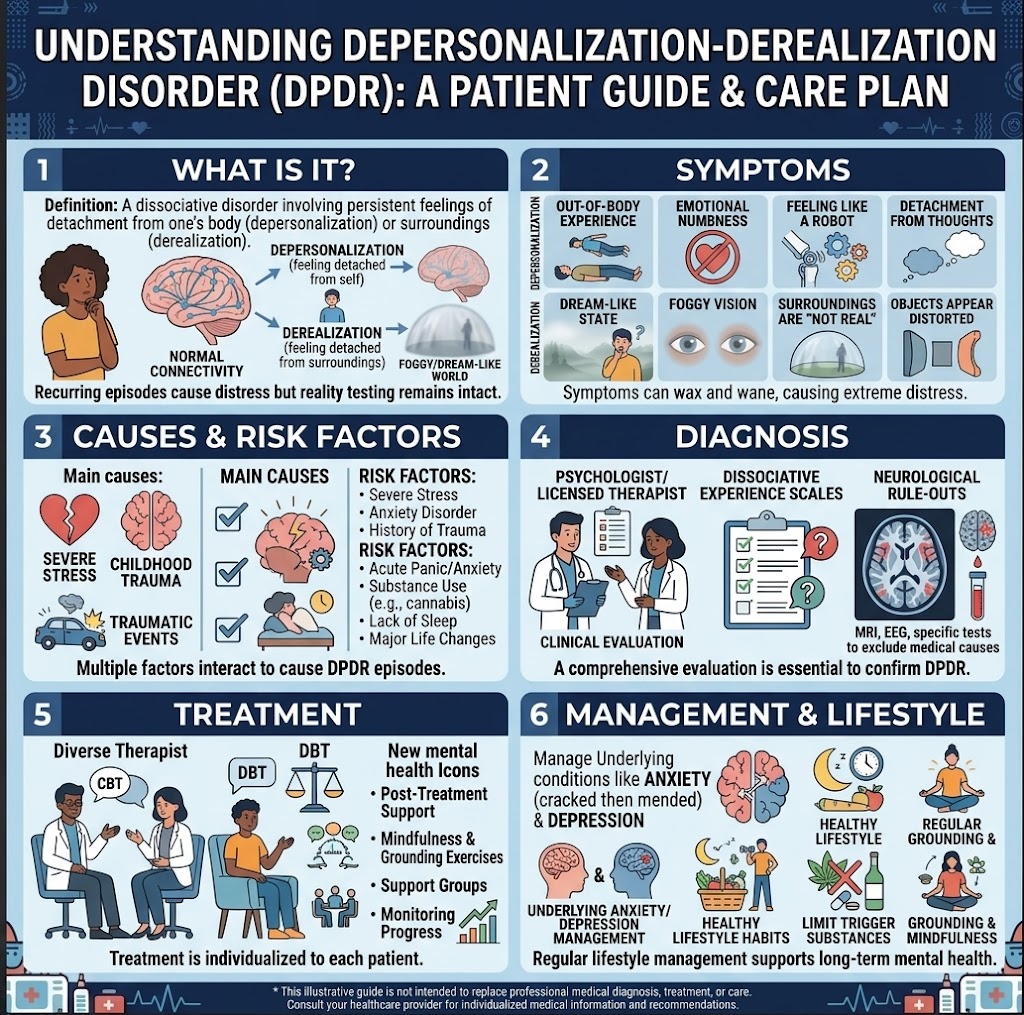
Depersonalization-derealization disorder is a mental health condition characterized by persistent or recurrent feelings of detachment from oneself or one's surroundings. Depersonalization involves feeling like an outside observer of your own body or thoughts, while derealization makes the world around you feel foggy, artificial, or dreamlike. While passing moments of dissociation are common under stress, the full disorder involves continuous or recurring episodes that cause significant distress and interfere with your daily life, work, and relationships. It is frequently triggered by past trauma, abuse, or severe chronic stress.
Understanding the Condition
Understanding Depersonalization-Derealization Disorder: Symptoms, Diagnostics, and Recovery
Understanding the Condition
Common Symptoms
Out-of-Body Sensations: Feeling like an external observer of your own mind, body, or physical actions, often described as floating above yourself or living in a dream.
Physical and Emotional Numbness: A lack of emotional reactivity to loved ones or environments, accompanied by muted physical senses or feeling like a robot without control over movements or speech.
Physical Distortion: Sensing that your limbs, head, or body parts are distorted, enlarged, shrunken, or wrapped in cotton, making your physical form feel unfamiliar.
Environmental Detachment (Derealization): Feeling separated from your surroundings by an invisible wall or glass pane, making objects, people, and environments seem flat, artificial, blurry, or unnaturally sharp.
Distorted Sense of Time and Memory: Sensing that time is passing unnaturally fast or slow, or feeling that your memories are disconnected from emotion or do not belong to you.
Consultation Guide
Which Specialist to Meet
To prepare for your visit, keep a detailed journal of your symptoms for at least two weeks, noting when episodes occur, how long they last, what you were doing, and any potential stress triggers. Write down your medical history, including any past physical or emotional trauma, a list of all current medications, vitamins, or supplements, and a list of questions to ask your doctor.
Book a doctor visit near me
A comprehensive clinical interview to assess your symptoms, behaviors, and personal history against standard diagnostic criteria for dissociative disorders.
You will meet with a mental health specialist in a private, quiet room. They will ask detailed questions about your thoughts, feelings, past experiences, and physical symptoms. You may also be asked to complete standardized questionnaires or self-assessment scales.
Physical and Neurological Examination
A medical assessment to rule out physical health conditions, such as brain disorders, temporal lobe epilepsy, or severe nutritional deficiencies, which can mimic dissociation.
Blood and urine tests to determine if your symptoms are being caused or triggered by recreational drug use, side effects from medication, or an underlying medical illness.
Cognitive Behavioral Therapy (CBT): Helps you change unhealthy thinking patterns, reduce worry about the feelings of unreality, and learn techniques to stop obsessing over your symptoms. (Duration: Typically 12 to 24 weekly sessions, but can be ongoing depending on progress.)
Dialectical Behavior Therapy (DBT): Teaches skills to manage intense emotions, handle distress without panicking, and stay connected to reality during overwhelming episodes. (Duration: Often ranges from 6 months to a year of weekly individual and group sessions.)
Eye Movement Desensitization and Reprocessing (EMDR): A specialized trauma therapy designed to help your brain process and heal from traumatic memories that trigger dissociative episodes. (Duration: Usually takes 8 to 12 sessions, which may be conducted weekly or bi-weekly.)
Supportive Pharmacotherapy
Co-occurring Symptom Management: While there are no medications specifically approved to treat dissociation itself, doctors may prescribe medicines to target associated symptoms of severe anxiety, depression, or panic attacks. (Duration: Variable, typically reviewed every 3 to 6 months to assess effectiveness and side effects.)
Home and Grounding Remedies
Sensory Grounding Exercises: Self-directed physical techniques used during an episode to reconnect with reality, such as holding an ice cube, splashing cold water on your face, or identifying 5 things you can see, hear, and touch. (Duration: Self-managed and practiced daily as needed; used immediately when symptoms begin.)
Maintenance Therapy Check-ins: Continue with periodic mental health check-ins even after symptoms improve to monitor for early signs of relapse, especially during stressful life transitions.
Building a Support Network: Educate close friends and family members about your condition so they can offer practical support and a reassuring presence during episodes of severe dissociation.
Consultation Guide
Depersonalization-derealization disorder is a mental health condition characterized by persistent or recurrent feelings of detachment from oneself or one's surroundings. Depersonalization involves feeling like an outside observer of your own body or thoughts, while derealization makes the world around you feel foggy, artificial, or dreamlike. While passing moments of dissociation are common under stress, the full disorder involves continuous or recurring episodes that cause significant distress and interfere with your daily life, work, and relationships. It is frequently triggered by past trauma, abuse, or severe chronic stress.
Diagnostic Procedures
You should consult with a licensed mental health professional, such as a psychiatrist (a medical doctor who can diagnose, treat, and prescribe medication) or a clinical psychologist/licensed psychotherapist specializing in trauma and dissociative disorders.
Preparations Before Your Visit
Psychiatric Evaluation
What to Expect
What to Expect
A physician will perform a physical exam, check your reflexes, and evaluate your balance and neurological function. They may refer you for brain imaging, such as an MRI, where you will lie still inside a large, tunnel-shaped scanner for 30 to 45 minutes while images of your brain are captured.
Toxicology and Laboratory Tests
What to Expect
A nurse or technician will draw a small sample of blood from a vein in your arm and collect a urine sample. The procedure is quick, with the blood draw causing only a brief pinch or sting.
Treatment Options
Psychotherapy (Talk Therapy)
Prevention & Long-Term Wellbeing
Prevention and Stress Management
Stress Reduction Routines: Incorporate daily stress-relief activities, such as deep-breathing exercises, yoga, meditation, or regular physical activity, to keep your nervous system calm and reduce the likelihood of trauma responses.
Mindful Substance Avoidance: Avoid recreational drugs, alcohol, and high doses of caffeine, as these substances can trigger, prolong, or worsen episodes of depersonalization and derealization.
Long-Term Monitoring and Support
Tags & Topics
Notice an error or need an update?
Help us keep medical information accurate. Report incorrect info or suggest an edit.


