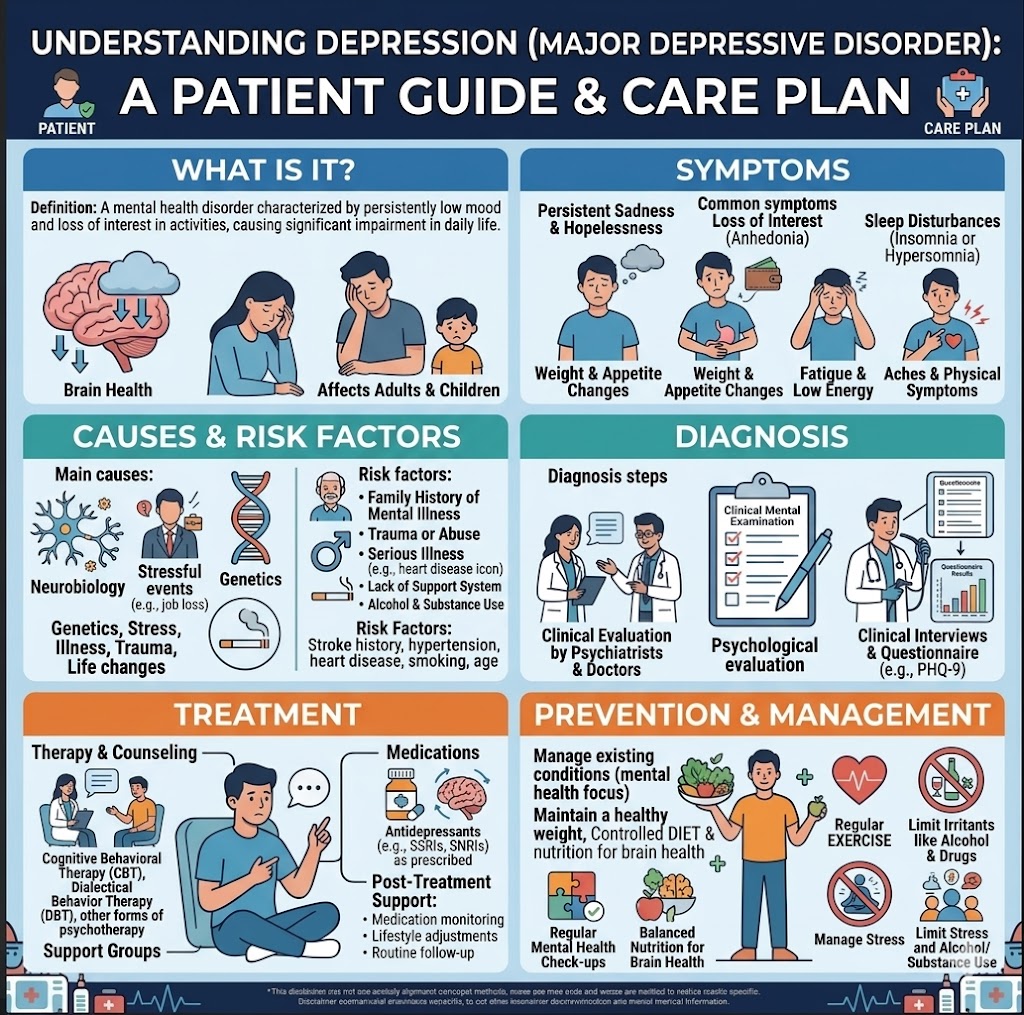
Depression (major depressive disorder) is a persistent mood disorder causing deep sadness and loss of interest. It affects feelings, thoughts, and behaviors, leading to emotional and physical issues. More than just "the blues," it's a serious medical condition, not a weakness, and typically requires professional treatment. Most individuals improve significantly with medication, psychotherapy, or both.
Understanding the Condition
Understanding Clinical Depression
Understanding the Condition
Common Symptoms
Persistent Sadness: Feelings of profound sadness, tearfulness, emptiness, or hopelessness.
Irritability & Frustration: Irritability, angry outbursts, or frustration, even over small matters.
Loss of Pleasure: Loss of interest or pleasure in most activities once enjoyed (e.g., sex, hobbies, sports).
Sleep Disturbances: Problems with sleep, including difficulty falling asleep (insomnia) or sleeping excessively.
Fatigue: Persistent tiredness and lack of energy, making even small tasks difficult.
Appetite & Weight Changes: Reduced appetite and weight loss, or increased cravings for food and weight gain.
Anxiety & Agitation: Feelings of anxiety, agitation, or restlessness.
Slowed Movements: Noticeably slowed thinking, speaking, or body movements.
Worthlessness or Guilt: Feelings of worthlessness, excessive guilt, self-blame, or fixating on past failures.
Concentration Difficulties: Trouble thinking, concentrating, making decisions, or remembering things.
Suicidal Thoughts: Frequent thoughts of death, suicidal thoughts, suicide attempts, or suicide.
Varied Symptoms in Men: In men, symptoms may include irritability, isolation, withdrawing, excessive work, or increased alcohol use.
Consultation Guide
Which Specialist to Meet
Before your visit, prepare a detailed list of your symptoms, including when they started and how they affect your daily life. Note any significant stressors or recent life changes, all medications (prescription and over-the-counter) and supplements you currently take, and any family history of depression or other mental health conditions.
Book a doctor visit near me
A common blood test to check your overall health and help rule out physical conditions that might cause depression-like symptoms, such as anemia or thyroid problems. It measures various blood components like red blood cells, white blood cells, and platelets.
Your doctor will perform a general physical check-up to look for any underlying medical conditions that could be contributing to or mimicking your symptoms. This helps ensure your depression isn't due to a treatable physical issue.
A doctor or mental health professional will ask detailed questions about your thoughts, feelings, behaviors, and patterns related to sleep, appetite, and daily activities. This evaluation helps determine if your symptoms align with the criteria for depression.
You will answer confidential questions about your symptoms, personal history, family history of mental illness, and current life situation. You may also be asked to complete questionnaires to further assess your mental state.
Antidepressants (General): Medicines designed to help balance brain chemicals that affect mood. They typically need to be taken consistently for several weeks before full effects are felt and side effects may subside. (Duration: Ongoing, often long-term (months to years) to prevent symptoms from returning.)
Electroconvulsive Therapy (ECT): A procedure performed under general anesthesia where small electric currents are passed through the brain to intentionally cause a brief seizure. This can quickly and significantly improve severe depression symptoms when other treatments haven't worked. (Duration: Typically 6-12 treatments over a few weeks; sometimes followed by maintenance treatments.)
Regular Exercise: Engaging in consistent physical activity can help reduce depression and anxiety symptoms by influencing brain chemicals, reducing inflammation, and improving overall mood. (Duration: As advised)
Avoid Alcohol and Recreational Drugs: These substances can worsen depression symptoms, interfere with the effectiveness of treatments, and create additional health problems. (Duration: As advised)
Early Treatment: Seek professional help at the earliest sign of a problem to prevent depression symptoms from worsening and to begin effective treatment promptly.
Adhere to Treatment Plan: Continue all prescribed medications and therapies for the recommended duration, even after symptoms improve, to help prevent a relapse of depression.
Monitor for Relapse: Be vigilant for any returning symptoms of depression and communicate them promptly to your healthcare provider for early intervention.
Consultation Guide
Unexplained Physical Pains: Physical problems without a clear medical cause, such as back pain or headaches.
Selective Serotonin Reuptake Inhibitors (SSRIs): Often the first choice, these medications increase serotonin levels in the brain. They are generally safe and typically cause fewer side effects than older types of antidepressants. (Duration: As advised)
Diagnostic Procedures
Complete Blood Count (CBC)
What to Expect
A healthcare professional will draw a small sample of blood, usually from a vein in your arm, using a needle. You might feel a brief pinch or sting. The sample is then sent to a lab for analysis.
What to Expect
What to Expect
Treatment Options
Depression (major depressive disorder) is a persistent mood disorder causing deep sadness and loss of interest. It affects feelings, thoughts, and behaviors, leading to emotional and physical issues. More than just "the blues," it's a serious medical condition, not a weakness, and typically requires professional treatment. Most individuals improve significantly with medication, psychotherapy, or both.
You should start by consulting your primary care doctor for an initial assessment. They can help rule out other medical conditions and may refer you to a mental health professional, such as a psychiatrist (a medical doctor specializing in mental health who can prescribe medication) or a psychologist (a professional who provides talk therapy).
Preparations Before Your Visit
Medications
Serotonin and Norepinephrine Reuptake Inhibitors (SNRIs): These medications increase both serotonin and norepinephrine in the brain. They are sometimes also used to treat anxiety disorders and chronic nerve pain. (Duration: As advised)
Atypical Antidepressants: A diverse group of medications that work in various ways, not fitting neatly into other categories. Each has unique characteristics and potential side effects. (Duration: As advised)
Monoamine Oxidase Inhibitors (MAOIs): Among the earliest antidepressants, these are very effective but require strict dietary restrictions (avoiding foods high in tyramine) and careful monitoring due to potential serious interactions. They are reserved for cases where other treatments have failed. (Duration: As advised)
Therapies
Psychotherapy (Talk Therapy): Involves talking with a mental health professional to learn about your condition, understand how your thoughts, emotions, and behaviors affect your moods, and develop healthy coping skills to manage challenging situations. (Duration: Varies widely, from a few weeks to several months or longer, depending on individual needs and the type of therapy.)
Transcranial Magnetic Stimulation (TMS): A non-invasive procedure that uses magnetic fields to stimulate nerve cells in specific regions of the brain involved in mood control. It is used for major depression that has not responded to other treatments. (Duration: Daily sessions for 4-6 weeks (typically 20-30 sessions).)
Vagus Nerve Stimulation (VNS): Involves surgically implanting a device under the skin in the chest that sends regular electrical impulses to the vagus nerve, which then sends signals to the brain. This is used for long-term treatment of severe, persistent depression resistant to other therapies. (Duration: Ongoing, as the device is implanted long-term.)
Balanced Diet: Eating a healthy, balanced diet is important for overall brain health. Low levels of certain vitamins (like B-12) may be linked to depression, though supplements are not a replacement for medical treatment. (Duration: As advised)
Medication Awareness: Understand potential antidepressant side effects (e.g., weight changes, sexual issues) and discuss adjustments with your doctor; never stop medication abruptly due to potential withdrawal risks.
Prevention & Long-Term Wellbeing
The doctor will physically examine your body, listen to your heart and lungs, check your blood pressure and other vital signs, and ask about your medical history and lifestyle habits.
Mental Health Evaluation
Lifestyle & Self-Care
Prevention
Stress Management: Develop healthy strategies to control stress, which can increase your resilience and boost self-esteem, making you less vulnerable to depression.
Build Social Support: Reach out to family and friends, especially during challenging or stressful times, to help you navigate rough periods and reduce feelings of isolation.
Maintain Healthy Habits: Continue regular exercise, a nutritious diet, sufficient sleep, and avoid substance abuse to support overall mental and physical health and well-being.
Therapy Continuation: Utilize ongoing psychotherapy as recommended to reinforce coping strategies, process underlying concerns, and maintain long-term mental health stability.
Tags & Topics
Notice an error or need an update?
Help us keep medical information accurate. Report incorrect info or suggest an edit.


