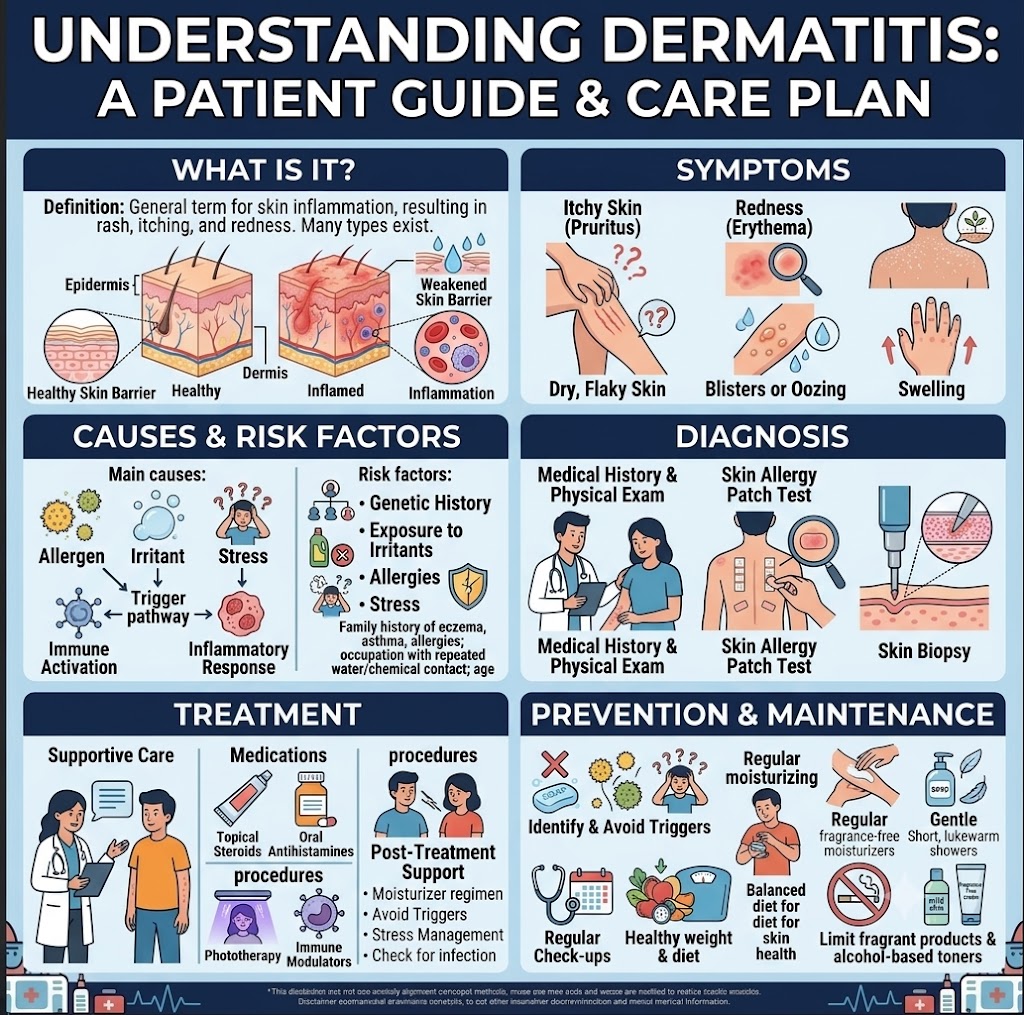
Dermatitis, also commonly known as eczema, is a frequent condition that causes the skin to become swollen, irritated, and often itchy. It can manifest in various ways, including dry, scaly skin, or a rash that may blister, ooze, crust, or flake. While highly uncomfortable, dermatitis is not contagious. Regular moisturizing and specific treatments, such as medicated creams or shampoos, are key to managing its symptoms. Three common forms include atopic dermatitis (often just called eczema), contact dermatitis, and seborrheic dermatitis.
Understanding the Condition
Understanding Dermatitis (Eczema): Skin Swelling and Irritation
Understanding the Condition
Dermatitis, also commonly known as eczema, is a frequent condition that causes the skin to become swollen, irritated, and often itchy. It can manifest in various ways, including dry, scaly skin, or a rash that may blister, ooze, crust, or flake. While highly uncomfortable, dermatitis is not contagious. Regular moisturizing and specific treatments, such as medicated creams or shampoos, are key to managing its symptoms. Three common forms include atopic dermatitis (often just called eczema), contact dermatitis, and seborrheic dermatitis.
Common Symptoms
Itchiness: A primary symptom, which can sometimes be severe enough to cause pain.
Dry, Cracked, or Scaly Skin: The skin may become very dry, leading to cracks and scaling. This can be more pronounced on lighter skin tones.
Rash: Swollen skin often presents with a rash, which can vary in color depending on your natural skin tone. On lighter skin, it might appear red, while on darker skin, it could look purple, gray, or dark brown.
Blisters: Small, fluid-filled bumps that may ooze clear fluid and later crust over.
Before your appointment, prepare a list of your symptoms, including when they started and how often they occur. Note any known triggers or substances that seem to worsen your skin. Bring a list of all medications, supplements, and skin care products you use. Be ready to discuss your medical history, including any family history of allergies, asthma, or eczema. Jot down any questions you have for the doctor.
Book a doctor visit near me
The doctor will visually examine your skin and ask detailed questions about your symptoms, medical history, lifestyle, and potential exposures.
Oral Corticosteroids: Powerful anti-inflammatory medications taken by mouth for severe, widespread flare-ups. (Duration: Very short-term, typically 1-2 weeks, to quickly control severe symptoms due to potential side effects.)
Consultation Guide
Thickened Skin: Repeated scratching or long-term irritation can cause the skin to become thicker and leathery over time.
Small, Raised Bumps: More commonly observed on brown or Black skin, these can be tiny, elevated spots within the affected area.
Skin Discoloration: After a flare-up, especially in people with brown or Black skin, the affected areas may become darker (post-inflammatory hyperpigmentation) or lighter (post-inflammatory hypopigmentation). This can persist for months or even years.
Consultation Guide
Which Specialist to Meet
After numbing the area with a local anesthetic injection (which might cause a brief sting), the doctor will use a small tool to remove a tiny piece of skin. This might be a shave biopsy (removing the top layers) or a punch biopsy (removing a deeper, circular sample). The site will then be bandaged, and you might have a few stitches. The sample is sent to a lab for analysis.
Identify and Avoid Triggers: Pay close attention to what causes your skin to flare up. Common triggers include certain soaps, detergents, perfumes, metals (like nickel), rough fabrics, sweating, stress, or specific foods. Once identified, diligently avoid these.
Establish a Consistent Skin Care Routine: Maintain a daily routine of cleansing with mild, fragrance-free products and liberal application of moisturizers, especially after bathing when skin is still damp. This helps to strengthen the skin's protective barrier.
Protect Your Skin: Wear protective gloves or clothing when handling irritants, chemicals, or performing tasks that might expose your skin to allergens. Choose soft, breathable fabrics like cotton.
Manage Stress: Stress can often trigger or worsen dermatitis flare-ups. Incorporate stress-reducing activities into your daily life, such as meditation, yoga, deep breathing exercises, or hobbies you enjoy.
Avoid Scratching: While tempting, scratching can worsen inflammation, damage the skin, and increase the risk of infection. Keep fingernails short and consider wearing cotton gloves at night if scratching during sleep is an issue. Apply cold compresses or anti-itch creams to relieve discomfort.
Diagnostic Procedures
You should first consult your primary care doctor for an initial assessment. If the condition is persistent, severe, or difficult to diagnose, your doctor may refer you to a dermatologist, a specialist in skin conditions. For cases of suspected allergic contact dermatitis, an allergist may also be consulted.
Preparations Before Your Visit
Physical Examination and Medical History
What to Expect
Used to identify specific allergens that might be causing contact dermatitis. Small amounts of common allergens are applied to your skin.
What to Expect
Tiny patches containing various potential allergens will be taped to your back. These patches usually stay in place for 48 hours. After this time, you'll return to have the patches removed, and your skin will be examined for any reactions (redness, swelling, blistering) at the sites. A second reading may be taken a few days later to check for delayed reactions. During this period, you will need to keep the patched area dry and avoid strenuous activities.
In rare cases, if the diagnosis is unclear or to rule out other skin conditions, a small sample of skin may be removed for microscopic examination.
What to Expect
Treatment Options
Medications
Topical Corticosteroids: Creams or ointments that reduce inflammation and relieve itching. (Duration: Typically for short periods during flare-ups, as directed by a doctor, usually 1-4 weeks per course.)
Topical Calcineurin Inhibitors: Non-steroid creams that help control inflammation and itching, often used for sensitive areas or long-term maintenance. (Duration: Long-term use is possible, as directed by a doctor, often twice daily.)
Oral Antihistamines: Medications taken by mouth to help reduce severe itching, especially if it interferes with sleep. (Duration: Short-term for acute itching, or as needed for a few days to weeks.)
Antibiotics or Antifungals: If scratching leads to a bacterial or fungal skin infection, these medications are prescribed to clear the infection. (Duration: Typically 7-14 days, as prescribed by a doctor.)
Other Immunomodulators: Newer injectable or oral medications that target specific immune system pathways for severe, hard-to-treat cases. (Duration: Long-term, as determined by a specialist.)
Therapies
Light Therapy (Phototherapy): Controlled exposure to specific wavelengths of ultraviolet light can help reduce inflammation and itching for widespread or severe dermatitis. (Duration: Multiple sessions per week for several weeks to months, then maintenance as needed.)
Address Skin Discoloration: For post-inflammatory hyperpigmentation or hypopigmentation, consistent skin care and sun protection are important. Discuss specific topical treatments with your dermatologist, if needed, though improvement can take significant time.
Prevention & Long-Term Wellbeing
During the visit, your doctor will carefully look at the affected areas of your skin, noting the type of rash, its location, and any other skin changes. They will ask about your personal and family history of skin conditions, allergies, or asthma, and inquire about your daily routines, diet, and any known irritants or allergens you might encounter.
Home Remedies and Lifestyle Adjustments
Regular Moisturizing: Applying a thick, unscented moisturizer frequently helps to seal in moisture and repair the skin barrier. (Duration: Ongoing, often multiple times a day)
Gentle Skin Care: Taking shorter, lukewarm baths or showers (around 10 minutes) and using mild, fragrance-free cleansers. Gently patting the skin dry afterwards rather than rubbing. (Duration: Ongoing)
Avoiding Triggers: Identifying and avoiding substances, foods, or environmental factors that worsen your dermatitis. (Duration: Ongoing)
Prevention and Long-Term Wellbeing
Stay Hydrated and Maintain a Balanced Diet: Drinking enough water supports overall skin health. While diet's role is complex, some individuals find certain foods may exacerbate their dermatitis; consult your doctor or a dietitian if you suspect a dietary link.
Tags & Topics
Notice an error or need an update?
Help us keep medical information accurate. Report incorrect info or suggest an edit.


