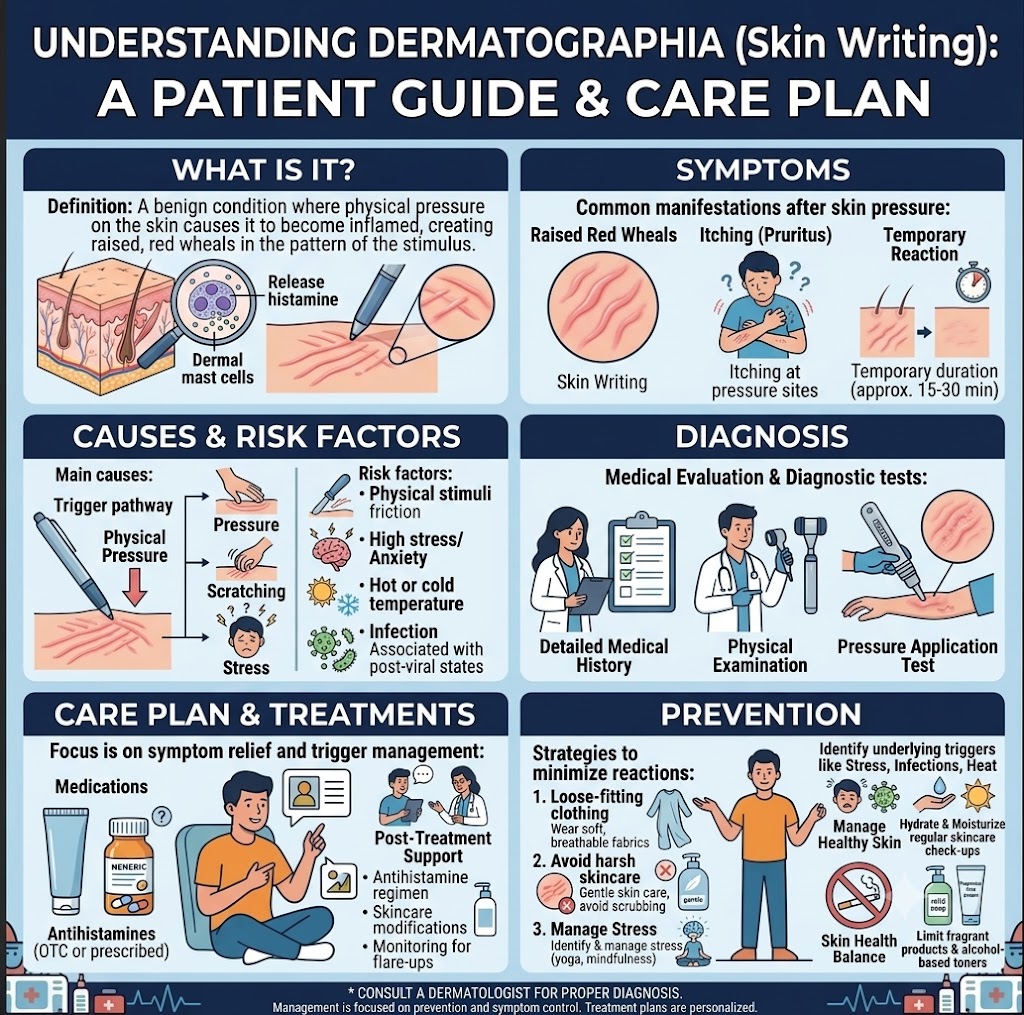
Dermatographia, sometimes called 'skin writing,' is a common and usually harmless condition where light scratching, rubbing, or pressure on the skin causes temporary red, raised lines or welts to appear. These marks often resemble writing or patterns traced on the skin and are a form of physical urticaria (hives). They typically develop quickly after stimulation and fade within 15 to 30 minutes, though they can sometimes last longer. The exact cause is unknown, but it's believed to be an exaggerated release of histamine.
Understanding the Condition
Dermatographia: When Your Skin Writes Back
Understanding the Condition
Common Symptoms
Red, Raised Lines (Welts): The most prominent symptom is the appearance of distinct red, elevated lines or welts on the skin where it has been scratched or rubbed. These marks exactly mirror the shape of the pressure applied.
Itching: The affected skin areas, particularly the raised welts, can often feel itchy. This sensation can range from mild to moderately bothersome.
Mild Swelling: Along with the red lines, there may be slight swelling in the immediate area, giving the welts a more pronounced, hive-like appearance.
Rapid Onset and Disappearance: Symptoms typically manifest within minutes of skin stimulation and generally subside on their own within 15 to 30 minutes. In some cases, they might persist for a few hours.
Consultation Guide
Which Specialist to Meet
Initially, a general practitioner or primary care provider can often diagnose and help manage dermatographia. If your symptoms are severe, persistent, or do not respond to initial treatments, you may be referred to a dermatologist (a doctor specializing in skin conditions) or an allergist/immunologist (a specialist in allergies and immune system disorders).
Preparations Before Your Visit
Before your appointment, it's helpful to keep a detailed symptom diary. Note when your symptoms started, what activities or triggers seem to bring them on, how long they last, and any other associated symptoms you experience. List all medications, supplements, and herbal remedies you are currently taking. It is important to avoid taking any antihistamines for at least 24 to 48 hours before your visit, as these medications can interfere with the diagnostic skin tests.
Book a doctor visit near me
Dermatographia is typically diagnosed based on a review of your symptoms, medical history, and a simple physical examination that includes a specific skin test.
During the physical exam, your doctor will inspect your skin and ask detailed questions about your symptoms, potential triggers, and how long the reactions last. The key diagnostic step is the 'scratch test.' For this, the doctor will gently but firmly run a blunt object, such as a tongue depressor or a specialized dermatographia pen, across a small area of your skin, often on your back or arm. You will feel a light pressure or a mild scraping sensation, but it should not be painful or break the skin. The doctor will then observe the area for several minutes. If you have dermatographia, a characteristic red, raised welt will appear along the path of the scratch within 5-10 minutes, confirming the diagnosis.
Manage Stress: Stress can exacerbate dermatographia symptoms for some individuals. Incorporate stress-reduction techniques into your routine, such as meditation, deep breathing exercises, yoga, or regular light physical activity. (Duration: Ongoing)
Oral Antihistamines: These are the primary medications used to manage dermatographia. They work by blocking the effects of histamine, a chemical released in the body that causes itching and welts. Newer generation antihistamines are often preferred as they cause less drowsiness. (Duration: Taken daily or as needed; typically for weeks to months, or long-term if symptoms are persistent.)
Histamine H2 Blockers: In some cases where H1 antihistamines alone are not sufficient, your doctor may recommend combining them with H2 blockers, which act on a different type of histamine receptor to provide more comprehensive symptom control. (Duration: Taken daily or as needed; typically for weeks to months.)
Environmental Awareness: Pay attention to whether extreme temperatures (hot or cold), sudden temperature changes, or dry air trigger your symptoms. Adjust your environment or protect your skin accordingly, such as by wearing appropriate clothing or using a humidifier.
Regular Doctor Check-ups: If you are managing dermatographia with medication, schedule regular follow-up visits with your doctor. This ensures your treatment plan remains effective and allows for adjustments in dosage or medication if your symptoms change or persist.
Maintain a Symptom Diary: Continue to track potential triggers, the severity and duration of your symptoms, and how well your treatments are working. This ongoing record is invaluable for fine-tuning your management strategy with your healthcare provider.
Develop Coping Strategies: Living with a chronic skin condition, even a generally mild one, can be frustrating. Develop effective coping mechanisms for stress and discomfort, such as mindfulness exercises, support groups, or professional counseling if symptoms significantly impact your quality of life.
Consultation Guide
Dermatographia, sometimes called 'skin writing,' is a common and usually harmless condition where light scratching, rubbing, or pressure on the skin causes temporary red, raised lines or welts to appear. These marks often resemble writing or patterns traced on the skin and are a form of physical urticaria (hives). They typically develop quickly after stimulation and fade within 15 to 30 minutes, though they can sometimes last longer. The exact cause is unknown, but it's believed to be an exaggerated release of histamine.
Identify and Avoid Triggers: Pay close attention to what causes your skin to react, such as tight clothing, vigorous scrubbing, extreme temperatures, or stress. Once identified, make conscious efforts to minimize exposure to these triggers. (Duration: Ongoing as needed)
Moisturize Skin Regularly: Apply a gentle, fragrance-free moisturizer daily to keep your skin hydrated. Well-hydrated skin is less prone to irritation and can help reduce the frequency or severity of reactions. (Duration: Daily, ongoing)
Wear Loose, Soft Clothing: Opt for loose-fitting garments made from smooth, natural fibers like cotton. These materials are less likely to rub against and irritate the skin compared to tight or rough fabrics. (Duration: Ongoing)
Diagnostic Procedures
Physical Examination and Skin Test (Darier's Sign Test)
What to Expect
Treatment Options
Medications
Leukotriene Receptor Antagonists: For individuals who do not respond adequately to antihistamines, a doctor might prescribe these medications. They help to reduce the inflammatory response involved in skin reactions. (Duration: Taken daily, typically for several weeks to months.)
Phototherapy (UVB Light Therapy): In rare, severe, and persistent cases that don't respond to other treatments, controlled exposure to specific wavelengths of ultraviolet B (UVB) light under medical supervision may be considered. This therapy can help desensitize the skin over time and reduce its reactivity. (Duration: Multiple sessions over several weeks or months, as prescribed by a dermatologist.)
Prevention & Long-Term Wellbeing
Home Remedies & Lifestyle Adjustments
Prevention
Mindful Skin Care Practices: Always be gentle with your skin. Avoid harsh soaps, vigorous scrubbing, and excessively hot baths or showers, as these can strip the skin's natural protective oils and increase its sensitivity to irritation.
Hydration and Balanced Diet: Maintain good overall hydration by drinking plenty of water throughout the day. While specific foods are not common triggers for dermatographia, a healthy, balanced diet supports overall skin health and immune function.
Long-Term Monitoring & Management
Tags & Topics
Notice an error or need an update?
Help us keep medical information accurate. Report incorrect info or suggest an edit.


