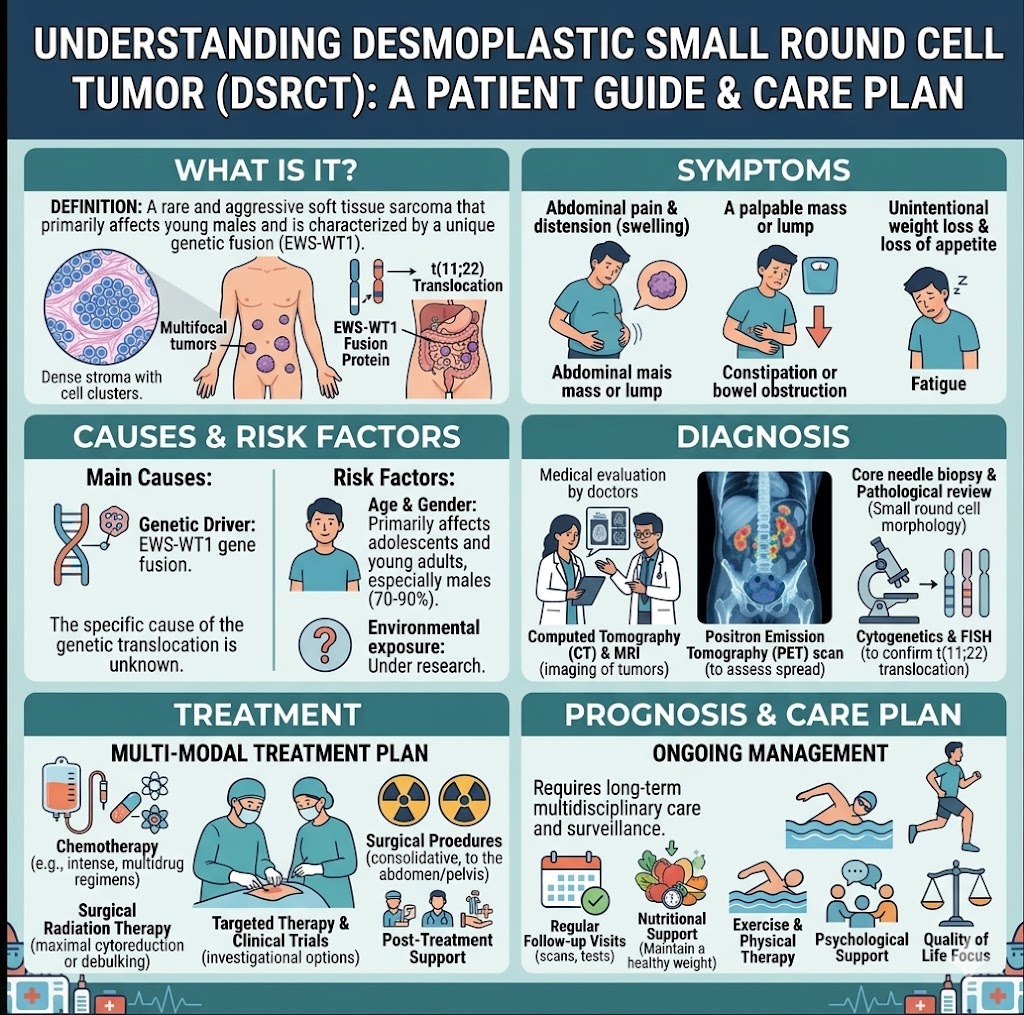
Desmoplastic Small Round Cell Tumor (DSRCT) is a very rare and aggressive type of cancer. It often begins in the lining of the abdomen and pelvis, called the peritoneum, but can appear in other body parts. DSRCT is a soft tissue sarcoma, meaning it starts in the tissues that connect, support, and surround body structures. This cancer typically affects young men and boys and can spread quickly to nearby organs. Treatment is complex and usually involves a combination of therapies.
Understanding the Condition
Desmoplastic Small Round Cell Tumor (DSRCT): A Patient Guide
Understanding the Condition
Common Symptoms
Abdominal Swelling: A noticeable enlargement or fullness of the abdomen.
Abdominal Pain: Discomfort or aching in the stomach area.
Constipation: Difficulty passing stool regularly.
Difficulty Urinating: Struggling to pass urine, or feeling incomplete emptying of the bladder.
Consultation Guide
Which Specialist to Meet
You should consult with a multidisciplinary team of specialists, including a medical oncologist (cancer doctor), a surgical oncologist (cancer surgeon), a radiation oncologist (radiation therapy specialist), and potentially a pathologist and radiologist. A supportive care team can also help manage symptoms and wellbeing.
Preparations Before Your Visit
Before your visit, gather all your medical records, including previous test results. Make a detailed list of all your symptoms, noting when they started and how severe they are. List all medications you are currently taking, including dosages and any allergies. Write down any questions you have for the doctor. Consider bringing a trusted friend or family member to help take notes and remember information.
Book a doctor visit near me
Radiation Therapy: High-energy rays are precisely directed at the tumor area to destroy cancer cells, shrink tumors, and manage symptoms. It may be used before or after surgery. (Duration: Typically involves daily sessions over several weeks.)
Symptom Management: This involves medications and other interventions to alleviate pain, nausea, fatigue, and other side effects caused by the cancer itself or its aggressive treatments, improving quality of life. (Duration: Ongoing as needed throughout the treatment journey and recovery.)
Diagnostic Procedures
Computed Tomography (CT) Scan
A CT scan uses specialized X-ray equipment to create detailed cross-sectional images of the body. It helps identify tumors, assess their size, and check for spread to other organs.
What to Expect
You will lie still on a table that slides into a large, donut-shaped scanner. You may receive a contrast dye (orally or intravenously) to enhance image clarity. The scan is painless and typically takes 15 to 60 minutes.
Magnetic Resonance Imaging (MRI)
An MRI uses powerful magnets and radio waves to generate detailed images of soft tissues, which can be particularly useful for evaluating tumor involvement and assessing its relationship to surrounding structures.
What to Expect
You will lie on a table that moves into a large, tube-like machine. It can be noisy (ear protection is provided), and some people find the enclosed space unsettling. You may receive a contrast dye. The procedure can take 30 to 90 minutes.
Positron Emission Tomography (PET) Scan
A PET scan uses a small amount of radioactive sugar, which is absorbed by fast-growing cancer cells. This helps doctors identify active tumors and detect cancer spread throughout the body.
What to Expect
A small amount of radioactive sugar will be injected into a vein. You will wait for about an hour for your body to absorb it. Then, you will lie on a table while a scanner takes images. The scan itself typically lasts 30 to 60 minutes.
Biopsy (Tissue Sample)
A biopsy is essential for a definitive diagnosis. A small piece of the tumor tissue is removed and examined under a microscope. This also includes specific genetic tests to identify a characteristic gene fusion (EWSR1-WT1) for DSRCT.
What to Expect
The procedure is performed under local anesthesia or sedation. It can be a core needle biopsy (a needle guided by imaging) or a small surgical procedure (incisional or excisional biopsy, often laparoscopically). You might feel some pressure. The sample is sent to a laboratory for analysis, and you may experience mild soreness afterward.
Blood tests are used to assess overall health, organ function, and detect general markers of inflammation or other issues, although there aren't specific blood markers for DSRCT.
What to Expect
A nurse or phlebotomist will draw blood from a vein, typically in your arm. The process is quick and involves a minor pinch.
Adhere to Follow-up Schedule: Regular follow-up appointments, including imaging scans and blood tests, are crucial for long-term monitoring and early detection of any cancer recurrence. This is a lifelong commitment.
Treatment Options
Desmoplastic Small Round Cell Tumor (DSRCT) is a very rare and aggressive type of cancer. It often begins in the lining of the abdomen and pelvis, called the peritoneum, but can appear in other body parts. DSRCT is a soft tissue sarcoma, meaning it starts in the tissues that connect, support, and surround body structures. This cancer typically affects young men and boys and can spread quickly to nearby organs. Treatment is complex and usually involves a combination of therapies.
Surgical Procedures
Tumor Removal Surgery (Cytoreductive Surgery): This extensive surgery aims to remove as much visible tumor as possible from the abdomen and any affected organs. It is a critical component of treatment for DSRCT. (Duration: Requires a hospital stay for recovery, typically 1 to 2 weeks, followed by several weeks or months for full recuperation.)
Hyperthermic Intraperitoneal Chemotherapy (HIPEC): Performed immediately after tumor removal surgery, a heated chemotherapy solution is circulated directly within the abdomen for a short period to kill any remaining microscopic cancer cells. (Duration: Typically performed for 60-90 minutes during the surgical procedure, part of the overall surgical recovery period.)
Systemic Chemotherapy: Powerful anti-cancer drugs are administered intravenously to target and kill cancer cells throughout the body. Often a combination of different drugs is used due to the aggressive nature of DSRCT. (Duration: Administered in cycles, typically weeks to months, with rest periods in between to allow the body to recover.)
Therapies
Targeted Therapy / Clinical Trials: These are investigational treatments that focus on specific molecular pathways that cancer cells use to grow. Patients may participate in clinical trials to access these newer therapies. (Duration: Varies significantly based on the specific drug and trial design, potentially long-term if effective.)
Maintain a Balanced Diet: Eating nutritious, well-balanced meals can help maintain strength, support the immune system, and aid healing during and after treatment. Consult a dietitian for personalized advice.
Engage in Gentle Exercise: With your doctor's approval, light physical activity such as walking can help reduce fatigue, improve mood, and maintain physical function. Adjust intensity based on your energy levels.
Managing Treatment Side Effects
Open Communication with Healthcare Team: Discuss all side effects, no matter how minor they seem, with your doctors and nurses. They can offer strategies, medications, or adjustments to manage discomfort and improve your daily life.
Proactive Pain Management: Work closely with your medical team to ensure your pain is adequately controlled, utilizing appropriate medications and complementary therapies as recommended.
Long-Term Monitoring and Rehabilitation
Consider Rehabilitation Services: Physical or occupational therapy may be beneficial to regain strength, mobility, and overall function after extensive surgery and treatment, helping you return to daily activities.
Prevention & Long-Term Wellbeing
Emotional and Psychological Support
Seek Counseling or Support Groups: Connecting with mental health professionals, patient support groups, or other survivors can provide coping strategies and emotional validation during a challenging time.
Practice Mindfulness and Relaxation: Techniques like meditation, deep breathing exercises, or gentle yoga can help manage stress, anxiety, and improve overall mental wellbeing.
Nutrition and Lifestyle
Tags & Topics
Notice an error or need an update?
Help us keep medical information accurate. Report incorrect info or suggest an edit.


