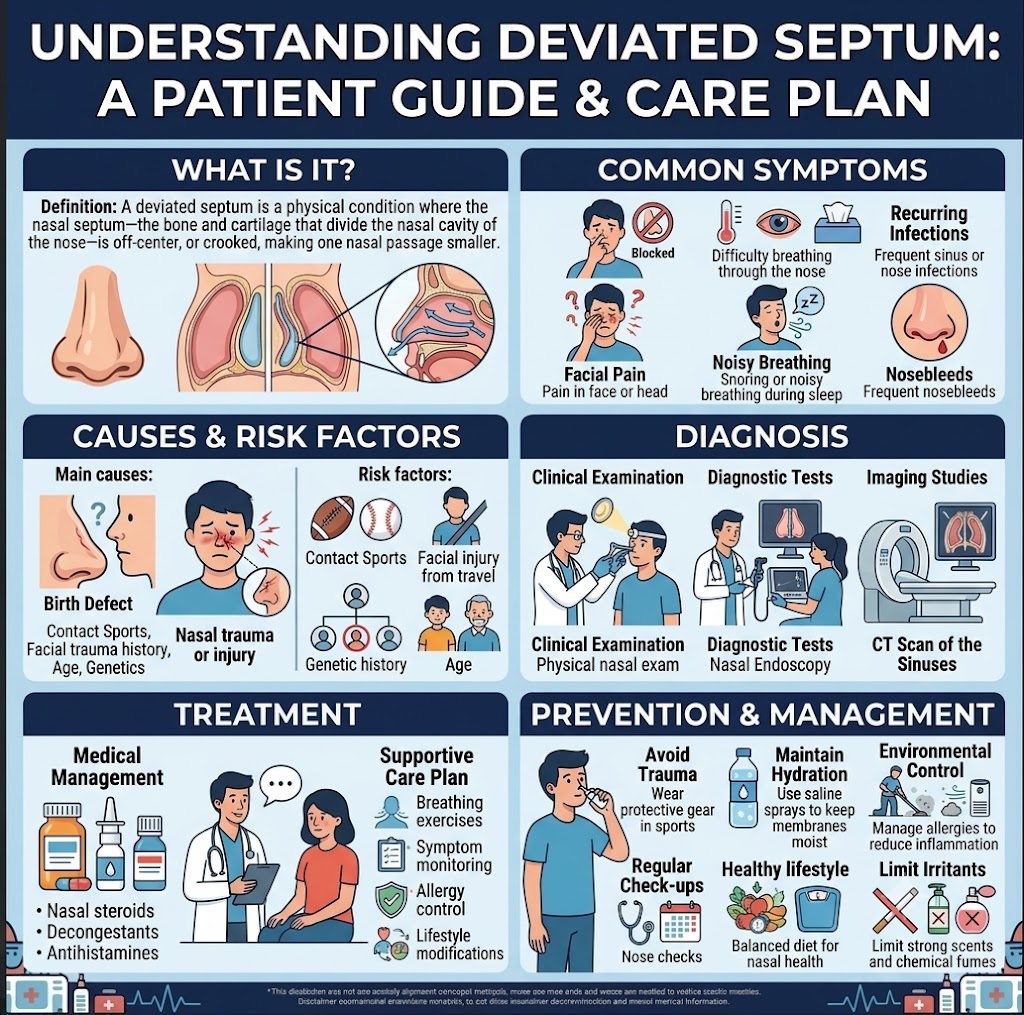
A deviated septum occurs when the thin wall of bone and cartilage that divides your nose into two separate passages (the nasal septum) is crooked or off-center. This common condition can make one nasal passage significantly narrower than the other, restricting airflow and making it difficult to breathe. While many people with a deviated septum experience no issues, for others, it can lead to bothersome symptoms like chronic nasal congestion, nosebleeds, or even a visibly crooked nose. Treatment options range from managing symptoms with medication to surgical correction.
Understanding the Condition
Deviated Septum: Understanding and Managing a Crooked Nasal Wall
Understanding the Condition
A deviated septum occurs when the thin wall of bone and cartilage that divides your nose into two separate passages (the nasal septum) is crooked or off-center. This common condition can make one nasal passage significantly narrower than the other, restricting airflow and making it difficult to breathe. While many people with a deviated septum experience no issues, for others, it can lead to bothersome symptoms like chronic nasal congestion, nosebleeds, or even a visibly crooked nose. Treatment options range from managing symptoms with medication to surgical correction.
Common Symptoms
Nosebleeds: The dry air passing through a narrowed nasal passage can irritate and dry out the septum's surface, making it more prone to bleeding.
Noisy Breathing During Sleep: For some individuals, the restricted airflow can lead to noisy breathing during sleep, which may resemble snoring or even contribute to sleep apnea.
Recurrent Sinus Infections: Impaired drainage from the sinuses due to the deviation can increase the likelihood of developing sinus infections.
For persistent nasal breathing problems or other symptoms related to a deviated septum, you should consult an Ear, Nose, and Throat (ENT) specialist, also known as an otolaryngologist. This specialist has expertise in diagnosing and treating conditions of the head and neck.
Preparations Before Your Visit
Before your visit, be prepared to discuss your symptoms in detail, including when they started, how often they occur, and what makes them better or worse. Inform your doctor about your complete medical history, including any previous nose injuries, other medical conditions, and all medications you are currently taking (prescription, over-the-counter, and supplements). It's helpful to write down any questions you have beforehand. If you use blood-thinning medications, your doctor may advise you to temporarily stop them before any potential procedures.
Book a doctor visit near me
Nasal Steroid Sprays: These sprays help reduce inflammation and swelling within the nasal passages, improving airflow. They do not correct the physical deviation but can alleviate symptoms caused by inflamed tissues. (Duration: Used daily for several weeks to months, as directed by a doctor, for optimal effect.)
Consultation Guide
Facial Asymmetry or Crooked Nose: In some cases, a severely deviated septum can cause a noticeable outward crookedness of the nose or contribute to facial asymmetry.
Consultation Guide
Which Specialist to Meet
During the examination, you will sit comfortably while the doctor carefully looks into your nose. They will assess the position of your nasal septum and identify any narrowing of the nasal passages. This part of the examination is generally quick and causes minimal discomfort. In some cases, a small amount of topical decongestant spray might be used to reduce any swelling, making it easier to visualize the septum. The doctor may also gently feel the outside of your nose to check its structure.
Diagnostic Procedures
Diagnosis of a deviated septum typically involves a thorough physical examination of your nose. The doctor will visually inspect the inside of your nostrils using a specialized light source and a nasal speculum (a small instrument that gently widens the nostril).
What to Expect
Treatment Options
Medications
Decongestant Sprays or Oral Decongestants: These medications temporarily shrink swollen tissues in the nose, offering short-term relief from congestion. Nasal sprays should be used sparingly as overuse can lead to worsening congestion. (Duration: Nasal sprays for no more than 3-5 consecutive days; oral decongestants as needed or for short courses.)
Antihistamines: If allergies contribute to nasal congestion, antihistamines can help by blocking the body's reaction to allergens, thereby reducing swelling and mucus production. (Duration: As needed or daily, depending on allergy severity and type of medication.)
Surgical Procedures
Rhinoplasty (Nose Reshaping Surgery): If the deviated septum significantly affects the external appearance of the nose, or if there are other aesthetic concerns, rhinoplasty may be performed simultaneously with septoplasty (known as septorhinoplasty). This procedure can change the size, shape, or proportions of the nose, addressing both breathing issues and cosmetic concerns. (Duration: A single procedure, typically lasting 1.5 to 3 hours or more, depending on complexity. Initial recovery takes several weeks, with final results visible after up to a year as swelling fully resolves.)
Follow Post-Surgery Instructions: If you undergo septoplasty or rhinoplasty, carefully follow your surgeon's post-operative care instructions, including wound care, activity restrictions, and medication use, to ensure optimal healing and results.
Manage Allergies and Sinus Conditions: Even after correction, managing underlying allergies or chronic sinus issues is important to prevent inflammation that can still affect nasal breathing. Continue to use prescribed nasal sprays or allergy medications as directed by your doctor.
Maintain Nasal Hygiene: Regular nasal saline rinses can help keep nasal passages moist and clear, especially in dry environments or if you experience recurrent congestion, promoting overall nasal health.
Prevention & Long-Term Wellbeing
Septoplasty: This surgical procedure is performed to straighten the nasal septum. During septoplasty, the surgeon repositions the crooked part of the bone and cartilage of the septum, sometimes trimming or removing small pieces before reinserting them in a straightened position. This aims to open up the nasal passages and improve breathing. (Duration: A single procedure, typically lasting 1 to 1.5 hours. Initial recovery usually takes a few weeks, with full internal healing taking several months.)
Prevention
Protect Your Nose from Injury: Many deviated septums result from trauma. Wear appropriate protective gear, such as helmets or face guards, during sports or activities where nasal injury is a risk to minimize the chance of damage.
Long-Term Monitoring and Management
Tags & Topics
Notice an error or need an update?
Help us keep medical information accurate. Report incorrect info or suggest an edit.


