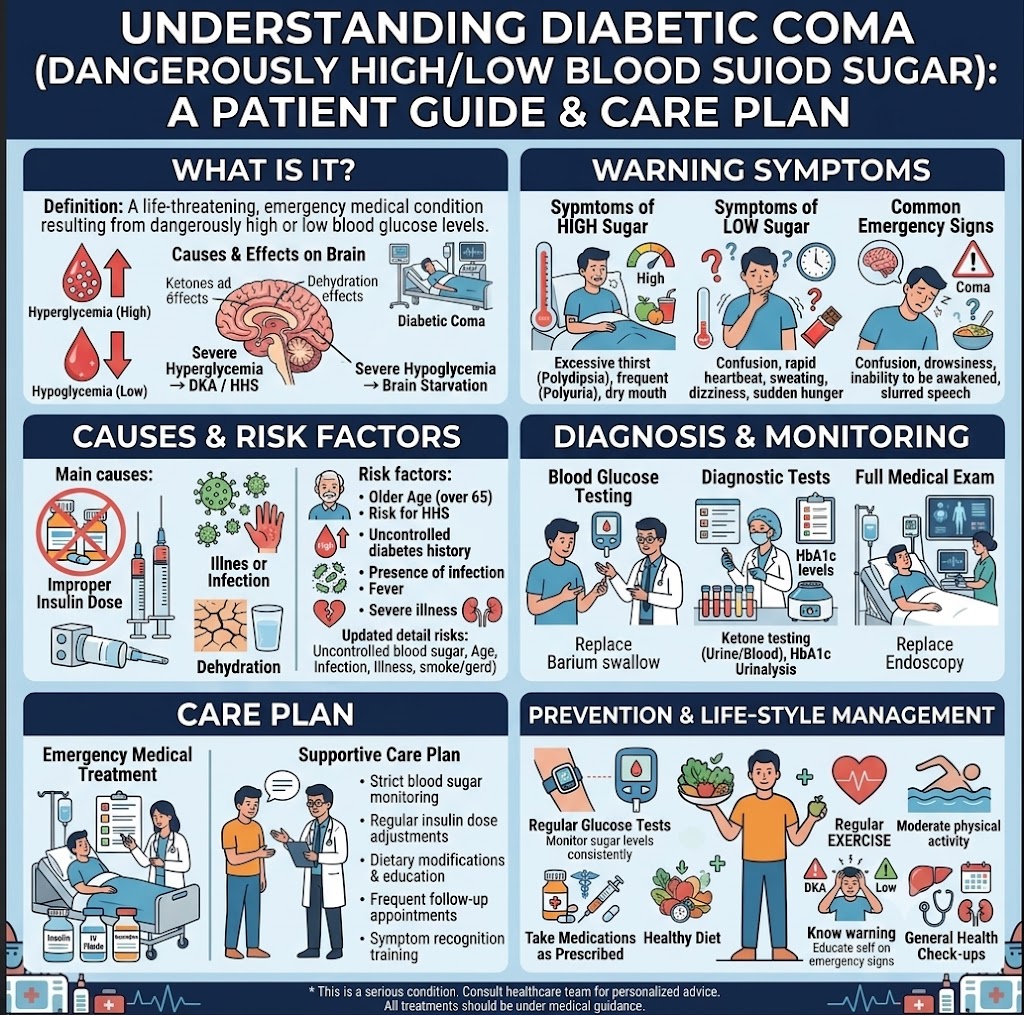
A diabetic coma is a life-threatening medical emergency where a person with diabetes becomes unconscious and unresponsive. This severe condition occurs when blood sugar levels become dangerously high (hyperglycemia) or dangerously low (hypoglycemia). While in a coma, a person is alive but cannot react purposefully to sights, sounds, or touch. If not treated quickly, a diabetic coma can lead to permanent brain damage or even death. The good news is that by carefully managing diabetes and recognizing warning signs, a diabetic coma can often be prevented.
Understanding the Condition
Common Symptoms
Symptoms of Dangerously High Blood Sugar (Hyperglycemia): Before a diabetic coma develops from high blood sugar, you might experience several warning signs. These often include: extreme thirst, frequent urination, nausea and vomiting, stomach pain, fruity-smelling breath, shortness of breath, a very dry mouth, and a rapid heartbeat.
Symptoms of Dangerously Low Blood Sugar (Hypoglycemia): If blood sugar drops too low, warning signs can appear quickly. These may include: feeling shaky or nervous, sweating, hunger, lightheadedness or dizziness, confusion, slurred speech, feeling sleepy, weakness, anxiety, and irritability.
Hypoglycemia Unawareness: Some individuals, especially those who have lived with diabetes for an extended period, may develop a condition called hypoglycemia unawareness. This means they do not experience the typical warning symptoms that signal a drop in blood sugar, making it harder to act before a severe low occurs. This can increase the risk of unexpectedly entering a diabetic coma.
When to Seek Immediate Medical Help: If you experience any of these symptoms of high or low blood sugar, test your blood sugar immediately. Follow your diabetes treatment plan based on the results. If you do not feel better quickly, or your condition worsens, seek medical care right away. If you suspect you might pass out or are with someone with diabetes who has become unconscious, call emergency services immediately and inform them the person has diabetes.
Consultation Guide
Which Specialist to Meet
Before your doctor's visit, it's helpful to prepare by keeping a detailed log of your blood sugar readings, noting any patterns or unusual spikes/drops. Make a comprehensive list of all medications you are currently taking, including doses and any supplements. Jot down any questions or concerns you have about your diabetes management or symptoms. Be ready to discuss your typical diet, exercise routine, and any recent changes in your health or stress levels. For specific diagnostic tests like blood or urine tests, you might be asked to fast overnight or avoid certain foods or supplements; your doctor or clinic will provide these specific instructions.
Book a doctor visit near me
Quick Sugar Intake: If you experience symptoms of mild low blood sugar, immediately consume 15-20 grams of fast-acting carbohydrates. Examples include glucose tablets, a small glass of fruit juice, regular soda, or hard candies. This provides a rapid boost to blood sugar. (Duration: Immediate action, recheck blood sugar after 15 minutes and repeat if levels are still low.)
Recognize Warning Symptoms: Learn the specific warning signs of both high and low blood sugar. Educate family members, friends, and co-workers about these symptoms and what to do in an emergency, especially if you experience hypoglycemia unawareness.
Always Carry Emergency Supplies: For low blood sugar, always have fast-acting sugar sources (like glucose tablets, hard candy, or juice) readily accessible. Wear a medical identification tag or bracelet indicating you have diabetes.
Stay Well Hydrated: Drink plenty of water, especially when your blood sugar is high. Hydration helps your body process and excrete excess glucose through urine and prevents dehydration.
Manage Other Health Conditions: Effectively manage any co-existing health issues like high blood pressure or high cholesterol, as these can impact your overall diabetes management and risk for complications.
Long-Term Monitoring and Support
Diagnostic Procedures
This test measures the amount of glucose (sugar) in your blood. It is a fundamental tool for managing diabetes, diagnosing diabetes, and identifying dangerously high or low blood sugar levels that could lead to a diabetic coma.
What to Expect
For a home blood sugar test, you will prick your fingertip with a small device called a lancet to get a tiny drop of blood, which you then apply to a test strip inserted into a glucose meter. For a lab test, a healthcare professional will draw a larger blood sample, usually from a vein in your arm. You might feel a brief pinch or sting during the blood draw. Depending on the specific test (e.g., fasting blood sugar), you may be asked not to eat or drink anything other than water for several hours beforehand.
Blood Urea Nitrogen (BUN) Test
The BUN test is a blood test that provides important information about how well your kidneys are functioning. It measures the amount of urea nitrogen in your blood, which is a waste product formed when protein breaks down. Healthy kidneys filter urea nitrogen out of your blood, so high levels can suggest your kidneys might not be working properly, a common complication of long-term diabetes.
What to Expect
A small blood sample will be taken, usually from a vein in your arm. A healthcare professional will clean the skin, apply a tourniquet (elastic band) to make the veins more visible, and insert a small needle. You might feel a brief sting or pressure. The process typically takes only a few minutes. You usually don't need to fast or prepare in any special way for a BUN test, but always inform your doctor about any medications or supplements you are taking.
This test measures creatinine, another waste product created by muscle activity, to assess how well your kidneys are filtering waste from your blood. Healthy kidneys efficiently remove creatinine, so elevated levels can indicate kidney damage or reduced kidney function, which is a concern for people with diabetes.
What to Expect
A creatinine test can be done using either a blood sample (serum creatinine) or a 24-hour urine collection. For a blood test, the procedure is similar to a BUN test: a blood sample is drawn from a vein in your arm. You might be asked to fast or temporarily avoid eating meat or using creatine supplements before the test, as these can affect results. For a 24-hour urine test, you will collect all your urine over a full day in special containers provided by your clinic. You will receive detailed instructions on how to collect and store the urine samples.
Estimated Glomerular Filtration Rate (GFR)
The GFR is not a separate blood test but rather a calculation that estimates how well your kidneys are filtering waste from your blood. It uses your blood creatinine level, along with your age, sex, and other factors, to provide an estimate of your overall kidney function (expressed as a percentage). This helps doctors monitor kidney health and detect early signs of kidney disease, which is vital for people with diabetes.
What to Expect
Since GFR is a calculation based on existing blood test results, you will not undergo any additional procedure specifically for the GFR itself. It is typically derived from the blood sample taken for a creatinine test.
Regular Kidney Function Tests: Undergo periodic blood and urine tests (like BUN, Creatinine, and GFR) to monitor your kidney health. Diabetes can affect kidney function over time, and early detection helps in managing potential kidney disease.
Treatment Options
Home/Immediate Remedies (for mild low blood sugar)
Medications (for diabetes management)
Oral Diabetes Medications: Various pills work in different ways to manage blood sugar, such as increasing insulin production, improving the body's response to insulin, or reducing glucose production in the liver. (Duration: Long-term, taken daily as prescribed by your doctor.)
Emergency Procedures (for severe cases)
Emergency Glucagon Injection (for severe low blood sugar): If someone with diabetes becomes unconscious due to extremely low blood sugar, a pre-filled syringe or nasal spray containing glucagon (a hormone that rapidly raises blood sugar) can be administered by a trained family member or emergency personnel. (Duration: A single dose for immediate intervention; typically followed by emergency medical transport and hospital observation for several hours.)
Intravenous (IV) Fluids and Insulin (for severe high blood sugar): For dangerously high blood sugar leading to coma, treatment in a hospital involves receiving IV fluids to rehydrate the body and dilute blood sugar, along with IV insulin to slowly and safely lower glucose levels. (Duration: Hospitalization typically lasting hours to several days, depending on the severity and how quickly blood sugar stabilizes.)
Strictly Follow Your Treatment Plan: Adhere consistently to your prescribed medication schedule (insulin or oral drugs), dietary recommendations, and exercise routine as advised by your healthcare team. Consistency is key to stable blood sugar.
Regular Blood Sugar Monitoring: Check your blood sugar levels frequently throughout the day, as directed by your doctor, using a home glucose meter. This allows you to identify and address dangerous highs or lows before they escalate.
Maintain Regular Doctor Visits: Keep all scheduled appointments with your primary care physician and diabetes specialist. These visits are crucial for reviewing your diabetes management plan, adjusting medications if needed, and screening for potential complications.
Prevention & Long-Term Wellbeing
Diabetic Coma: Understanding, Prevention, and Emergency Care
- Understanding the Condition
A diabetic coma is a life-threatening medical emergency where a person with diabetes becomes unconscious and unresponsive. This severe condition occurs when blood sugar levels become dangerously high (hyperglycemia) or dangerously low (hypoglycemia). While in a coma, a person is alive but cannot react purposefully to sights, sounds, or touch. If not treated quickly, a diabetic coma can lead to permanent brain damage or even death. The good news is that by carefully managing diabetes and recognizing warning signs, a diabetic coma can often be prevented.
For ongoing diabetes management and prevention of diabetic coma, you should regularly consult with your Primary Care Physician. They can refer you to an Endocrinologist, a doctor specializing in hormone disorders like diabetes, for more specialized care. A Certified Diabetes Educator can also provide crucial guidance on managing your condition. In an emergency where someone becomes unconscious due to diabetes, Emergency Medical Personnel (paramedics, emergency room doctors) are the primary specialists to provide immediate, life-saving care.
Preparations Before Your Visit
Insulin Therapy: Administered via injections or an insulin pump, insulin helps lower high blood sugar by enabling your body's cells to absorb glucose. It is essential for managing Type 1 diabetes and often used for Type 2 diabetes. (Duration: Lifelong for Type 1 diabetes; often long-term for Type 2, with daily adjustments to doses based on blood sugar levels, diet, and activity.)
Lifestyle Therapies
Medical Nutrition Therapy: Working with a registered dietitian to develop an individualized meal plan that helps manage blood sugar levels, control weight, and ensure adequate nutrition. (Duration: Ongoing, integrated into daily dietary habits.)
Regular Physical Activity: Engaging in consistent exercise helps improve the body's sensitivity to insulin, which in turn helps control blood sugar levels and manage weight. (Duration: Ongoing, typically recommended for at least 30 minutes most days of the week.)
Prevention of Diabetic Coma
Continuous Diabetes Education: Stay informed about diabetes management. Participate in educational programs or workshops to learn about new technologies, dietary strategies, and exercise recommendations that can improve your long-term health and prevent complications.
Tags & Topics
Notice an error or need an update?
Help us keep medical information accurate. Report incorrect info or suggest an edit.


