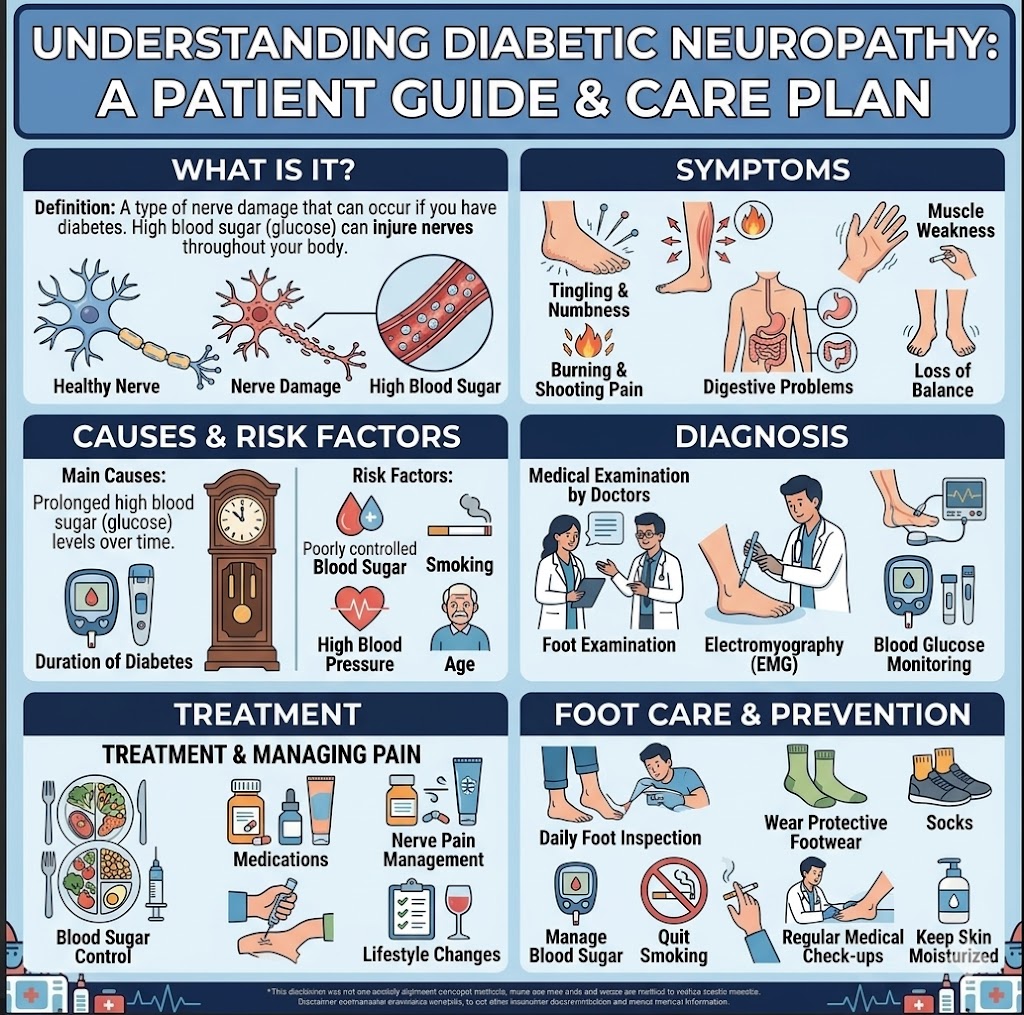
Diabetic neuropathy is a type of nerve damage that can occur in individuals with diabetes. When blood sugar (glucose) levels remain consistently high, it can injure nerves throughout the body over time. This condition most frequently targets the nerves in the legs and feet, but it can also affect your digestive system, blood vessels, urinary tract, and heart. For some, symptoms are mild, while for others, they can be painful, disabling, and significantly impact daily life. While serious, diabetic neuropathy can often be prevented or managed through strict blood sugar control and a healthy lifestyle.
Understanding the Condition
Understanding Diabetic Neuropathy: Nerve Damage from Diabetes
Understanding the Condition
Diabetic neuropathy is a type of nerve damage that can occur in individuals with diabetes. When blood sugar (glucose) levels remain consistently high, it can injure nerves throughout the body over time. This condition most frequently targets the nerves in the legs and feet, but it can also affect your digestive system, blood vessels, urinary tract, and heart. For some, symptoms are mild, while for others, they can be painful, disabling, and significantly impact daily life. While serious, diabetic neuropathy can often be prevented or managed through strict blood sugar control and a healthy lifestyle.
Common Symptoms
Peripheral Neuropathy: This is the most common form, typically affecting the feet and legs first, followed by the hands and arms. Symptoms are often worse at night and include numbness, a reduced ability to feel pain or temperature changes, tingling or burning sensations, sharp pains or cramps, and extreme sensitivity to even light touch.
Autonomic Neuropathy: This type damages the nerves that control your internal organs. It can lead to a lack of awareness of low blood sugar levels, bladder control issues, constipation or diarrhea, slow stomach emptying (causing nausea and bloating), difficulty swallowing, erectile dysfunction, and dizziness when standing up due to sudden blood pressure drops.
Proximal Neuropathy: Also known as diabetic polyradiculopathy, this form affects nerves in the thighs, hips, buttocks, or legs. It is most common in adults over 50 with type 2 diabetes. Symptoms usually appear on one side of the body and include severe pain in the hip, thigh, or buttock, along with weak and shrinking thigh muscles, making it difficult to stand up from a sitting position.
Mononeuropathy: This refers to damage to a single, specific nerve in the face, torso, arm, or leg. It often occurs suddenly. Symptoms depend on the affected nerve and can include difficulty focusing the eyes, double vision, paralysis on one side of the face (Bell's palsy), pain in the shin or foot, or pain in the front of the thigh.
Consultation Guide
Which Specialist to Meet
You should meet with an Endocrinologist (a diabetes specialist) or a Neurologist (a nerve specialist). For leg and foot concerns, a Podiatrist (foot doctor) is also highly recommended.
Preparations Before Your Visit
Before your visit, keep a log of your daily blood sugar levels and write down all symptoms, noting when they began and what makes them better or worse. Bring a complete list of all medications and supplements you take. Wear comfortable clothing and shoes that are easy to remove, as the doctor will need to examine your feet and check your reflexes.
Book a doctor visit near me
Nerve Pain Relievers: Oral prescription medications designed to alter how your brain processes pain signals, helping to relieve burning, shooting, or stabbing sensations. (Duration: Typically taken daily as long-term maintenance therapy; adjustments are made based on symptom relief and side effects.)
Diagnostic Procedures
Neurological Examination
A physical exam where the healthcare provider checks your overall nervous system function, focusing on reflexes, muscle strength, and sensitivity to touch, vibration, and temperature.
What to Expect
The doctor will lightly touch your feet and legs with a soft nylon fiber (monofilament) to test your sensitivity. They will tap your tendons with a small rubber hammer to test your reflexes and use a vibrating tuning fork to evaluate your sensory perception.
Electromyography (EMG)
A test used to evaluate the health of your muscles and the nerve cells (motor neurons) that control them by recording muscle electrical activity.
What to Expect
During the procedure, a doctor will insert a tiny, thin needle electrode directly into key muscles. You may feel a slight pinch or discomfort. The recording machine will measure the electrical activity while you relax and gently contract the muscle.
Nerve Conduction Study
A diagnostic test, usually performed alongside an EMG, that measures how fast and strong electrical signals travel through your nerves.
What to Expect
The technician will stick small patch electrodes onto your skin over specific nerves. A mild, harmless electrical pulse will be applied to stimulate the nerve. You will feel a quick, tingling sensation or a minor muscle twitch as the system measures the nerve speed.
Dietary Supplements: The use of daily vitamins, such as Vitamin B-12, to support nerve health and repair, especially in individuals with diagnosed deficiencies or those on medications that lower B-12 levels. (Duration: Ongoing daily use, monitored by your physician through routine blood work.)
Treatment Options
Medications
Antidepressant Classes for Pain: Specific daily oral medications originally designed for depression that have been proven to interfere with the chemical processes in the brain and spinal cord that trigger nerve pain. (Duration: Long-term daily use, requiring several weeks of initial treatment to feel the full pain-relieving effects.)
Therapies and Home Remedies
Physical Therapy: Guided exercises to help improve balance, strength, and coordination, reducing the risk of falls and relieving muscle stiffness. (Duration: Typically involves 4 to 12 weeks of clinical sessions, followed by lifelong daily home exercises.)
Transcutaneous Electrical Nerve Stimulation (TENS): A therapy that uses a small device to send mild electrical currents through patches placed on the skin to block pain signals from reaching the brain. (Duration: Administered in 15 to 30-minute sessions daily or as needed for temporary, short-term pain relief.)
Prevention & Long-Term Wellbeing
Strict Glucose Control: Consistently monitoring your blood sugar and keeping it within your target range to prevent new nerve damage and stop existing damage from getting worse.
Nutrient-Rich Diet: Eating a balanced diet focused on whole foods, lean proteins, and fiber to stabilize blood sugar and naturalize nutrient intake.
Daily Foot Exams: Carefully inspecting your feet every day for cuts, blisters, redness, swelling, or sores, using a mirror if necessary to view the bottoms of your feet.
Gentle Foot Hygiene: Washing your feet daily in lukewarm water, drying them thoroughly, and applying moisturizer (except between the toes) to prevent skin cracking and infections.
Regular Physical Activity: Engaging in safe, low-impact exercise like swimming or walking to improve blood flow, boost heart health, and lower blood sugar.
Tags & Topics
Notice an error or need an update?
Help us keep medical information accurate. Report incorrect info or suggest an edit.


