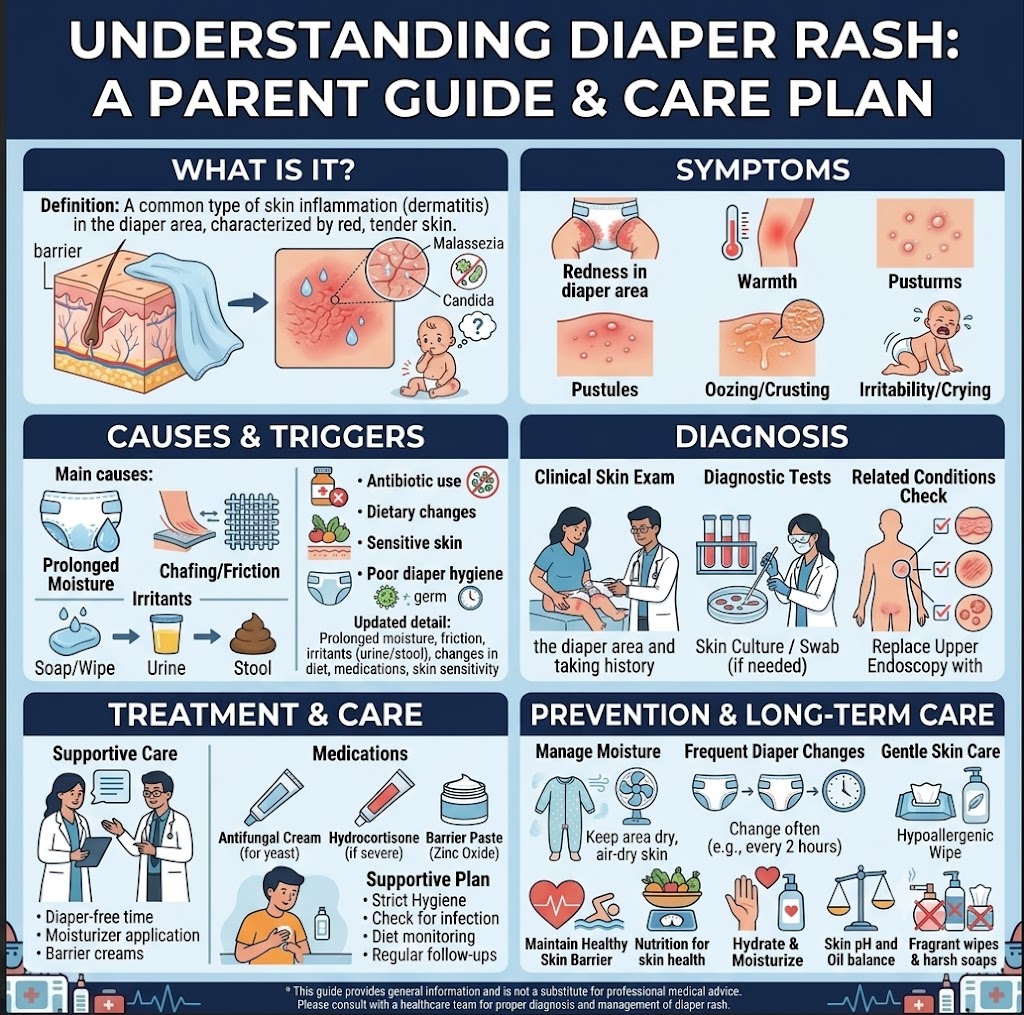
Diaper rash is a common skin irritation that appears as inflamed, red patches on the skin covered by a diaper, typically on the buttocks, thighs, and genitals. It's a form of dermatitis, meaning skin inflammation. This condition is most often caused by prolonged contact with wet or soiled diapers, skin sensitivity, or friction. While very common in infants, anyone who regularly wears a diaper can experience it. Most cases of diaper rash improve with simple home care strategies like increased air exposure, frequent diaper changes, and the application of protective creams.
Understanding the Condition
Diaper Rash: Causes, Symptoms, and Care
Understanding the Condition
Common Symptoms
Tenderness or Soreness: The affected skin can be sensitive or painful to the touch, potentially causing discomfort or fussiness in infants.
Warmth: The irritated skin may feel warmer than surrounding skin.
Shiny or Peeling Skin: In some cases, the skin may appear shiny, or there might be mild peeling.
Small Bumps or Blisters: More severe rashes can sometimes include small, fluid-filled bumps or blisters, indicating a more intense irritation or potential infection.
Consultation Guide
Which Specialist to Meet
For infants, a pediatrician is the primary specialist. Adults experiencing diaper rash should consult a family doctor or general practitioner. If the rash is persistent, severe, or unusual, a dermatologist (skin specialist) may be recommended.
Preparations Before Your Visit
Before your visit, it's helpful to observe and note down: when the rash started, what it looks like, how it has changed, any home remedies you've tried and their effectiveness, recent changes in diet or introduction of new products (like wipes or detergents), and any associated symptoms like fever or severe discomfort. Also, be prepared to answer questions about typical diaper changing habits.
Book a doctor visit near me
Diagnosis of diaper rash is primarily made through a thorough visual inspection of the affected skin by a healthcare professional, combined with a detailed discussion about the patient's symptoms and health history.
Consultation Guide
Diaper rash is a common skin irritation that appears as inflamed, red patches on the skin covered by a diaper, typically on the buttocks, thighs, and genitals. It's a form of dermatitis, meaning skin inflammation. This condition is most often caused by prolonged contact with wet or soiled diapers, skin sensitivity, or friction. While very common in infants, anyone who regularly wears a diaper can experience it. Most cases of diaper rash improve with simple home care strategies like increased air exposure, frequent diaper changes, and the application of protective creams.
During the visit, the doctor will carefully examine the rash in the diaper area. They will ask you questions about when the rash first appeared, how long it has lasted, what steps you've taken to treat it at home, your routine for diaper changes, and any other relevant medical history. For infants, questions might include feeding habits and overall behavior. In rare cases, if the rash looks unusual, doesn't respond to typical treatments, or seems to be caused by something other than a typical diaper rash, the doctor might take a small skin sample (swab or scraping) for laboratory analysis to rule out fungal infections or other skin conditions.
Antifungal Creams: If the rash is caused or complicated by a yeast infection (common in moist, warm environments), a doctor may prescribe a topical antifungal cream. (Duration: Usually applied once or twice daily for one to two weeks, or as directed by a doctor.)
Choose Appropriate Diapers: Ensure diapers fit correctly – not too tight, which can cause chafing, and use super-absorbent disposable diapers if possible.
Avoid Irritants: Opt for fragrance-free and alcohol-free wipes and avoid harsh soaps, bubble baths, or laundry detergents with strong perfumes that can irritate sensitive skin.
Observe Skin Regularly: Periodically check the diaper area for any signs of redness or irritation, even when there isn't an active rash, to catch potential issues early.
Diagnostic Procedures
Physical Examination and History Taking
What to Expect
Treatment Options
Home Remedies and General Care
Frequent Diaper Changes: Change wet or soiled diapers as soon as possible to minimize skin exposure to moisture and irritants. (Duration: Ongoing, especially during a rash outbreak.)
Gentle Cleaning: Clean the diaper area thoroughly but gently with warm water and a soft cloth or mild, fragrance-free wipes. Pat the skin dry, avoiding harsh rubbing. (Duration: Ongoing during diaper changes.)
Air Drying: Allow the skin to air dry completely for several minutes before putting on a fresh diaper. Brief periods of diaper-free time can also be very beneficial. (Duration: Several times a day until rash resolves.)
Medications (Prescription Only)
Topical Corticosteroid Creams: For more severe inflammation, a doctor might prescribe a mild topical corticosteroid cream to reduce redness and swelling. (Duration: Typically applied once or twice daily for a few days to one week, as directed by a doctor.)
Prevention & Long-Term Wellbeing
Barrier Creams or Ointments: Apply a thick layer of a protective zinc oxide or petroleum jelly-based cream to create a barrier between the skin and moisture. Ensure the skin is clean and dry before application. (Duration: With every diaper change until rash resolves, and for prevention.)
Prevention
Maintain Dryness: Change diapers frequently, ideally as soon as they are wet or soiled, to keep the skin as dry as possible.
Thorough and Gentle Cleaning: Clean the diaper area gently with warm water and a mild cleanser or fragrance-free wipes. Always wipe from front to back for girls. Pat the skin completely dry before applying a new diaper.
Use Barrier Protection: Regularly apply a thick layer of a zinc oxide or petroleum jelly-based barrier cream at each diaper change, especially overnight, to protect the skin from moisture.
Allow Air Exposure: Provide regular periods of diaper-free time for babies to allow the skin to breathe and dry naturally.
Adjust Routine as Needed: Be prepared to adjust your diaper care routine based on your child's individual skin sensitivity or changes in their diet (e.g., during teething or introduction of solid foods, which can change stool consistency and pH).
Seek Medical Advice for Recurrence: If diaper rashes are frequent, severe, or do not respond to consistent home care, consult a healthcare professional to rule out underlying conditions or ensure appropriate management.
Tags & Topics
Notice an error or need an update?
Help us keep medical information accurate. Report incorrect info or suggest an edit.


