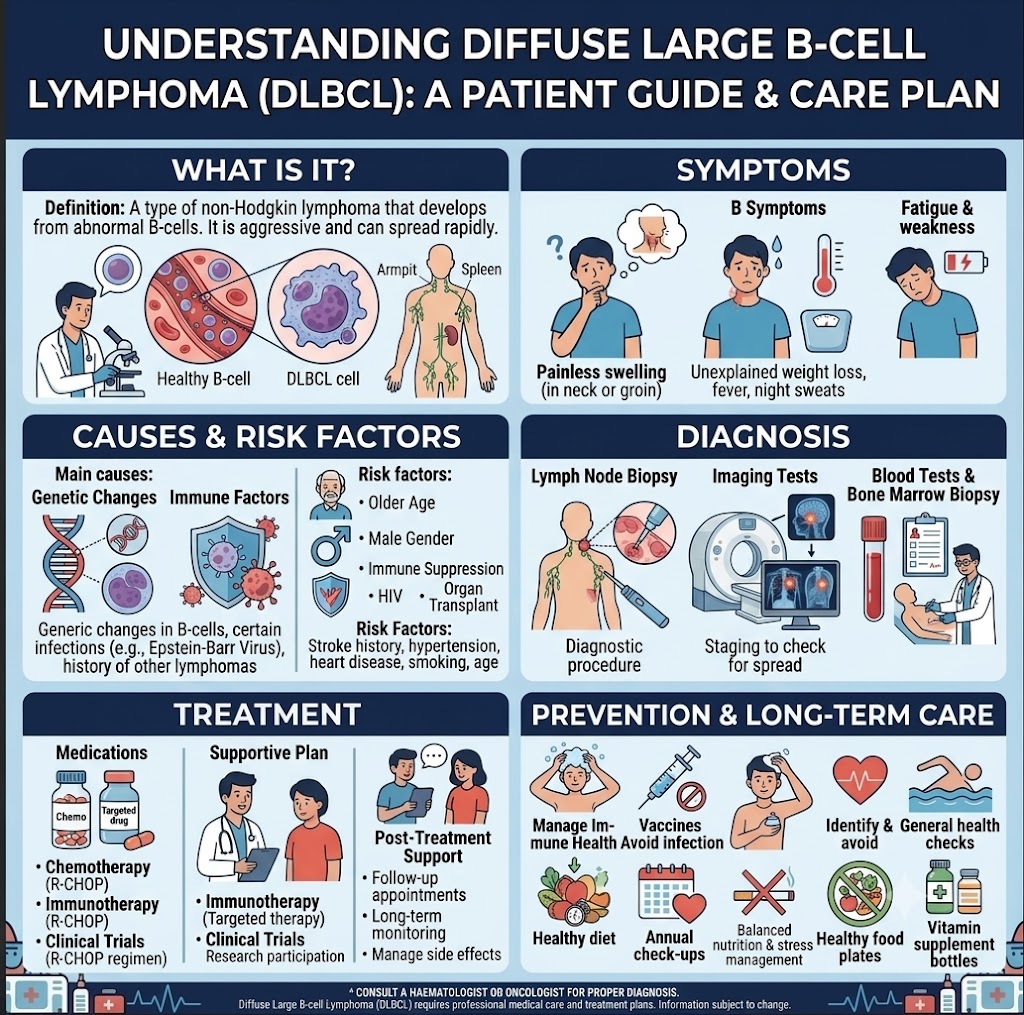
Diffuse Large B-Cell Lymphoma (DLBCL) is a fast-growing cancer starting in B cells, a type of white blood cell vital for your immune system. It's the most common non-Hodgkin lymphoma, affecting the lymphatic system (vessels, lymph nodes, organs that fight germs). DLBCL can occur in lymph nodes, bone marrow, or other tissues like the digestive or nervous systems. Cancerous B cells are larger than healthy ones and "diffuse," meaning spread out. Despite its aggressiveness, DLBCL is often treatable and sometimes curable, especially when diagnosed and treated early. This cancer is diverse, with varying behaviors and treatment responses due to different genetic features.
Understanding the Condition
Diffuse Large B-Cell Lymphoma (DLBCL): A Guide for Non-Medical Persons
Understanding the Condition
Common Symptoms
Common Symptoms
If in the Digestive System: Abdominal pain or feeling of fullness, loss of appetite, unexplained weight loss.
If in the Nervous System (brain, spinal cord, eyes): Symptoms can include headaches, vision changes, weakness, or seizures, depending on the specific area involved.
Consultation Guide
Which Specialist to Meet
Start with your primary care doctor, who may refer you to a hematologist-oncologist (blood cancer specialist). Other specialists might be involved based on cancer location.
Preparations Before Your Visit
List all symptoms (when started, changes), medications, medical history, and any family history of lymphoma. Prepare questions for your doctor.
Book a doctor visit near me
Consultation Guide
Support Immune Health: While causes are unclear, a balanced diet, regular exercise, and adequate sleep support a healthy immune system.
Manage Conditions: If you have an autoimmune condition or weakened immune system, work with your doctor for effective management, as these are risk factors.
Prevent Infections: Take steps to avoid infections like HIV and Epstein-Barr virus, linked to some DLBCL types.
Regular Check-ups: Consistent doctor visits help monitor health and address concerns early.
Long-Term Monitoring and Support
Diagnostic Procedures
Diffuse Large B-Cell Lymphoma (DLBCL) is a fast-growing cancer starting in B cells, a type of white blood cell vital for your immune system. It's the most common non-Hodgkin lymphoma, affecting the lymphatic system (vessels, lymph nodes, organs that fight germs). DLBCL can occur in lymph nodes, bone marrow, or other tissues like the digestive or nervous systems. Cancerous B cells are larger than healthy ones and "diffuse," meaning spread out. Despite its aggressiveness, DLBCL is often treatable and sometimes curable, especially when diagnosed and treated early. This cancer is diverse, with varying behaviors and treatment responses due to different genetic features.
Bone Marrow Biopsy and Aspiration
Samples of bone marrow (spongy tissue inside bones that makes blood cells) are taken to check for cancer cells. Aspiration collects liquid marrow; biopsy takes a solid tissue piece.
What to Expect
You'll lie on your side or stomach. The hip bone area will be numbed. A needle is inserted to collect samples. Expect pressure or brief, sharp pain. Procedure is about 30 minutes, with some soreness after.
A small piece of affected tissue (e.g., lymph node, mass) is removed and examined under a microscope to confirm cancer and its type.
What to Expect
Involves local anesthetic, possibly a minor incision or needle biopsy (sometimes imaging-guided). You'll feel pressure. The site will be bandaged, with normal tenderness.
Complete Blood Count (CBC)
A routine blood test measuring various blood cell components to assess overall health and detect abnormalities related to lymphoma or treatment effects.
What to Expect
A small blood sample is drawn from a vein in your arm. Quick test with minimal discomfort.
CT Scan (Computed Tomography Scan)
Uses X-rays and a computer to create detailed cross-sectional images of internal organs, bones, and tissues, helping to locate cancer and assess its spread.
What to Expect
You lie on a table that slides into a donut-shaped machine. You might briefly hold your breath. Contrast dye may be given. Painless, takes minutes.
PET Scan (Positron Emission Tomography Scan)
An imaging test using a radioactive tracer injected into your body. Cancer cells absorb more tracer and light up on the scan, pinpointing cancer locations and activity. Often combined with a CT scan.
What to Expect
After tracer injection, you wait 30-60 minutes. You then lie still on a table inside the scanner for 20-30 minutes. Painless.
Lumbar Puncture (Spinal Tap)
A needle into your lower back collects cerebrospinal fluid (CSF) to check for cancer cells if nervous system involvement is suspected.
What to Expect
You'll lie on your side with knees tucked or sit leaning forward. The area is numbed. A needle is carefully inserted to collect fluid. You may feel pressure or a brief, sharp sensation. Lying flat afterwards may be advised.
Follow-up Care: Crucial for monitoring relapse and managing long-term treatment side effects. Includes physical exams, blood tests, and imaging scans.
Treatment Options
Medications
Chemotherapy: Uses powerful drugs (intravenous or oral) to kill rapidly dividing cancer cells throughout the body. (Duration: Given in cycles over weeks to months, with rest periods.)
Targeted Therapy: Medicines that specifically attack unique weaknesses within cancer cells, aiming to spare healthy cells. (Duration: Varies; can be cycles for months or ongoing.)
Immunotherapy: Boosts your body's immune system to recognize and fight cancer cells. (Duration: Often in cycles, typically several months to over a year.)
Therapies
Radiation Therapy: Uses high-energy beams (e.g., X-rays) precisely aimed at cancerous areas to destroy cancer cells and shrink tumors. (Duration: Usually daily sessions, five days a week, for several weeks (e.g., 2-6 weeks).)
Bone Marrow Transplant (Stem Cell Transplant): Replaces diseased bone marrow with healthy blood-forming stem cells. High-dose chemotherapy (and sometimes radiation) first eliminates cancer and existing marrow, followed by healthy stem cell infusion (from patient or donor). (Duration: Preparatory treatment lasts days to weeks. Infusion is one-time, but recovery takes several months, involving immune system rebuilding and complication monitoring.)
Manage Side Effects: Work with your team to manage lingering treatment side effects (e.g., fatigue, neuropathy) with available medications or therapies.
Emotional Support: Seek support from family, friends, groups, or mental health professionals to cope with cancer's emotional challenges.
Infection Control: During and after treatment, your immune system may be compromised. Practice good hand hygiene, avoid sick individuals, and discuss vaccinations with your doctor.
Prevention & Long-Term Wellbeing
Chimeric Antigen Receptor (CAR)-T Cell Therapy: Patient's own T cells are genetically modified in a lab to better recognize and attack cancer, then re-infused. (Duration: Cell collection and modification take weeks. Infusion is single, but significant monitoring and recovery needed for weeks to months.)
Prevention
Healthy Lifestyle: Embrace a nutritious diet, regular physical activity (as tolerated), and stress-reduction techniques for overall well-being and recovery.
Tags & Topics
Notice an error or need an update?
Help us keep medical information accurate. Report incorrect info or suggest an edit.


