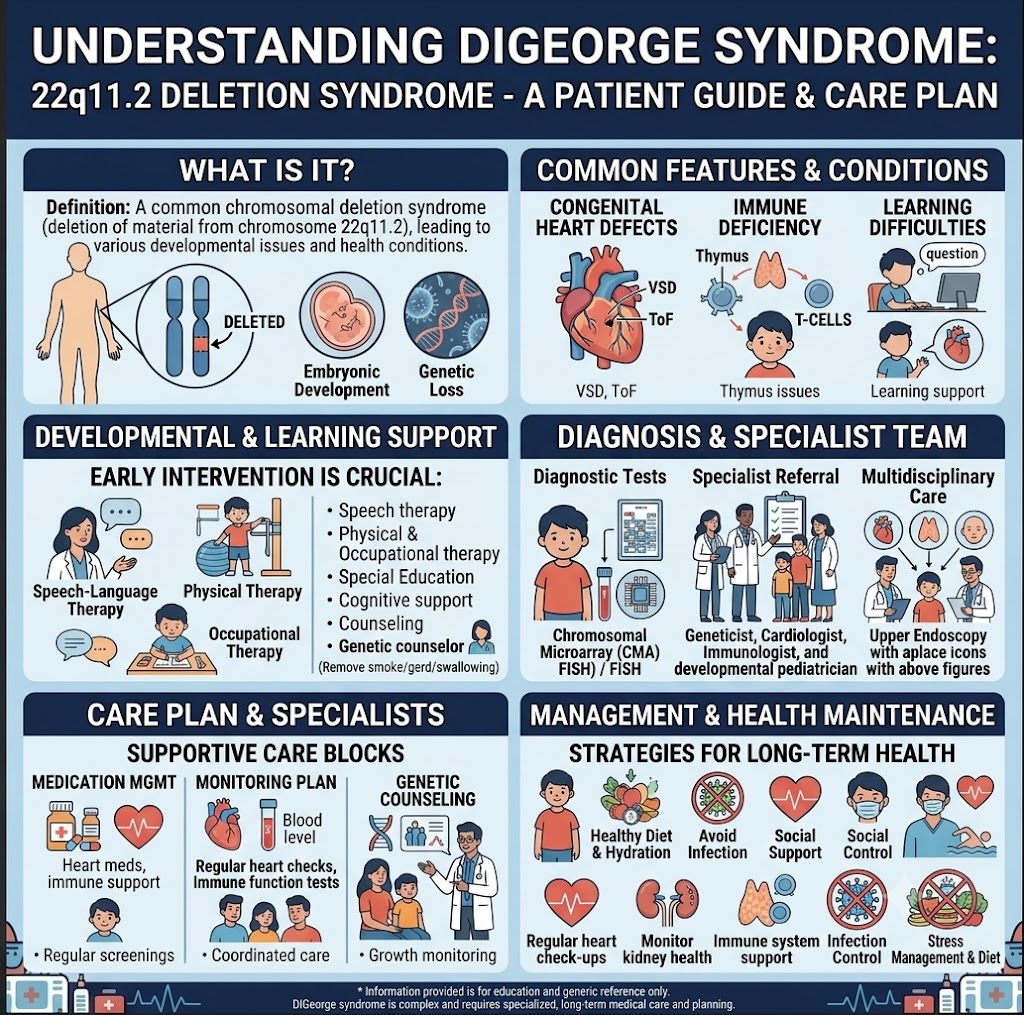
DiGeorge syndrome, also known as 22q11.2 deletion syndrome, is a condition where a small piece of chromosome 22 is missing. This tiny missing segment affects how several body systems develop, leading to a wide range of potential health problems. This term covers various conditions, including DiGeorge syndrome and velocardiofacial syndrome, all caused by the same genetic change, though symptoms can vary.
Understanding the Condition
DiGeorge Syndrome (22q11.2 Deletion Syndrome)
Understanding the Condition
DiGeorge syndrome, also known as 22q11.2 deletion syndrome, is a condition where a small piece of chromosome 22 is missing. This tiny missing segment affects how several body systems develop, leading to a wide range of potential health problems. This term covers various conditions, including DiGeorge syndrome and velocardiofacial syndrome, all caused by the same genetic change, though symptoms can vary.
Common Symptoms
Due to the wide range of symptoms, care often involves a team of specialists. This may include a pediatrician or family doctor, geneticist, cardiologist (heart specialist), immunologist (immune system specialist), endocrinologist (hormone specialist), otolaryngologist (ear, nose, and throat specialist), ophthalmologist (eye specialist), speech-language pathologist, physical therapist, occupational therapist, and mental health providers.
Preparations Before Your Visit
Before your visit, gather all relevant medical records, a detailed family medical history, and a list of all current symptoms or concerns. Prepare any questions you have for the doctor to ensure all your worries are addressed.
Book a doctor visit near me
Consultation Guide
Heart Problems: Issues with heart structure or blood vessels, often leading to poor blood circulation, which may cause a heart murmur or bluish skin (cyanosis).
Frequent Infections: Due to a weakened immune system, individuals may experience more common or severe infections.
Distinctive Facial Features: May include an underdeveloped chin, differently shaped ears, wide-set or hooded eyes, and an enlarged nose tip. Sometimes, one side of the mouth may droop when crying, known as asymmetric crying facies.
Cleft Palate or Other Palate Issues: A gap in the roof of the mouth (cleft palate) or other hidden palate problems that can affect speech and swallowing.
Feeding Difficulties and Stomach Issues: Challenges with feeding, difficulty gaining weight, and other digestive problems.
Hearing Loss: Reduced ability to hear, which can range in severity.
Poor Muscle Tone: Muscles may feel floppy or weak, affecting motor skills and development.
Kidney Problems: Issues with kidney function or structure.
Vision and Eye Problems: Various difficulties with eyesight or the structure of the eyes.
Low Blood Calcium Levels: Insufficient calcium in the blood, which can lead to complications like seizures.
Developmental and Behavioral Delays: Delayed development, learning difficulties, and an increased risk of behavioral, emotional, or mental health challenges later in life.
Consultation Guide
Which Specialist to Meet
When standard genetic testing doesn't provide a clear diagnosis but a genetic cause is strongly suspected, genome sequencing offers a more in-depth analysis. It maps out a person's entire genetic code to find subtle variations.
Diagnostic Procedures
Genetic testing examines your DNA to identify missing segments or changes in your genes, specifically looking for the deletion on chromosome 22 (22q11.2). This test is crucial for confirming a diagnosis of DiGeorge syndrome.
What to Expect
A blood sample is typically drawn, or a swab is taken from the inside of your cheek. For prenatal testing, a sample of amniotic fluid (amniocentesis) or placental tissue (chorionic villus sampling) may be collected. While generally safe, these prenatal procedures carry a small risk of pregnancy loss.
What to Expect
Similar to genetic testing, a blood sample is usually collected. This sample undergoes extensive laboratory analysis to examine all of your genes (genome) or specifically the protein-coding parts (exome) for subtle variations that might explain your condition.
Hearing and Vision Tests: Periodic screenings to detect and manage hearing loss and vision problems.
Treatment Options
Surgical Procedures
Heart Surgery: Corrective surgery for structural heart defects, such as closing holes between heart chambers (ventricular septal defect) or repairing abnormal vessels. (Duration: A single procedure, followed by recovery, with potential for long-term monitoring.)
Cleft Palate Repair: Surgical procedure to close the opening in the roof of the mouth and reconstruct the palate. (Duration: A single procedure, typically performed in infancy, with potential for follow-up surgeries and therapies.)
Calcium Supplementation: Medication to increase and maintain healthy levels of calcium in the blood, often necessary due to hypoparathyroidism. (Duration: Lifelong, with regular monitoring and dosage adjustments.)
Prevention & Long-Term Wellbeing
Bone Marrow Transplant (Stem Cell Transplant): For severe immune system problems where the thymus gland is largely absent or non-functional, healthy blood-forming stem cells are infused to rebuild the immune system. (Duration: A single intensive procedure, followed by months of recovery and lifelong monitoring.)
Speech Therapy: Therapy to improve speech, language, and swallowing difficulties, often related to palate issues or poor muscle tone. (Duration: Ongoing as needed, potentially for many years.)
Occupational Therapy: Helps individuals develop fine motor skills and adapt to challenges in daily activities, promoting independence. (Duration: Ongoing as needed, from childhood into adulthood.)
Physical Therapy: Aids in improving muscle strength, coordination, and overall motor development, addressing issues like poor muscle tone. (Duration: Ongoing as needed, from infancy through childhood.)
Psychotherapy (Talk Therapy): Counseling with a mental health professional to address learning, behavioral, emotional, and mental health challenges. (Duration: Varies from short-term to ongoing for months or years, depending on individual needs.)
Educational Support: Specialized educational plans and resources to support learning difficulties and developmental delays. (Duration: Ongoing throughout school years, adapted to individual learning pace.)
Prevention
Genetic Counseling: If you have a family history of 22q11.2 deletion syndrome or already have a child with the syndrome, consulting a genetic counselor can help understand risks for future pregnancies and family planning options.
Long-Term Monitoring
Regular Medical Check-ups: Ongoing visits with a team of specialists for continuous monitoring and management of heart, immune, endocrine, and other system functions throughout life.
Monitoring for Autoimmune Conditions: Regular screening for conditions like rheumatoid arthritis or Graves' disease, as individuals with DiGeorge syndrome have a higher risk.
Mental Health Support: Continuous assessment and support for potential mental health conditions, including depression, anxiety, ADHD, or autism spectrum disorder, as individuals age.
Nutritional and Growth Monitoring: Regular evaluation of growth and nutritional status, addressing any feeding difficulties or issues with weight gain.
Tags & Topics
Notice an error or need an update?
Help us keep medical information accurate. Report incorrect info or suggest an edit.


