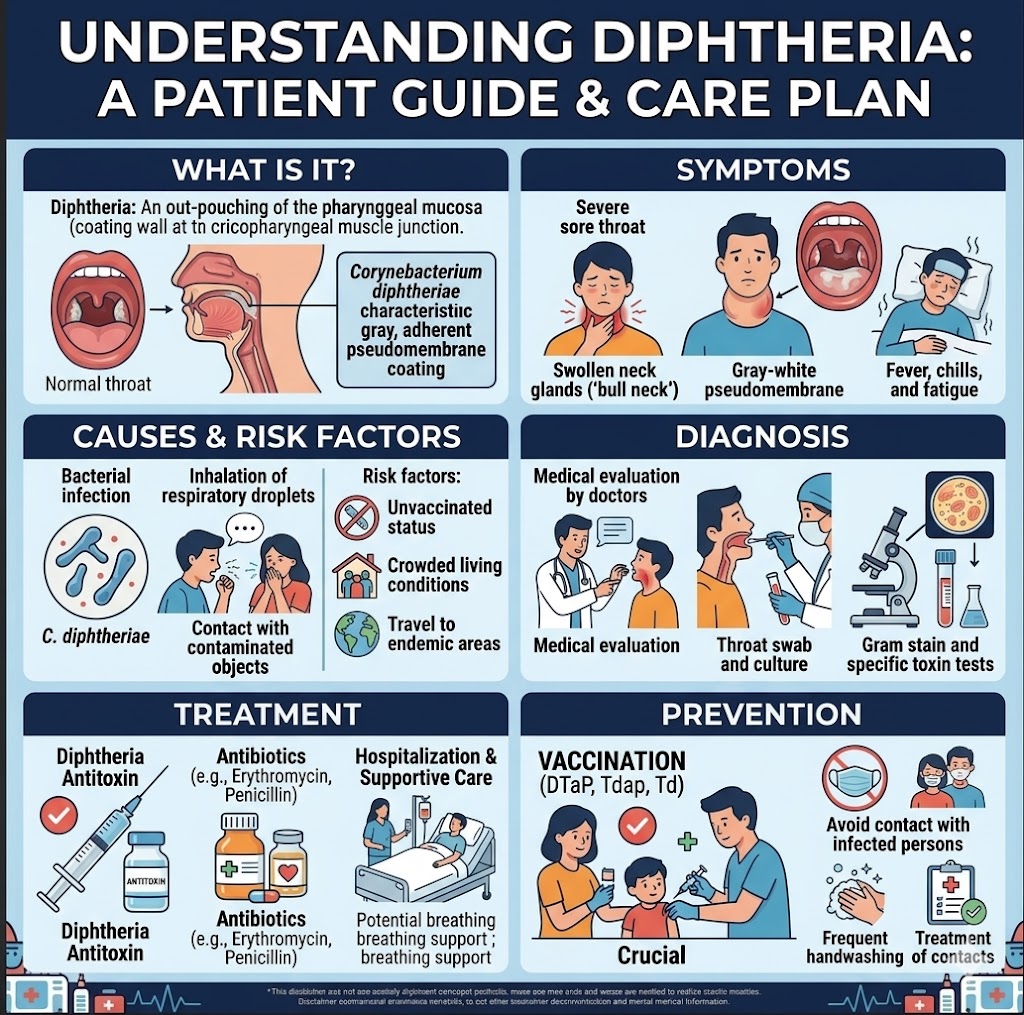
Diphtheria is a severe illness caused by specific bacteria that usually attacks the lining of the nose and throat. Thanks to widespread vaccination, it's very rare in many developed countries. However, it remains a serious health concern in areas with limited healthcare or vaccination access. If left untreated or in advanced stages, diphtheria can cause significant damage to vital organs like the heart and kidneys, and even harm the nervous system. This infection can be life-threatening, particularly for children, even with medical treatment.
Understanding the Condition
Diphtheria: Understanding and Preventing a Serious Bacterial Infection
Understanding the Condition
Common Symptoms
General Symptoms: Signs of diphtheria typically appear 2 to 5 days after infection. These can include a sore throat, fever, general weakness, and swollen glands (enlarged lymph nodes) in the neck. A distinctive thick, gray membrane may form and cover the throat and tonsils, making it difficult to breathe or swallow.
Mild or Silent Infections: Some individuals infected with the diphtheria bacteria experience only mild symptoms or none at all. These individuals, known as 'carriers,' can still spread the infection to others even though they don't appear sick themselves.
Skin Diphtheria: A less common form of diphtheria can affect the skin, causing redness, swelling, and pain similar to other bacterial skin infections. Characteristic ulcers covered by a gray membrane may also develop. While more common in warm, tropical climates, skin diphtheria can occur anywhere, especially among people living in crowded conditions with poor hygiene.
Consultation Guide
Which Specialist to Meet
For suspected diphtheria, you should first contact your primary care physician or a pediatrician if it's for a child. They may then refer you to an infectious disease specialist, who has expertise in diagnosing and treating infections, or an ear, nose, and throat (ENT) specialist if there are severe throat symptoms.
Preparations Before Your Visit
Before your appointment, gather information about recent exposures, especially if you or your child has been in contact with someone who is sick or has traveled internationally. Note down any symptoms you're experiencing, when they started, and your full vaccination history, including the dates of your last tetanus-diphtheria (Td) or diphtheria, tetanus, and acellular pertussis (Tdap) shots. Be ready to discuss your medical history and any medications you are currently taking.
Book a doctor visit near me
Consultation Guide
Diphtheria is a severe illness caused by specific bacteria that usually attacks the lining of the nose and throat. Thanks to widespread vaccination, it's very rare in many developed countries. However, it remains a serious health concern in areas with limited healthcare or vaccination access. If left untreated or in advanced stages, diphtheria can cause significant damage to vital organs like the heart and kidneys, and even harm the nervous system. This infection can be life-threatening, particularly for children, even with medical treatment.
During the physical exam, your doctor will visually inspect your throat and neck. They may gently feel your neck to check for swollen lymph nodes. If skin lesions are present, they will be examined closely. This part of the examination is generally quick and causes no discomfort, though looking into the throat might briefly trigger a gag reflex.
Throat or Skin Swab Culture
For a throat swab, a sterile cotton swab will be gently rubbed over the back of your throat or tonsils. For a nasal swab, it will be inserted just inside your nostril. If you have a skin lesion, the swab will be gently applied to the lesion. This process is brief and might cause a mild tickling sensation or slight discomfort in the throat, but it is not painful. The lab results typically take a few days to become available.
Diphtheria Antitoxin: This medication is critical for neutralizing the harmful toxins produced by the bacteria that cause diphtheria. It must be administered as quickly as possible once diphtheria is suspected, often even before lab results confirm the diagnosis, to prevent serious damage to the heart, nerves, and kidneys. (Duration: Administered as a single intravenous (IV) dose, with effects ideally seen within hours.)
Diagnostic Procedures
Your doctor will conduct a thorough physical examination, looking for key signs of diphtheria such as swollen glands in the neck, a sore throat, and especially the characteristic gray membrane in the throat or on the tonsils. They will also check for any skin lesions that might suggest skin diphtheria.
What to Expect
The most definitive way to diagnose diphtheria is by taking a swab sample from the affected area – usually the back of the throat, nose, or any suspicious skin lesions. This sample is then sent to a laboratory to grow and identify the specific diphtheria-causing bacteria.
What to Expect
Monitoring for Complications: Patients will undergo continuous monitoring for potential complications such as heart problems (myocarditis), nerve damage (paralysis), or kidney issues. This involves regular check-ups, heart tests (like an electrocardiogram), and blood tests. (Duration: Throughout hospitalization and potentially for several weeks or months after discharge.)
Isolate Infected Individuals: If someone is diagnosed with diphtheria, they should be isolated from others to prevent transmission. Close contacts of an infected person may also need preventive antibiotics or a booster shot of the vaccine.
Long-Term Monitoring and Care
Treatment Options
Medications
Antibiotics: These medications are used to kill the diphtheria bacteria in the body, preventing them from spreading further and producing more toxins. Antibiotics help clear the infection and prevent the person from spreading the bacteria to others. (Duration: Typically given for 7 to 14 days, often intravenously initially, then orally.)
Supportive Care and Procedures
Hospitalization and Isolation: Individuals with diphtheria are typically admitted to the hospital. They are kept in isolation to prevent the spread of the infection to others, especially while they are still contagious. Hospitalization allows for close monitoring of vital signs and immediate treatment of complications. (Duration: Duration varies depending on severity and response to treatment, typically several days to weeks, until the patient is no longer contagious.)
Breathing Support: If the gray membrane severely blocks the airway, or if nerve damage affects breathing muscles, mechanical ventilation (a breathing machine) or a procedure to create an opening in the windpipe (tracheostomy) may be necessary to ensure the patient can breathe properly. (Duration: As long as necessary, from a few days to several weeks, depending on the severity of airway obstruction or nerve damage.)
Post-Treatment Follow-up: Even after completing treatment, individuals who have had diphtheria, especially severe cases, should have follow-up appointments to monitor for any lingering effects or complications, particularly heart or nerve damage. Regular check-ups with your doctor are important.
Prevention & Long-Term Wellbeing
Prevention
Vaccination: The most effective way to prevent diphtheria is through vaccination. Children typically receive a series of doses as part of routine immunizations, and adults need booster shots every 10 years (often combined with tetanus and pertussis vaccines) to maintain protection. Ensure all family members are up-to-date on their vaccinations.
Good Hygiene Practices: Regular and thorough handwashing with soap and water, especially after coughing, sneezing, or using the bathroom, can help prevent the spread of many infections, including diphtheria. Avoid touching your face with unwashed hands.
Avoid Sharing Personal Items: Do not share personal items like eating utensils, drinking cups, towels, or tissues, especially with anyone who is sick or may have been exposed to an infection. Diphtheria bacteria can spread through contaminated objects.
Maintain Vaccination Status: Even if you have had diphtheria, it's recommended to complete your vaccination series as natural infection doesn't always provide lifelong immunity. Consult your doctor about appropriate vaccination schedules after recovery.
Tags & Topics
Notice an error or need an update?
Help us keep medical information accurate. Report incorrect info or suggest an edit.


