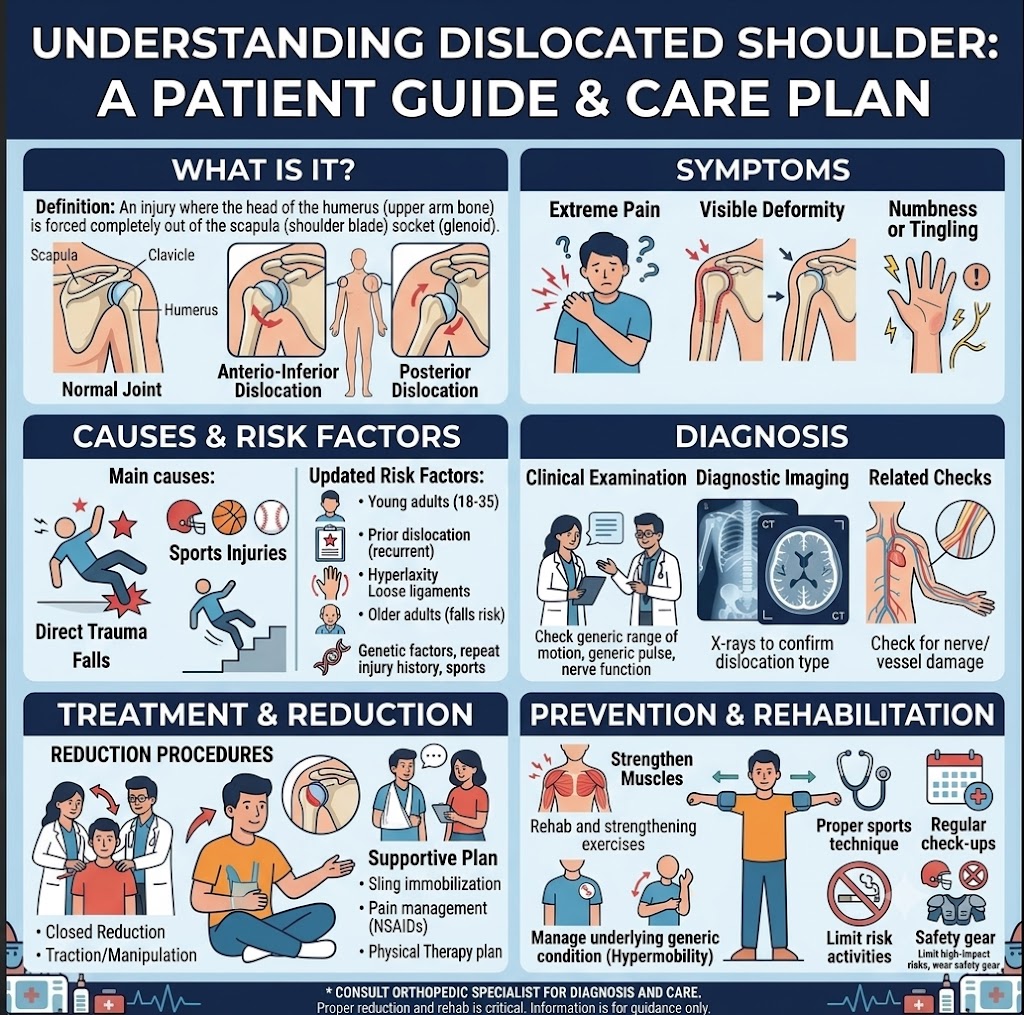
A dislocated shoulder is a common injury where the top of the upper arm bone unexpectedly pops out of its shallow, cup-shaped socket in the shoulder blade. The shoulder is the body's most flexible joint, allowing for a wide range of motion, but this flexibility also makes it more susceptible to dislocation. If you suspect a dislocated shoulder, it's crucial to seek immediate medical attention. While most individuals regain full use of their shoulder within a few weeks with proper care, a dislocated shoulder can make the joint more prone to future dislocations.
Understanding the Condition
Common Symptoms
Visibly Deformed or Out-of-Place Shoulder: The shoulder may appear misshapen, slumped, or clearly out of its normal position.
Swelling or Bruising: Noticeable puffiness and discoloration around the shoulder joint due to injury to surrounding tissues.
Intense Pain: Severe pain localized to the shoulder area, often worsening with any attempt to move the arm.
Inability to Move the Joint: Difficulty or complete inability to raise, rotate, or use the affected arm.
Numbness, Weakness, or Tingling: Sensations of numbness, weakness, or 'pins and needles' that can extend from the shoulder down the arm or into the neck, indicating possible nerve irritation or damage.
Muscle Spasms: Involuntary contractions of the muscles around the shoulder, which can intensify the pain and make the shoulder feel rigid.
Consultation Guide
Which Specialist to Meet
Initially, you will likely be seen by an emergency room physician who can assess the injury and perform immediate necessary procedures. For ongoing care, you will typically consult with an orthopedic surgeon, a doctor specializing in bone and joint injuries, or a sports medicine specialist, who focuses on injuries related to physical activity.
Preparations Before Your Visit
Consultation Guide
If you suspect a dislocated shoulder, it is vital to seek medical help immediately. While waiting for medical attention, do not attempt to move the joint or force it back into place, as this can cause further damage to surrounding muscles, ligaments, nerves, or blood vessels. Instead, try to keep the shoulder joint as still as possible; if available, gently support it with a sling or splint in its current position. Applying an ice pack to the injured area can help reduce pain and swelling. Be prepared to provide your medical history, including any previous shoulder injuries or dislocations.
Book a doctor visit near me
For an EMG, a very thin needle electrode is gently inserted into specific muscles to record their electrical activity while at rest and during movement. You might feel a slight pinprick or mild discomfort. For an NCS, sticker electrodes are placed on your skin over nerves, and small, mild electrical pulses are delivered to measure how quickly your nerves transmit signals. This may cause a brief tingling or twitching sensation. Both procedures are generally well-tolerated and provide crucial information about nerve and muscle function.
Rest: Immediately stop any activity that caused the injury and avoid movements that cause pain. Resting the shoulder is crucial for initial healing. (Duration: Typically for the first few days to weeks, as advised by your doctor.)
Ice Application: Apply a cold pack or ice wrapped in a cloth to the injured shoulder to help reduce pain and swelling. (Duration: For 15-20 minutes at a time, several times a day, particularly in the first 48 hours after injury.)
Listen to Your Body: Pay attention to any discomfort, pain, or instability in your shoulder. If a movement causes pain or makes your shoulder feel unstable, stop the activity and consult your doctor or physical therapist.
Prompt Medical Consultation for Recurrence: If you experience another dislocation or persistent instability, seek medical advice immediately. Recurrent dislocations may indicate the need for further evaluation or surgical intervention to stabilize the joint.
Diagnostic Procedures
An X-ray is a quick, painless imaging test that uses a small amount of radiation to create pictures of the bones inside your body. It is highly effective in showing if bones are properly aligned or if they have moved out of position, as in a dislocation, and can also identify any associated bone fractures.
What to Expect
During an X-ray, you will be asked to remove any jewelry or metal objects that might obstruct the image. You will lie or stand in various positions, guided by a technician, to allow different angles of your shoulder to be captured. It's important to remain still during the brief moments the X-ray is taken. The procedure itself is painless and typically takes only a few minutes.
Electromyography (EMG) and Nerve Conduction Study (NCS)
If there are concerns about nerve damage following a shoulder dislocation, an Electromyography (EMG) and a Nerve Conduction Study (NCS) may be performed. EMG assesses the health of muscles and the nerve cells that control them, revealing nerve or muscle dysfunction. NCS measures the speed and strength of electrical signals traveling along nerves.
What to Expect
Treatment Options
Home Remedies & First Aid
Medications
Pain Relievers: Over-the-counter pain medications can help manage pain and inflammation. Your doctor may prescribe stronger pain relief if necessary. (Duration: As needed, usually for a few days to a couple of weeks post-injury or reduction.)
Closed Reduction: This is a non-surgical procedure where a doctor carefully maneuvers your arm and shoulder to gently guide the upper arm bone back into its socket. This often requires pain medication or sedation to relax the muscles and minimize discomfort. (Duration: The procedure itself is quick, usually a few minutes, performed as soon as possible after the injury.)
Therapies
Immobilization: After the shoulder is put back into place, it will be kept still using a sling or other device to allow the surrounding tissues to heal and prevent re-dislocation. (Duration: Typically 1 to 3 weeks, depending on the severity of the injury and as advised by your doctor.)
Physical Therapy: Once the initial pain and swelling subside and the shoulder is stable, a physical therapy program will begin. This involves specific exercises designed to restore full range of motion, strengthen the muscles around the shoulder joint, and improve stability to prevent future dislocations. (Duration: Several weeks to several months, progressing gradually under the guidance of a therapist.)
Surgical Procedures
Shoulder Stabilization Surgery: Surgery may be recommended if ligaments or tendons are severely torn, if there's damage to nerves or blood vessels that can't be resolved otherwise, or if you experience repeated dislocations despite non-surgical treatments. The surgery aims to repair damaged tissues and tighten the shoulder joint to increase stability. (Duration: Recovery typically involves several months of rehabilitation after the surgery.)
Prevention & Long-Term Wellbeing
Dislocated Shoulder: Understanding and Recovery
- Understanding the Condition
A dislocated shoulder is a common injury where the top of the upper arm bone unexpectedly pops out of its shallow, cup-shaped socket in the shoulder blade. The shoulder is the body's most flexible joint, allowing for a wide range of motion, but this flexibility also makes it more susceptible to dislocation. If you suspect a dislocated shoulder, it's crucial to seek immediate medical attention. While most individuals regain full use of their shoulder within a few weeks with proper care, a dislocated shoulder can make the joint more prone to future dislocations.
Prevention
Avoid Falls and Shoulder Trauma: Be mindful of your surroundings, use ladders and stairs safely, and remove tripping hazards in your home. Exercise caution during activities that could lead to a fall or a direct blow to the shoulder.
Wear Protective Gear: When participating in contact sports like football or hockey, or activities with a high risk of falls such as skiing or gymnastics, always wear appropriate protective padding and gear to shield your shoulders.
Maintain Strength and Flexibility: Engage in regular exercise that includes strengthening exercises for the shoulder muscles and stretching to maintain joint flexibility. This helps support the shoulder joint and make it less susceptible to injury.
Long-Term Monitoring and Recurrence Prevention
Strict Adherence to Physical Therapy: Even after pain subsides, consistently perform the prescribed strength and stability exercises to fully recover and minimize the risk of future dislocations. Do not stop exercises prematurely.
Gradual Return to Activities: Slowly increase your activity level, especially when returning to sports or strenuous physical tasks. Avoid sudden, forceful movements that put stress on the healing shoulder.
Tags & Topics
Notice an error or need an update?
Help us keep medical information accurate. Report incorrect info or suggest an edit.


