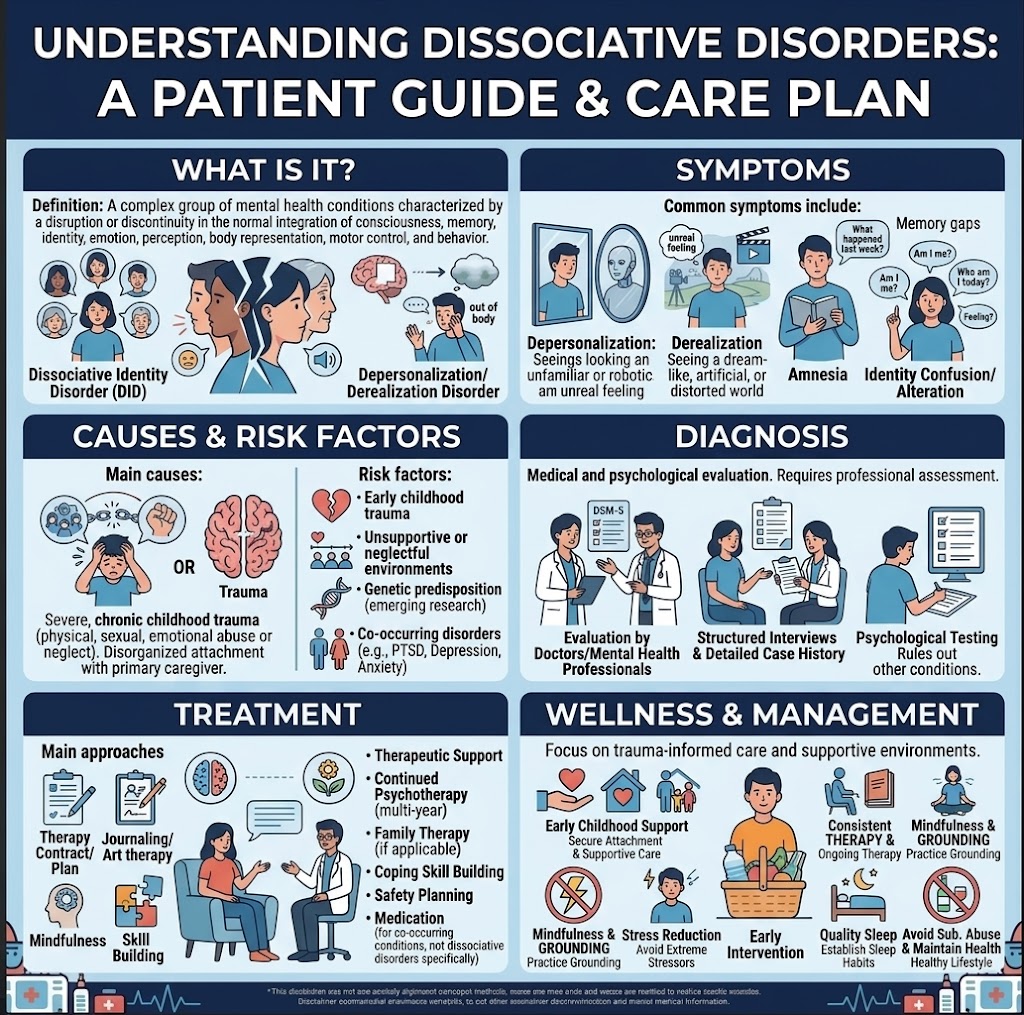
Dissociative disorders are mental health conditions where a person experiences an involuntary separation from their thoughts, memories, feelings, surroundings, behavior, or sense of self. These conditions represent an unhealthy escape from reality, often making it difficult to manage daily life. They typically develop as a coping mechanism following overwhelming or traumatic events, helping to push away painful memories. Symptoms can range from memory loss to feeling detached from oneself or having multiple identities. While challenging to treat, many individuals learn effective coping strategies and experience significant improvement through therapy and sometimes medication.
Understanding the Condition
Dissociative Disorders: Understanding a Break from Reality
Understanding the Condition
Dissociative disorders are mental health conditions where a person experiences an involuntary separation from their thoughts, memories, feelings, surroundings, behavior, or sense of self. These conditions represent an unhealthy escape from reality, often making it difficult to manage daily life. They typically develop as a coping mechanism following overwhelming or traumatic events, helping to push away painful memories. Symptoms can range from memory loss to feeling detached from oneself or having multiple identities. While challenging to treat, many individuals learn effective coping strategies and experience significant improvement through therapy and sometimes medication.
Common Symptoms
Detachment from Self and Emotions: Feeling separated from your body, thoughts, actions, or emotions, as if you are observing yourself from outside, much like watching a movie of your own life. This is known as depersonalization.
Feeling of Unreality: Perceiving people and things around you as distorted, unreal, foggy, or dreamlike. This experience is called derealization.
Confused Identity: Having a blurred, shifting, or unclear sense of who you are, making it difficult to recognize your own identity.
Significant Life Problems: Experiencing severe stress or difficulties in relationships, at work or school, or in other important aspects of daily life.
Poor Stress Management: Struggling to cope effectively with emotional or work-related stress, leading to overwhelming feelings.
Memory Loss (Amnesia): Forgetting important personal information, specific time periods, events, or people, which cannot be explained by ordinary forgetfulness.
Co-occurring Mental Health Issues: Experiencing other mental health concerns like depression, anxiety, or having suicidal thoughts and behaviors.
Consultation Guide
Which Specialist to Meet
Before your appointment, it's helpful to write down a detailed list of your symptoms, including when they started and how they affect your daily life. Be prepared to discuss your personal history, especially any past traumatic experiences, and your medical history. Also, list any questions you have for the specialist.
Book a doctor visit near me
Diagnosis of dissociative disorders primarily involves a thorough clinical assessment by a mental health professional. This process aims to understand your symptoms, life history, and rule out other potential medical or mental health conditions.
During this evaluation, you will engage in an extensive conversation with a psychiatrist, psychologist, or licensed therapist. They will ask detailed questions about your thoughts, feelings, behaviors, personal history (including any past traumatic experiences), and family medical history. To further assess your symptoms and experiences, they may use standardized questionnaires or psychological tools. A physical examination may also be conducted by a medical doctor to rule out any underlying physical health issues that could be causing your symptoms. This comprehensive approach helps the professional determine if your symptoms align with a dissociative disorder and identify the specific type.
Symptom-Targeted Medications: While no specific medication treats dissociative disorders directly, medications are often prescribed to manage co-occurring symptoms like depression, anxiety, or severe stress that frequently accompany dissociative disorders. These medications can make it easier to engage in therapy. (Duration: Ongoing, as prescribed by a doctor, often for several months or longer based on symptom control and individual response.)
Building Healthy Coping Skills: Learning and consistently practicing healthy strategies to manage stress, intense emotions, and challenging life situations is key to preventing symptoms from worsening and promoting overall mental health. This can be achieved through therapy or self-help resources.
Consistent Engagement with Treatment: For individuals diagnosed with a dissociative disorder, maintaining regular appointments with mental health professionals and adhering to treatment plans (therapy, medication, etc.) is essential for long-term recovery, symptom management, and improved quality of life.
Establishing a Support System: Connecting with trusted friends, family, community leaders, or support groups can provide valuable emotional support and reduce feelings of isolation, which is important for managing chronic conditions.
Diagnostic Procedures
Initially, you might see your primary care doctor, who can refer you to a mental health professional. Specialists involved in diagnosing and treating dissociative disorders include psychiatrists (medical doctors who can prescribe medication), psychologists, and licensed therapists or counselors (who provide various forms of talk therapy).
Preparations Before Your Visit
Clinical Assessment and Psychological Evaluation
What to Expect
Treatment Options
Therapies
Psychotherapy (Talk Therapy): This is a primary treatment approach where you talk with a mental health professional to understand your issues, how your thoughts, emotions, and behaviors interact, and learn healthy coping skills. Various types exist, tailored to individual needs. (Duration: Can range from several months to years, depending on the severity and complexity of the condition.)
Cognitive Behavioral Therapy (CBT): CBT is a structured, goal-oriented therapy that helps you identify and change unhelpful thinking patterns and behaviors. It often involves practical exercises and 'homework' to practice skills learned in sessions. (Duration: Typically involves fewer sessions than other therapies, often 12-20 sessions over several months, but can be longer for complex cases.)
Hypnosis (Hypnotherapy): Under the guidance of a trained professional, hypnosis induces a relaxed, focused state of awareness. In this state, individuals may be more receptive to suggestions for changing unwanted behaviors or coping with anxiety and pain. It can help process traumatic memories safely. (Duration: Varies widely, from a few sessions to several months, depending on specific goals.)
Medications
Prevention & Long-Term Wellbeing
Prevention and Long-Term Management
Early Intervention After Trauma: If you or a child has experienced physical, emotional, or sexual abuse, or another deeply distressing event like war or a natural disaster, seeking immediate professional help is crucial. Early intervention can significantly reduce the risk of developing dissociative disorders or lessen their severity.
Parenting Support and Education: For parents facing stress or personal challenges that impact their ability to care for their children, seeking support is vital. Resources like parenting support groups, family therapists, and community education programs can help foster healthier parenting styles and safe home environments.
Tags & Topics
Notice an error or need an update?
Help us keep medical information accurate. Report incorrect info or suggest an edit.


