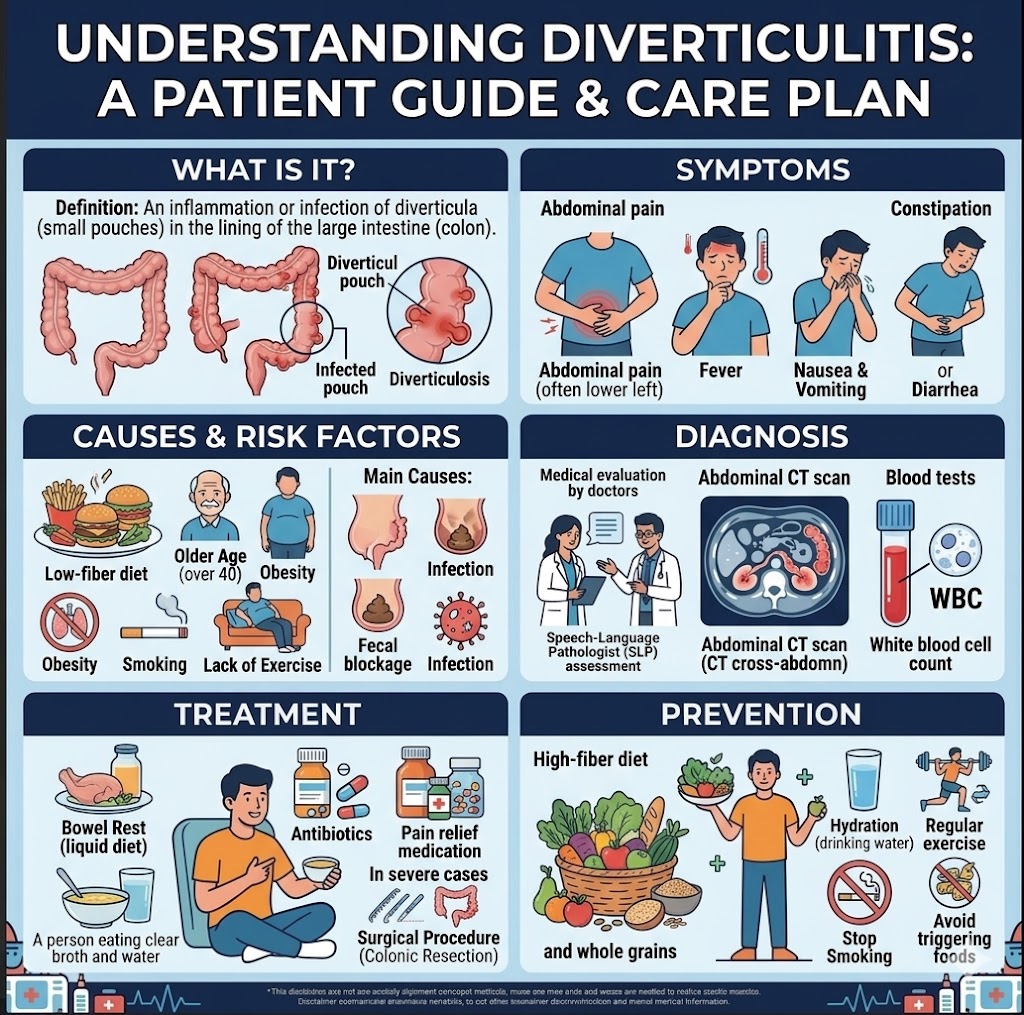
The large intestine, also known as the colon, usually has a smooth inner lining. Sometimes, small, irregular pouches can form in weak spots along its wall. These pouches are called "diverticula" (a single pouch is a "diverticulum"). The presence of these pouches is a common condition called "diverticulosis," especially after age 50, and often causes no problems. Diverticulitis occurs when one or more of these pouches become inflamed or infected. This inflammation can lead to significant pain, fever, nausea, and changes in bowel habits. While mild cases can often be managed with rest and dietary adjustments, severe diverticulitis may require hospital treatment or even surgery. These pouches typically develop over time due to pressure within the colon, possibly from straining, which can cause the colon wall to bulge outward in weak areas. Inflammation in diverticulitis can be triggered by bacterial issues or damage to the pouch tissues.
Understanding the Condition
Understanding Diverticulitis: A Guide for Non-Medical Persons
Understanding the Condition
Common Symptoms
Abdominal Pain: Often sharp and sudden pain, most commonly in the lower left side of the abdomen. It can be mild and worsen gradually or vary in intensity.
Abdominal Tenderness: The affected area of the abdomen may feel sore or painful when touched.
Fever: An elevated body temperature can indicate an infection or significant inflammation.
Nausea and Vomiting: Feeling sick to your stomach and throwing up.
Changes in Bowel Habits: This can include sudden bouts of diarrhea or persistent constipation. Seek medical attention for constant, unexplained abdominal pain, especially if accompanied by fever and noticeable changes in your stools.
Consultation Guide
Which Specialist to Meet
Before your visit, it's helpful to:* Keep a diary of your symptoms, noting when they started, their intensity, and any triggers.* Be prepared to discuss your full medical history, including any existing conditions and medications you take.* List any questions you have for the doctor.* Avoid eating or drinking anything for a few hours before your appointment if instructed, especially if a procedure like a CT scan might be considered.
Book a doctor visit near me
Regular Medical Check-ups: If you have been diagnosed with diverticulosis (the presence of pouches), regular check-ups with your doctor are important to monitor your colon health and discuss any new symptoms.
Symptom Awareness: Be vigilant for any new or worsening abdominal pain, changes in bowel habits, or fever, and seek prompt medical advice if they occur.
Consultation Guide
The large intestine, also known as the colon, usually has a smooth inner lining. Sometimes, small, irregular pouches can form in weak spots along its wall. These pouches are called "diverticula" (a single pouch is a "diverticulum"). The presence of these pouches is a common condition called "diverticulosis," especially after age 50, and often causes no problems. Diverticulitis occurs when one or more of these pouches become inflamed or infected. This inflammation can lead to significant pain, fever, nausea, and changes in bowel habits. While mild cases can often be managed with rest and dietary adjustments, severe diverticulitis may require hospital treatment or even surgery. These pouches typically develop over time due to pressure within the colon, possibly from straining, which can cause the colon wall to bulge outward in weak areas. Inflammation in diverticulitis can be triggered by bacterial issues or damage to the pouch tissues.
Diagnostic Procedures
CT Scan (Computerized Tomography Scan)
A CT scan uses specialized X-ray equipment and a computer to create detailed cross-sectional images, or "slices," of your internal organs, bones, blood vessels, and soft tissues. These images provide more detail than standard X-rays and are crucial for diagnosing diverticulitis by identifying inflamed pouches, abscesses, or other complications.
What to Expect
You will lie on a motorized table that slides into a large, doughnut-shaped machine. You may be asked to hold your breath for short periods. A contrast dye might be given orally or injected into a vein to highlight certain areas. The scan itself is usually painless and takes about 10-30 minutes. You will hear whirring or clicking noises from the machine. You can communicate with the technologist through an intercom. After the scan, you can typically resume your normal activities. If contrast dye was used, you might be advised to drink extra fluids to help flush it from your body.
Colectomy (Colon Resection): Involves surgically removing the diseased section of the large intestine, then reconnecting the healthy ends. This is often necessary for severe, recurrent, or complicated diverticulitis (e.g., abscess, blockage, perforation). (Duration: Surgery takes several hours; recovery is typically weeks.)
Ostomy (Colostomy or Ileostomy): A surgical opening (stoma) created in the abdomen to divert waste into an external pouch. A colostomy diverts from the large intestine, an ileostomy from the small intestine. This can be temporary, allowing the bowel to heal, or permanent in certain situations. (Duration: Temporary (weeks to months/years) or permanent.)
Treatment Options
You should first consult your primary care provider, who may then refer you to a gastroenterologist (a doctor specializing in digestive system disorders) or a general surgeon, especially if surgery is being considered.
Preparations Before Your Visit
Medications
Antibiotics: Prescribed to combat bacterial infection if present. It's vital to complete the full course. (Duration: Usually 7-10 days.)
Pain Relievers: Used to manage discomfort. Consult your doctor for suitable options. (Duration: As needed for pain.)
Intravenous (IV) Treatment: For severe cases, hospitalization may involve receiving antibiotics and fluids directly into a vein to treat infection and prevent dehydration. (Duration: Several days to a week or more, based on condition.)
Surgical Procedures
Ostomy Reversal Surgery: If a temporary ostomy was performed, this procedure reconnects the bowel to restore natural stool passage. It's done once the bowel has healed, though not all ostomies can be reversed. (Duration: Surgery takes a few hours; recovery lasts several weeks, with bowel function normalizing over time.)
Prevention & Long-Term Wellbeing
Rest and Dietary Adjustments: For mild inflammation, rest is key. Initially, a clear liquid diet or low-fiber diet may be recommended to allow the bowel to heal, gradually returning to regular foods. (Duration: Typically a few days to one week.)
Prevention
Regular Exercise: Engaging in consistent physical activity, even vigorous exercise, can significantly lower your risk of developing diverticulitis.
High-Fiber Diet: Eating plenty of fiber-rich foods like fruits, vegetables, whole grains, seeds, and beans helps keep waste moving smoothly through the colon, preventing constipation and reducing pressure that can lead to pouches. Limit red meats and sweets.
Maintain a Healthy Weight: Achieving and maintaining a healthy body weight reduces overall health risks, including the likelihood of diverticulitis. Consult a healthcare professional for personalized weight goals.
Stay Hydrated: Drinking ample fluids helps fiber work effectively by softening waste, adding bulk, and promoting regular bowel movements, which prevents constipation.
Avoid Smoking and Limit Alcohol: Smoking and heavy alcohol consumption are linked to an increased risk of diverticulitis. Quitting smoking and moderating alcohol intake can support colon health.
Long-Term Wellbeing
Tags & Topics
Notice an error or need an update?
Help us keep medical information accurate. Report incorrect info or suggest an edit.


