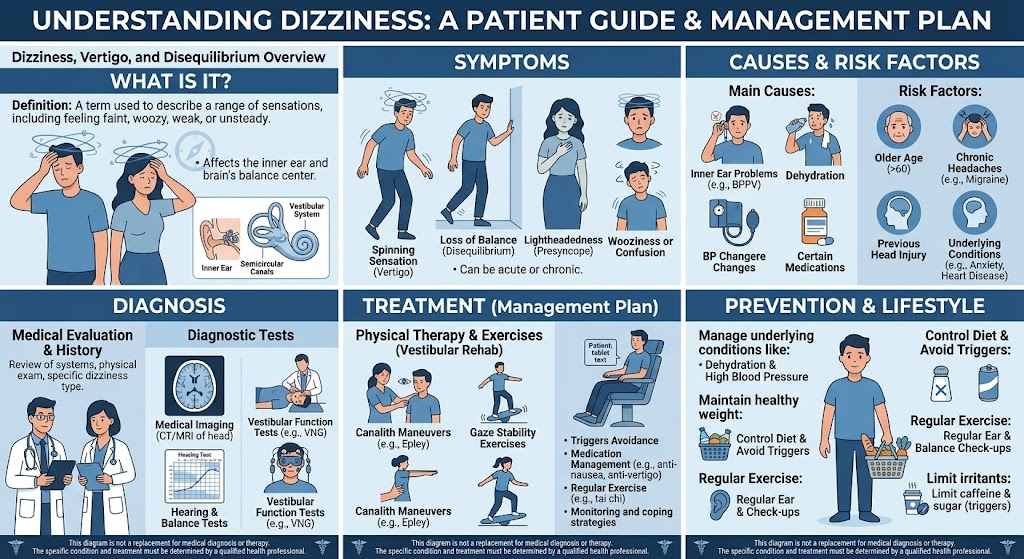
Dizziness is a broad term describing various uncomfortable sensations like feeling faint, woozy, weak, or unsteady. More specifically, vertigo is the sensation that you or your surroundings are spinning or moving. Dizziness is a common reason adults seek medical attention, and frequent or constant episodes can significantly impact daily life. While often disruptive, dizziness rarely indicates a life-threatening condition. Treatment focuses on the underlying cause and specific symptoms, often providing relief, though symptoms may sometimes return.
Understanding the Condition
Dizziness: Understanding and Managing Balance Issues
Understanding the Condition
Dizziness is a broad term describing various uncomfortable sensations like feeling faint, woozy, weak, or unsteady. More specifically, vertigo is the sensation that you or your surroundings are spinning or moving. Dizziness is a common reason adults seek medical attention, and frequent or constant episodes can significantly impact daily life. While often disruptive, dizziness rarely indicates a life-threatening condition. Treatment focuses on the underlying cause and specific symptoms, often providing relief, though symptoms may sometimes return.
Common Symptoms
Vertigo: A powerful sensation of motion or spinning, as if you or your surroundings are moving.
Lightheadedness or Fainting Sensation: Feeling as if you might pass out, or a sense of wooziness.
Loss of Balance: Feeling unsteady on your feet, like you might fall.
Floating or Heavy-Headedness: A disconnected feeling, as if you are floating, or a dull, heavy sensation in your head.
Exacerbating Factors: These sensations may worsen when you walk, stand up, or move your head quickly. Dizziness can also occur alongside an upset stomach.
Severity and Duration: Episodes can be sudden and severe, requiring you to sit or lie down. They may last anywhere from a few seconds to several days and can recur.
When to Seek Emergency Care Immediately: Get immediate medical help if new, severe dizziness or vertigo occurs with any of the following: sudden, severe headache or chest pain; rapid or irregular heartbeat; numbness or weakness in arms, legs, or face; stumbling or trouble walking; trouble breathing; fainting or seizures; sudden vision changes or double vision; sudden hearing change; confusion or slurred speech; or ongoing vomiting.
Consultation Guide
Which Specialist to Meet
Before your visit, keep a detailed diary of your dizzy spells. Note when they occur, how long they last, what they feel like, what activities trigger them, and any other symptoms you experience. Bring a list of all medications, supplements, and vitamins you are currently taking, as well as your complete medical history.
Book a doctor visit near me
Your doctor will ask detailed questions about your dizziness, including its characteristics, triggers, and associated symptoms, along with your full medical history. This helps piece together clues about potential causes, as your sense of balance relies on signals from your eyes, sensory nerves, and inner ear.
Symptom-Relieving Medications: For acute, severe dizziness or vertigo, your doctor may prescribe medications to alleviate nausea, vomiting, or the sensation of spinning. (Duration: Short-term, typically for a few days)
Canalith Repositioning Procedure: This simple, in-office procedure helps treat Benign Paroxysmal Positional Vertigo (BPPV). It involves a series of specific head and body movements designed to shift the dislodged inner ear particles back into a part of the ear where they won't cause dizziness. (Duration: Typically 1-2 treatments in a doctor's office. Relief can be immediate but symptoms may recur over time.)
Vestibular Rehabilitation Therapy (VRT): A specialized form of physical therapy that involves exercises to help your brain learn to compensate for inner ear problems, improve balance, and reduce dizziness. This can include eye and head movements, balance exercises, and walking tasks. (Duration: Typically several weeks to months, depending on severity and progress)
Regular Follow-ups: Maintain regular appointments with your healthcare provider to monitor your condition, adjust treatments as needed, and address any new symptoms or concerns.
Consultation Guide
Initially, consult your primary care physician for any repeated, sudden, severe, or long-lasting dizziness without a clear cause. Depending on the suspected cause, you may be referred to an Ear, Nose, and Throat (ENT) specialist for inner ear conditions, a neurologist for nervous system issues, or a cardiologist for heart-related concerns.
Preparations Before Your Visit
Psychotherapy (Talk Therapy): If dizziness causes significant anxiety, stress, or impacts your mental well-being, talk therapy can help you develop coping strategies and manage the emotional effects, improving overall quality of life. (Duration: Varies from weeks to several months or longer, based on individual needs)
Review Medications: Regularly discuss all your medications, including over-the-counter drugs and supplements, with your doctor, as some can cause dizziness as a side effect.
Mindful Movements: If you are prone to dizziness, especially BPPV, try to avoid sudden head movements, particularly when sitting up, lying down, or turning in bed.
Stay Hydrated and Nourished: Drink adequate fluids throughout the day and eat regular, balanced meals to prevent low blood sugar or dehydration, which can trigger dizziness.
Long-Term Wellbeing and Safety
Diagnostic Procedures
Clinical Assessment and History Taking
What to Expect
You will answer questions about when your dizziness started, how it feels, what makes it better or worse, and any other health issues. The doctor will likely perform a general physical exam, checking your ears, eyes, and basic reflexes to look for initial indicators.
Neurological Examination
A neurological exam assesses the function of your nervous system, including your brain, spinal cord, nerves, and muscles, to identify any underlying neurological conditions that might be causing dizziness.
What to Expect
The doctor will test your mental status (alertness, memory), balance, coordination, reflexes, sensation, vision, and hearing. This may involve tasks like walking in a straight line, touching your finger to your nose, or responding to light touches and pinpricks. The exam can range from a few minutes to an hour or more.
Positional Testing (e.g., Dix-Hallpike Maneuver)
These tests are specific maneuvers used to diagnose conditions like Benign Paroxysmal Positional Vertigo (BPPV), which occurs when tiny calcium particles in the inner ear become dislodged.
What to Expect
While sitting on an exam table, your doctor will quickly move your head into specific positions and then help you lie down with your head turned and slightly hanging. They will observe your eyes for involuntary movements (nystagmus) and ask if you feel dizzy. This process helps confirm if dislodged inner ear particles are causing your vertigo.
Treatment Options
Self-Care & Home Remedies
Medications
Medications for Underlying Conditions: If your dizziness is linked to conditions like migraines, Meniere's disease, or inner ear inflammation, specific medications may be prescribed to manage these conditions and prevent dizziness episodes. (Duration: Varies; can be short-term or long-term depending on the condition)
Prevention & Long-Term Wellbeing
Rest and Hydration: During dizzy spells, rest immediately. Avoid sudden head movements. Ensure you are well-hydrated by drinking plenty of fluids. (Duration: As needed during episodes, ongoing for prevention)
Environmental Modifications: Make your home safer by removing tripping hazards and using good lighting to prevent falls during dizzy episodes. (Duration: Ongoing)
Prevention
Manage Underlying Health Conditions: Work with your doctor to effectively manage chronic conditions such as high blood pressure, diabetes, or migraines, as these can contribute to dizziness.
Fall Prevention: Take steps to prevent falls, such as installing handrails, ensuring adequate lighting, removing loose rugs, and using assistive devices if recommended.
Safety Precautions: Avoid driving or operating heavy machinery during dizzy spells to prevent accidents. Plan daily activities to minimize risks if dizziness is a frequent issue.
Healthy Lifestyle: Engage in appropriate physical activity to maintain strength and balance. Practice stress-reduction techniques to help manage any anxiety related to dizziness.
Tags & Topics
Notice an error or need an update?
Help us keep medical information accurate. Report incorrect info or suggest an edit.


