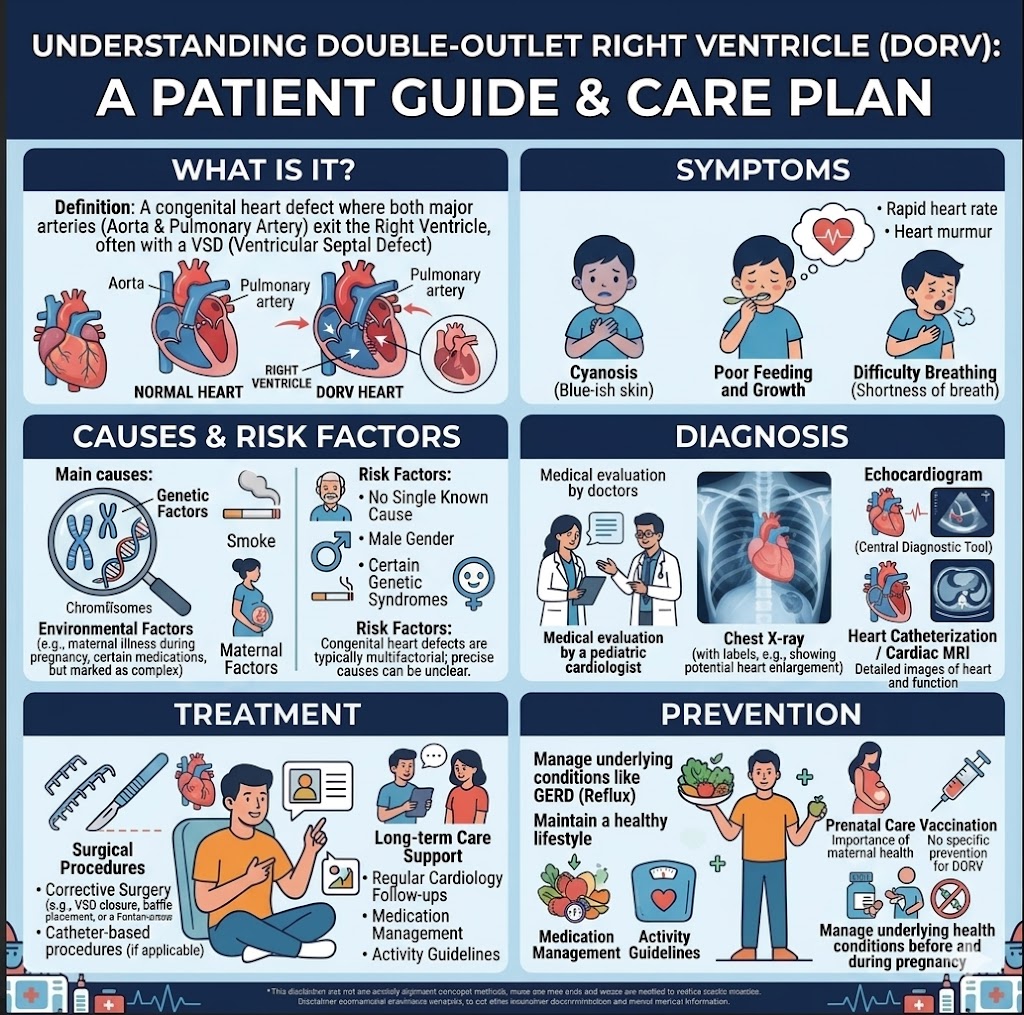
Double-outlet right ventricle (DORV) is a complex heart condition present at birth, meaning it's a congenital heart defect. In a typical heart, the lower right chamber (right ventricle) pumps blood to the lungs, and the lower left chamber (left ventricle) pumps blood to the body. With DORV, both of the heart's major arteries (the aorta, which sends blood to the body, and the pulmonary artery, which sends blood to the lungs) connect incorrectly to the right ventricle. This causes oxygen-poor and oxygen-rich blood to mix and be pumped inefficiently to both the lungs and the body. Babies with DORV also always have a hole between the two lower heart chambers, called a ventricular septal defect, which is essential for blood to exit the right ventricle.
Understanding the Condition
Double-Outlet Right Ventricle (DORV): A Guide for Families
Understanding the Condition
Common Symptoms
Shortness of Breath: Difficulty breathing, especially during feeding or activity.
Poor Growth: Failure to gain weight or grow as expected.
Fatigue: Unusual tiredness or lack of energy.
Blue or Gray Skin (Cyanosis): A bluish tint to the skin, lips, or fingernails due to insufficient oxygen in the blood.
Rapid Heart Rate: An unusually fast heartbeat.
Consultation Guide
Which Specialist to Meet
If you suspect your baby has symptoms of a heart condition, you should see a pediatric cardiologist, a doctor specializing in children's heart conditions. A pediatric cardiovascular surgeon may also be part of the care team for treatment planning.
Preparations Before Your Visit
Before your visit, make a list of all your baby's symptoms, including when they started and how often they occur. Write down any questions you have. Be prepared to share your baby's medical history, including any other health conditions, medications, and details about your pregnancy and family medical history.
Book a doctor visit near me
Consultation Guide
Double-outlet right ventricle (DORV) is a complex heart condition present at birth, meaning it's a congenital heart defect. In a typical heart, the lower right chamber (right ventricle) pumps blood to the lungs, and the lower left chamber (left ventricle) pumps blood to the body. With DORV, both of the heart's major arteries (the aorta, which sends blood to the body, and the pulmonary artery, which sends blood to the lungs) connect incorrectly to the right ventricle. This causes oxygen-poor and oxygen-rich blood to mix and be pumped inefficiently to both the lungs and the body. Babies with DORV also always have a hole between the two lower heart chambers, called a ventricular septal defect, which is essential for blood to exit the right ventricle.
Prenatal Care: While the exact cause of DORV is unknown, maintaining good health during pregnancy is crucial. This includes attending all prenatal appointments, discussing any medications with your doctor, and avoiding harmful substances.
Avoid Smoking During Pregnancy: Maternal smoking during pregnancy has been linked to an increased risk of certain congenital heart defects. Avoiding smoking is an important step in promoting fetal health.
Manage Existing Health Conditions: If you have pre-existing health conditions like diabetes, ensure they are well-managed before and during pregnancy, as some conditions can increase the risk of birth defects.
Long-Term Monitoring and Support
Regular Follow-Up with a Cardiologist: Children and adults with DORV will require lifelong follow-up care with a pediatric or adult congenital cardiologist. These regular check-ups are essential to monitor heart function, detect any potential complications, and ensure overall health.
Diagnostic Procedures
An echocardiogram uses sound waves to create moving pictures of the heart. It helps healthcare professionals see the heart's structure, how blood flows through its chambers and valves, and identify any defects like DORV or a ventricular septal defect.
What to Expect
Your baby will lie down, and a gel will be applied to their chest. A small handheld device called a transducer will be moved over the chest area. This device sends and receives sound waves, which are converted into images on a screen. Sticky patches will also be placed on the chest to monitor heart rhythm. The test is painless and typically takes less than an hour.
Electrocardiogram (ECG or EKG)
An electrocardiogram is a quick and painless test that records the electrical signals of the heart. It shows how fast or slow the heart is beating and can help detect irregular heart rhythms or signs of heart muscle strain.
What to Expect
Your baby will lie down while sticky patches, called electrodes, are placed on their chest, and sometimes on their arms or legs. Wires connect these patches to a machine that records the heart's electrical activity. The test is very fast, usually taking only a few minutes, and is not uncomfortable.
A chest X-ray uses a small amount of radiation to create images of the heart, lungs, blood vessels, and bones in the chest. It can help assess the size and shape of the heart and lungs, as well as detect fluid or other lung problems.
What to Expect
Your baby will be positioned on a table, and a brief X-ray will be taken. You may be asked to hold your baby to keep them still during the quick image capture. The procedure is painless and takes only a few seconds.
Cardiac Catheterization
Cardiac catheterization is a more invasive procedure used to gather detailed information about the heart's structure, blood flow, and pressures within the heart chambers and blood vessels. A thin, flexible tube (catheter) is guided through a blood vessel to the heart.
What to Expect
Treatment Options
Your baby will receive medication to help them relax or sleep during the procedure. A small incision will be made, usually in the groin, to access a blood vessel. The catheter is then carefully threaded through the vessel to the heart. Dye may be injected to visualize structures, and pressure readings will be taken. The procedure can last several hours, and your baby will be closely monitored afterward.
Surgical Procedures
Corrective Heart Surgery: The main treatment for DORV is open-heart surgery to redirect blood flow. This typically involves closing the ventricular septal defect (the hole between the lower heart chambers) and creating pathways to ensure oxygen-poor blood goes to the lungs and oxygen-rich blood goes to the body. Often, this means creating a 'tunnel' within the heart to connect the left ventricle to the aorta. (Duration: Typically a single major surgery, followed by a recovery period in the hospital of several weeks, and ongoing follow-up care for life.)
Repair of Associated Heart Defects: Children with DORV often have other heart conditions, such as narrowed heart valves or additional holes. These defects may be repaired during the same surgery or in separate procedures, depending on their severity and complexity. (Duration: Specific to the defect being repaired; often integrated with the primary DORV correction, requiring a similar recovery and follow-up timeline.)
Heart Transplant: In very rare and severe cases where the heart damage is extensive or other treatments have not been successful, a heart transplant may be considered. This involves replacing the failing heart with a healthy donor heart. (Duration: A major surgical procedure followed by a lengthy recovery period (months) and lifelong medical management with anti-rejection medications and regular monitoring.)
Adherence to Medical Advice: Following your healthcare team's instructions regarding medications, activity restrictions (if any), and lifestyle recommendations is vital for long-term health and preventing complications.
Prevention & Long-Term Wellbeing
Prevention
Healthy Lifestyle: Encourage a heart-healthy lifestyle, including a balanced diet and regular, appropriate exercise, as advised by the cardiologist, to support overall wellbeing and heart function.
Emotional and Psychological Support: Living with a congenital heart condition can impact mental and emotional health. Seeking support from family, friends, support groups, or mental health professionals can be beneficial for patients and their families.
Tags & Topics
Notice an error or need an update?
Help us keep medical information accurate. Report incorrect info or suggest an edit.


