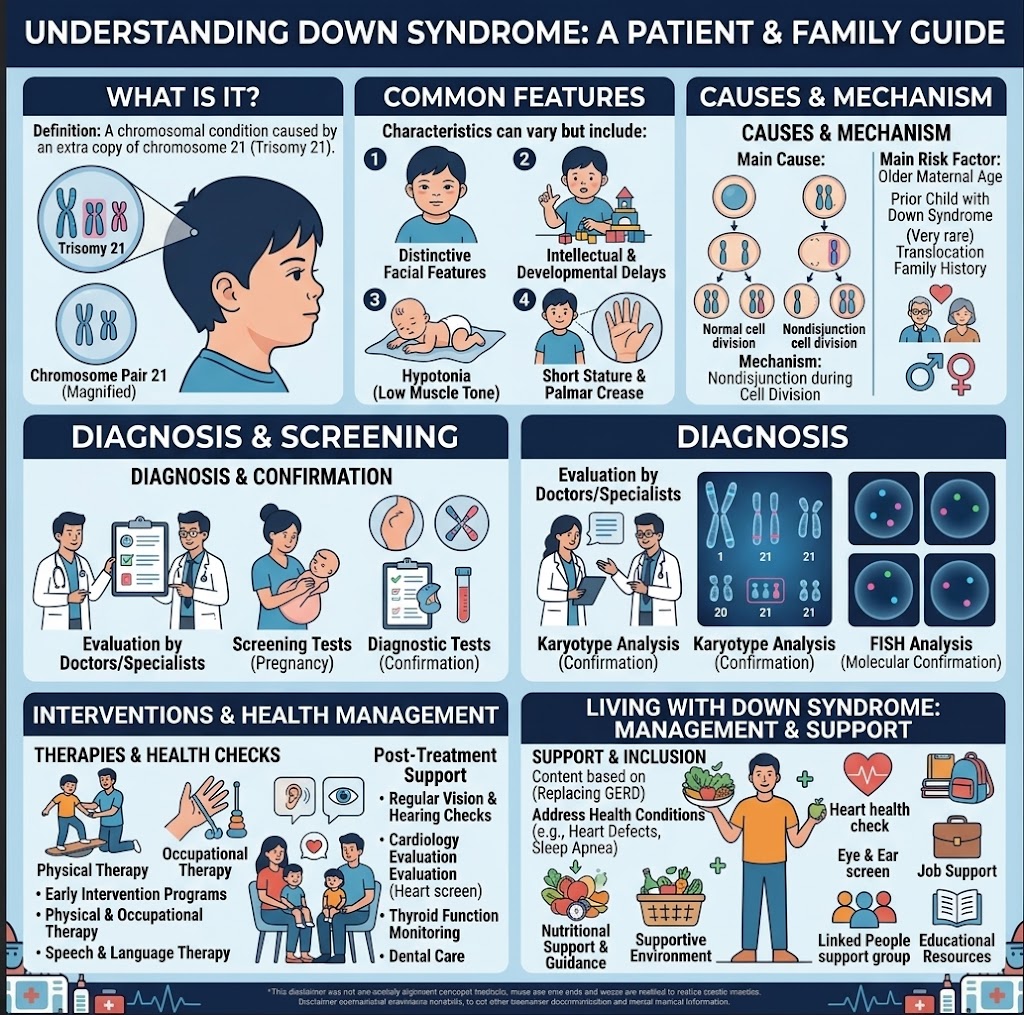
Down syndrome is a genetic condition that occurs when a baby is born with an extra full or partial copy of chromosome 21. This extra genetic material changes how the body and brain develop, leading to unique physical features and developmental differences. The term 'syndrome' refers to a collection of signs and symptoms that tend to appear together. The severity of Down syndrome varies widely among individuals, causing lifelong intellectual disability and developmental delays, usually mild to moderate. It is a common genetic cause of intellectual disabilities in children and can also lead to various medical conditions, including heart and digestive issues. Early support and interventions significantly improve the quality of life for those with Down syndrome, helping them lead fulfilling lives.
Understanding the Condition
Down Syndrome: An Accessible Medical Guide
Understanding the Condition
Down syndrome is a genetic condition that occurs when a baby is born with an extra full or partial copy of chromosome 21. This extra genetic material changes how the body and brain develop, leading to unique physical features and developmental differences. The term 'syndrome' refers to a collection of signs and symptoms that tend to appear together. The severity of Down syndrome varies widely among individuals, causing lifelong intellectual disability and developmental delays, usually mild to moderate. It is a common genetic cause of intellectual disabilities in children and can also lead to various medical conditions, including heart and digestive issues. Early support and interventions significantly improve the quality of life for those with Down syndrome, helping them lead fulfilling lives.
Common Symptoms
Distinctive Facial Features: Flattened face with a small, flat-bridged nose; small head and a short neck; a tongue that may appear larger and tend to stick out; eyes with upward-slanting eyelids and a skin fold covering the inner corner; small, rounded ears; tiny white spots on the colored part of the eye (iris), known as Brushfield's spots.
Hand and Foot Characteristics: Wide, small hands, often with a single crease across the palm and short fingers; small feet with a gap between the first and second toes.
Physical Development: Shorter height than average; poor muscle tone (floppiness) noticeable in infants; loose and very flexible joints.
Cognitive and Developmental Delays: Lifelong intellectual disability and developmental delays, typically ranging from mild to moderate.
Consultation Guide
Which Specialist to Meet
Before your visit, gather your personal and family medical history, especially noting any genetic conditions. Write down any specific symptoms or concerns you have. Prepare a list of questions for the doctor regarding diagnosis, future health, and available support.
Book a doctor visit near me
Diagnostic Procedures
If you have concerns about Down syndrome, your primary care physician or your child's pediatrician is a good first point of contact. They may refer you to a geneticist (a doctor specializing in genetic conditions) for diagnosis and genetic counseling. For managing associated health issues, a team of specialists may be involved, including cardiologists (heart doctors), gastroenterologists (digestive system doctors), developmental pediatricians, and various therapists (physical, occupational, speech).
Preparations Before Your Visit
An ultrasound uses sound waves to create images of the baby inside the womb. During pregnancy, it can help identify certain physical features that might suggest a higher chance of Down syndrome, though it cannot definitively diagnose the condition.
What to Expect
During the procedure, you will lie on an examination table. A gel is applied to your abdomen, and a transducer is moved over the skin. Images appear on a screen. You might feel slight pressure, but it's generally painless and safe. No special preparation is typically needed.
Genetic Testing (Prenatal and Postnatal)
Genetic testing examines DNA to identify changes in genes or chromosomes. For Down syndrome, it involves looking for the extra copy of chromosome 21. It can be done during pregnancy (prenatal) or after birth (postnatal) using blood or tissue samples.
What to Expect
If done during pregnancy, it often starts with a parental blood test. For confirmation, invasive tests like amniocentesis might follow. Post-birth, a baby's blood sample is usually sufficient. Blood tests involve a small needle stick. Tissue samples use specific collection methods. Risks are minimal, except for prenatal tests like amniocentesis which carry a small miscarriage risk.
Amniocentesis is a diagnostic test performed during pregnancy, typically between weeks 14 and 20. It involves taking a small sample of the amniotic fluid surrounding the baby in the womb. This fluid contains fetal cells that can be analyzed for chromosomal abnormalities like Down syndrome.
What to Expect
First, an ultrasound locates the baby and a safe needle insertion spot. Your abdomen is cleaned. Under continuous ultrasound guidance, a thin needle is inserted through your abdominal wall into the uterus to withdraw fluid. You might feel pressure or mild cramping. Afterward, rest is advised. There is a small risk of complications, including miscarriage.
Digestive System Interventions: May include surgical correction for structural abnormalities of the intestines or stomach, and dietary management for conditions like celiac disease or reflux. (Duration: Surgical interventions are one-time; dietary management is ongoing.)
Genetic Counseling: For higher-risk parents (e.g., older age, prior child with Down syndrome, or carrier of specific genetic translocation), a genetic counselor can clarify risks and prenatal testing options.
Long-Term Management & Support
Regular Medical Check-ups: Routine visits to a primary care doctor and specialists are essential for monitoring health, addressing new concerns, and managing existing conditions like heart issues, thyroid problems, and hearing/vision.
Treatment Options
Therapies and Support
Early Intervention Programs: These programs start soon after birth and include physical, occupational, and speech therapy to help children reach developmental milestones. Early intervention is crucial for maximizing a child's potential. (Duration: Ongoing, adjusted as needed.)
Physical Therapy: Helps improve muscle strength, coordination, and motor skills, addressing poor muscle tone and joint flexibility. (Duration: Regular, ongoing sessions.)
Occupational Therapy: Focuses on developing daily living skills, such as feeding, dressing, and writing, adapting tasks to individual abilities. (Duration: Regular, ongoing sessions.)
Speech and Language Therapy: Aids in developing communication skills, including speech clarity, understanding language, and non-verbal communication. (Duration: Regular, ongoing sessions.)
Medical and Surgical Procedures
Heart Surgery: For babies born with heart defects, surgery may be necessary to repair structural problems and improve heart function. (Duration: One-time procedure, followed by long-term cardiac monitoring.)
Sleep Apnea Management: Treatment can involve using a continuous positive airway pressure (CPAP) device during sleep, or sometimes surgery to remove enlarged tonsils/adenoids to improve breathing. (Duration: CPAP is ongoing; surgery is a one-time procedure.)
Medications and Monitoring
Thyroid Hormone Replacement: If thyroid problems develop, medication is prescribed to balance hormone levels in the body. (Duration: Ongoing, often lifelong, with regular monitoring.)
Seizure Medications: For individuals who experience seizures, specific medications can help control and reduce their frequency. (Duration: Ongoing, with regular neurological monitoring.)
Immune System Support and Infection Treatment: Treating infections and managing higher risks of autoimmune disorders or certain cancers. (Duration: As needed for infections; ongoing monitoring and treatment for other conditions.)
Prevention & Long-Term Wellbeing
Prevention (for future pregnancies)
Healthy Lifestyle: Encourage a balanced diet and regular physical activity to maintain a healthy weight and overall well-being. This is especially important given the higher risk of obesity.
Supportive Environment: Foster an inclusive and stimulating home and educational environment to support social, emotional, and intellectual growth. Community involvement and social activities are also beneficial.
Monitoring for Specific Conditions: Regular screening for conditions common in Down syndrome, such as sleep apnea, spinal instability (atlantoaxial instability), and later in life, signs of early-onset Alzheimer's disease.
Addressing Mental Health Needs: Be aware of and address potential mental health conditions like depression, anxiety, or ADHD, seeking professional support when necessary.
Tags & Topics
Notice an error or need an update?
Help us keep medical information accurate. Report incorrect info or suggest an edit.


